Desolator is perhaps the most unabashedly old school death metal act in a family of underground Swedish projects that includes Ending Quest, Soliliquium and Within the Fall, but beyond getting the fundamental aesthetics right, I wasn't terribly impressed with the Gravefeast demo in 2010. Though a number of those early tracks have made the transition onto their debut full-length Unearthly Monument, releasing through Polish Hellthrasher Productions, the larger selection of material here definitely gives us a better insight and a stronger songwriting showcase of their capabilities. Add to that a straight to the face, down to earth production job and some clear thrash-to-death conversion compositions circa the early 90s, and you've got yourself a decidedly archaic sound arriving at a time when the irons are hot for such flashbacks, and the Swedes have taken a step forward in quality, though not yet an elephantine stride.
I'll give Desolator some credit: they absolutely do not sound like your run of the mill, Left Hand Path worshipers but instead go out for a less abrasive, honest guitar tone which immediately displaces them from the plethora of Entombed/Dismember doppelgangers that have been wearing out their welcome for some time now (with exceptions, of course). Here I was more reminded of those 'other' Swedish cult classics like Into the Grave, Fornever Laid to Rest, or An Evil Shade of Grey, but with a liberal helping of Cianide, Cancer, Autopsy and Bolt Thrower. Granted, the chords seem a little too dry and bare, but meaty and oppressive enough to carry the weight of the quartet's aggressive. A few of the riffing progressions could be linked back to a d-beat or predictable, bouncing breakdown influence you find so readily in this niche of death metal, but for the most part they really drag the imagination back towards the thrash-inspired riffing from which death metal emerged in its infancy. Desolator are also no strangers to evil melodies, like those that open "Feeding Frenzy", and they do a lot to help round out the less interesting chord patterns, though not to the extent that they're like to haunt your dreams for a substantial amount of time.
Unearthly Monument's honest, earthen visage extends to the drumming, which has a nice, hovering live presence felt through the snares, fills and general pacing. Bass lines are thickly pumped along with the rhythm guitars through I'd prefer they were more distinct and independently musical, and the vocals have a dense and guttural inflection which is often drawn out with a bit of Floridian snarling influence. Speaking of Florida, they pull off some respectable, morbid tremolo-picked riffing progressions that hearken back to records like Scream Bloody Gore or Leprosy, only not quite so memorable; but there are also some intense blasted sequences (like in "Impaled") that usher in some of the brutality of the mid 90s. In other words, even if Desolator isn't the most atmospheric or sinister sounding band in this particular scene, there is no denying that they're well-rounded, and unafraid to change gears or tempos to avoid stagnant repetition of ideas. They get their elbows hands dirty shoveling death. It's not an amazing album, but it's a fleshy, humble, and antiquated means for old school purists to kill the better part of an hour (48 minutes), fully aware of its limitations and identity.
Verdict: Win [7/10]
http://desolator.info.se/
Sunday, June 23, 2013
Friday, June 21, 2013
Viranesir - Fountain of Uncertainty (2013)
With its phallic cover image and cleverly relevant album title (don't we know it, males), and a track list that reads like a chronological overview of the reproductive cycle, Fountain of Uncertainty is quite a rare bird that I've received for the blog. In fact, what makes the album even more unusual is that it's the soundtrack to a short Turkish film, Drink from the Fountain of Uncertainty, which examines the life and relationships of a musician in the Adana-Mersin provincial area, and it's quite fascinating just how the lyrics for each of the pieces matches up to the themes of alienation, subcultural isolation and so forth while still having that duality of purpose to remain an abstraction for the sexual process hinted at. But even cooler, what surprised me was just how well the ambient textures and drudging, evil black metal guitar aesthetics actually function alongside the clips of the film that I've actually seen.
This isn't Emir Toğrul's first dance with this particular admixture of ingredients, having released several albums as Yayla, but Fountain of Uncertainty is the most visionary and compelling of his works that I've come across yet. An oft times chilling, oft times majestic affirmation of the qualities once manifest in the music of an artist like Burzum or Abruptum, only cast in a more urbane, post-everything mold. Distant and cacophonous, wailing vocals hover just at the edge of perception alongside the dreamy, crude synthesizers (think early M83) and rasping guitar lines, while the drum programming thunders just loud enough that you realize there is a beat mooring the music. However, there is quite a variation in the structure of these five pieces: "Stark of Dark", for example, is a roiling marriage of molten, fuzzed out bass tones with eerie layered synthesizers, while the album's 12+ minute centerpiece, "Ejaculation" is a more jarring, progressive piece with some staccato and flooded chords, and overall the most guitar-oriented, and the closer "Fertilization" makes the best use of the snarled, decaying black metal vocal style.
Whether vocally or instrumentally, though, the album is equally engaging, with a distant and murky mix that feels like its clamoring off the crumbling walls of an inner city, only to transcend the building-tops and escape off into a dingy night sky. The caveat is, while Emir exhibits a lot of control here on the shorter instrumental tunes ("Stark of Dark", "Sight of Light"), Fountain of Uncertainty is not an album that will sate anyone who seeks the norm. Architecture, percussion, verse/chorus conventions are at best, loosely defined, and the totality of the 30 minute experience plays far more like a dark ambient experimentation than a heavily metal infused monument. There is no shortage of sounds or textures, but Toğrul leaves plenty up to the imagination, especially when one is listening through this independent of the film. That said, I found that the music worked in both situations, as ancillary tension and warmth to the story, and as a background piece one can insert into the turmoils and victories of one's own existence.
It's not perfect, and I would actually not have minded a broader palette of sounds and instruments here, but it IS consistent in quality, and has enough conviction to really swallow the imagination while it lasts. A well rationed, well executed proof of its concept. Recommended if you're seeking out a more loose, surreal, urban alternative to Filosofem, Darkspace, or that intriguing, obscure Alpha Drone s/t out of Germany.
Verdict: Win [7.75/10]
http://merdumgiriz.org/
This isn't Emir Toğrul's first dance with this particular admixture of ingredients, having released several albums as Yayla, but Fountain of Uncertainty is the most visionary and compelling of his works that I've come across yet. An oft times chilling, oft times majestic affirmation of the qualities once manifest in the music of an artist like Burzum or Abruptum, only cast in a more urbane, post-everything mold. Distant and cacophonous, wailing vocals hover just at the edge of perception alongside the dreamy, crude synthesizers (think early M83) and rasping guitar lines, while the drum programming thunders just loud enough that you realize there is a beat mooring the music. However, there is quite a variation in the structure of these five pieces: "Stark of Dark", for example, is a roiling marriage of molten, fuzzed out bass tones with eerie layered synthesizers, while the album's 12+ minute centerpiece, "Ejaculation" is a more jarring, progressive piece with some staccato and flooded chords, and overall the most guitar-oriented, and the closer "Fertilization" makes the best use of the snarled, decaying black metal vocal style.
Whether vocally or instrumentally, though, the album is equally engaging, with a distant and murky mix that feels like its clamoring off the crumbling walls of an inner city, only to transcend the building-tops and escape off into a dingy night sky. The caveat is, while Emir exhibits a lot of control here on the shorter instrumental tunes ("Stark of Dark", "Sight of Light"), Fountain of Uncertainty is not an album that will sate anyone who seeks the norm. Architecture, percussion, verse/chorus conventions are at best, loosely defined, and the totality of the 30 minute experience plays far more like a dark ambient experimentation than a heavily metal infused monument. There is no shortage of sounds or textures, but Toğrul leaves plenty up to the imagination, especially when one is listening through this independent of the film. That said, I found that the music worked in both situations, as ancillary tension and warmth to the story, and as a background piece one can insert into the turmoils and victories of one's own existence.
It's not perfect, and I would actually not have minded a broader palette of sounds and instruments here, but it IS consistent in quality, and has enough conviction to really swallow the imagination while it lasts. A well rationed, well executed proof of its concept. Recommended if you're seeking out a more loose, surreal, urban alternative to Filosofem, Darkspace, or that intriguing, obscure Alpha Drone s/t out of Germany.
Verdict: Win [7.75/10]
http://merdumgiriz.org/
Thursday, June 20, 2013
Autolatry - Native (2013)
Ever come away from a film screening, a listening party, or an art exhibit with a broad smile on your face that translates into 'something right just happened'? Well, Native, the sophomore full-length from Connecticut's Autolatry has proven the latest instance of this phenomena for me, a conceptual piece which musically expands and expounds upon the band's prior output (the Of the Land EP) in decidedly thorough and positive directions that help to address any possible shortcomings there might have been. Previously an intensely melodic, harmony-drunk black metal outfit who were already quite skilled, they've now successfully embraced and smoothed over tangents of jazz, folk, and post-rock/hardcore chord progressions into a delightful, dynamic whole that remains compelling across a number of listens, and while perfection might still have eluded the quintet, there is no question that Native demands to be head by anyone interested in forward thinking, eclectic spins on its parent genre.
There is precedent, of course, and I'd be remiss to ignore that established European acts like Enslaved and Klabautamann, or modern US cults like Krallice have already tilled some of the fertile soil Autolatry are harvesting, but these guys seize such aesthetics and paint them onto a personal palette of grace and agony which becomes even more engrossing the further through Native one travels. For instance, "Colony", while a formidable exhibition of (or introduction to) the group's rhythmic versatility and devotion to non-standard chord choices (at least in this niche), barely scrapes the surface of the range of emotions and ideas lying in wait for the listener, and is quickly eclipsed by the bass-driven grooves of "Waning Moon" or thundering blast-work which ushers in "Unrest with the Tide", and from there the surprises never cease, from the warm and proggy bridge of "Pale Dishonor" to the immediately memorable acoustic/saxophone interlude "Setting of the Sun", or the immense surge of the titular finale. Autolatry's sense of pacing here is brilliant, through both the consonant and dissonant flux of their riffing progressions, and combined with the lyrical themes of native New England subjugation during the early colonization of the United States, it's clear we've got an album that is unique and important.
This is not pulled off through strict adherence to conventions, but through creative, proficient instrumentation culled from a number of influences. For one, the excellent, fluid and occasionally frenetic bass playing has its roots in jazz, fusion, or progressive rock & metal, an almost Cynic-level attention to details. Its fat, thriving, swerving tones create a seamless contrast to the harsher discord of the modernized chords, which are just as often steeped in post-punk/hardcore (Sonic Youth meets Voivod) architecture as they are paeans to the formative melodic black metal out of Sweden in the 90s. The drums are everything they need to be: whether blasting in concussive clarity or settling into a rock groove, the strikes and fills are well-placed, well-timed, and I love how they're able to achieve such audible, loud levels in the mix without smothering any of the guitars or the vocals. Speaking of which, the snarling might be considered the least of Native's 'curiosities', but there is plenty of conviction there, an occasional growl, and they thankfully avoid the predictable cliche of the Scandinavian soaring cleans. When Karl Chamberlain goes for a mildly cleaner timbre (as in the bridge of "Pale Dishonor") there is still a lot of grime and constipation there which I enjoyed.
Autolatry is artfully abreast of their US contemporaries like Krallice, Liturgy, and Deafheaven, only more intense, memorable, and less prone to the frustrating bouts of ironic and uninteresting compositional choices that render their works incongruent to the amount of hype they celebrate. Native doesn't bear that same philosophical burden of 'let's be artsy for art's sake' which plagues a lot of unfortunate, insipid hipster neckbeard black metal. This isn't some forestry-obsessed Fugazi with rasped vocals, but an actual black metal album, albeit with a difference. Complex, and challenging in that it will occasionally flood the listener with its jarring dissonance and tempos, but ultimately not difficult to follow or headache-inducing. In fact, the harder hitting riff sequences here proved quite a compelling counterweight to the simpler imagery inherent to the lyrical passages of nature and loss. Like if a reincarnated Walt Whitman, speaking on behalf of the Nehantics, Sequin or Pequot-Mohegan tribes, was putting together a Lulu-styled collaboration with members of Enslaved, Agalloch and Borknagar. Only awesome. I can't say that I loved this record entirely, since I found 3-4 tunes more interesting than the rest, but at its worst, Native is still bound to be one of the most engaging USBM recordings of 2013. Translation: listen to this.
Verdict: Win [8.75/10]
https://www.facebook.com/Autolatry
There is precedent, of course, and I'd be remiss to ignore that established European acts like Enslaved and Klabautamann, or modern US cults like Krallice have already tilled some of the fertile soil Autolatry are harvesting, but these guys seize such aesthetics and paint them onto a personal palette of grace and agony which becomes even more engrossing the further through Native one travels. For instance, "Colony", while a formidable exhibition of (or introduction to) the group's rhythmic versatility and devotion to non-standard chord choices (at least in this niche), barely scrapes the surface of the range of emotions and ideas lying in wait for the listener, and is quickly eclipsed by the bass-driven grooves of "Waning Moon" or thundering blast-work which ushers in "Unrest with the Tide", and from there the surprises never cease, from the warm and proggy bridge of "Pale Dishonor" to the immediately memorable acoustic/saxophone interlude "Setting of the Sun", or the immense surge of the titular finale. Autolatry's sense of pacing here is brilliant, through both the consonant and dissonant flux of their riffing progressions, and combined with the lyrical themes of native New England subjugation during the early colonization of the United States, it's clear we've got an album that is unique and important.
This is not pulled off through strict adherence to conventions, but through creative, proficient instrumentation culled from a number of influences. For one, the excellent, fluid and occasionally frenetic bass playing has its roots in jazz, fusion, or progressive rock & metal, an almost Cynic-level attention to details. Its fat, thriving, swerving tones create a seamless contrast to the harsher discord of the modernized chords, which are just as often steeped in post-punk/hardcore (Sonic Youth meets Voivod) architecture as they are paeans to the formative melodic black metal out of Sweden in the 90s. The drums are everything they need to be: whether blasting in concussive clarity or settling into a rock groove, the strikes and fills are well-placed, well-timed, and I love how they're able to achieve such audible, loud levels in the mix without smothering any of the guitars or the vocals. Speaking of which, the snarling might be considered the least of Native's 'curiosities', but there is plenty of conviction there, an occasional growl, and they thankfully avoid the predictable cliche of the Scandinavian soaring cleans. When Karl Chamberlain goes for a mildly cleaner timbre (as in the bridge of "Pale Dishonor") there is still a lot of grime and constipation there which I enjoyed.
Autolatry is artfully abreast of their US contemporaries like Krallice, Liturgy, and Deafheaven, only more intense, memorable, and less prone to the frustrating bouts of ironic and uninteresting compositional choices that render their works incongruent to the amount of hype they celebrate. Native doesn't bear that same philosophical burden of 'let's be artsy for art's sake' which plagues a lot of unfortunate, insipid hipster neckbeard black metal. This isn't some forestry-obsessed Fugazi with rasped vocals, but an actual black metal album, albeit with a difference. Complex, and challenging in that it will occasionally flood the listener with its jarring dissonance and tempos, but ultimately not difficult to follow or headache-inducing. In fact, the harder hitting riff sequences here proved quite a compelling counterweight to the simpler imagery inherent to the lyrical passages of nature and loss. Like if a reincarnated Walt Whitman, speaking on behalf of the Nehantics, Sequin or Pequot-Mohegan tribes, was putting together a Lulu-styled collaboration with members of Enslaved, Agalloch and Borknagar. Only awesome. I can't say that I loved this record entirely, since I found 3-4 tunes more interesting than the rest, but at its worst, Native is still bound to be one of the most engaging USBM recordings of 2013. Translation: listen to this.
Verdict: Win [8.75/10]
https://www.facebook.com/Autolatry
Labels:
2013,
autolatry,
black metal,
connecticut,
progressive metal,
USA,
win
Alice in Chains - Jar of Flies EP (1993)
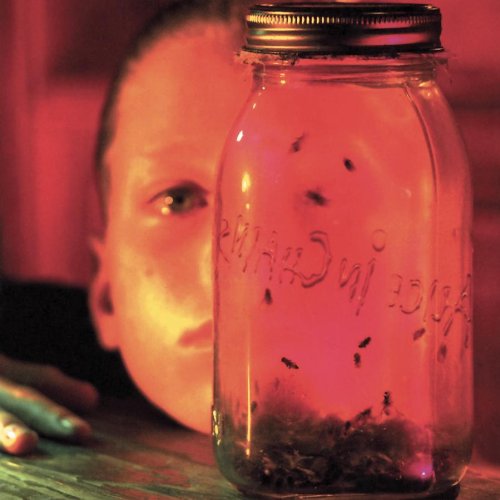
Alice in Chain's second EP, Jar of Flies, is an enigma in my personal hierarchy of the band's discography, in that while it is far from their heaviest work, it is unquestionably my favourite. There are a myriad of personal reasons that inform this declaration (young-adult angst, mostly); but its an impeccable album in its own regard, with brilliant songwriting (almost) all the way through. There's something remarkably pure about this album, possibly thanks to the circumstances of its recordings (the band supposedly wrote and recorded the entire EP in a week, while living in the studio after being evicted from their shared apartment after the Dirt tour). Much like Sap, the songs feel more personal here; less about the wallowing in the mud and more about wondering where you are, and where life's taking you. To a young nineteen-year-old who was going through the aforementioned angst (not looking for sympathy, honest), a lot of this album rang true on a few levels. The stripped-down arrangements, dominated by acoustic guitars, evoke a more reflective side of a band that seemed to have a lot to reflect on, not the least of which being newfound critical acclaim after the release of Dirt.
The band isn't afraid to experiment beyond the acoustic arrangements here, either. "Rotten Apple" showcases one of guitarist Jerry Cantrell's best solos, played through a talk-box; "I Stay Away" and "Whale & Wasp" both feature strings, with the latter having the honour of being the band's only instrumental piece. All the songs here are unique and manage to differentiate themselves in bold ways, which is all the more remarkable with the EP being - for all intents and purposes - an impromptu jam session. The level of craft on display here is incredible, and its made even more so when considering it was done such a short time. The fact that something so beautiful and completely integral to a band's ouevre as a song like "Nutshell" appears here is astounding.
"No Excuses" is arguably the centrepiece of the EP's concentrated genius. All four members are at their A-game here, with an incredible rhythm section consisting of Sean Kinney and Mike Inez (replacing the late Mike Starr on bass) supporting Cantrell and late vocalist's Layne Staley's impeccable harmonies. Once again, the guitar is nothing to scoff at, with Cantrell's playing absolutely shimmering during the verse, all building to an incredibly memorable solo. The song is more upbeat than AiC has ever sounded before and since then, a stark contrast with the remainder of the disc yet never feeling out of place.
The same can't be said about my only real slight against the album, that being the final track, "Swing On This". A bluesy track ushered in with a walking bass line, there's nothing inherently bad about it. In fact, its just the kind of off-kilter track, with a chorus that reminds me a bit of Dirt's "Hate to Feel", that really characterized some of AiC's deeper cuts. That said, I feel like it doesn't flow very organically from the rest of the album. The first six songs form such a cohesive picture that "Swing On This" comes off as jarring. Some will certainly disagree, but for myself, its the only reason why I would refrain from calling Jar of Flies perfect.
Last song woes aside, however, Jar of Flies remains an introspective, honest, and unpretentious work from a band that had worldwide acclaim at its fingertips. To take the time away from superstardom and and bare it all on a work so genuine is nothing short of remarkable, and I recommend everyone give it a listen. No excuses.
Verdict: Epic Win [9.5/10] (Take me home)
http://aliceinchains.com
Labels:
1993,
alice in chains,
Epic Win,
grunge,
rock,
USA,
washington
Wednesday, June 19, 2013
Zealotry - The Charnel Expanse (2013)
Ever a pleasure to discover a band like Zealotry haunting the New England underground, especially in the death metal niche, which I've honestly never found to be particularly strong around here. Sure, we've had some local heroes to cheer on in the past, and we've got a few at the moment (Abnormality, Revocation, etc), but The Charnel Expanse is something positioned at quite the right place and time: an old school exhibition which never shies from introspection, atmosphere and most importantly, a higher plane of musicality you just don't expect from your garden variety Incantation, Entombed or Autopsy clones that have admittedly helped rekindle an interest in the sounds of the genre's grade school years. Zealotry takes chances, and the band's full-length debut allows each of its constituent instruments to breathe witchery into its arcane whole, plus the cover looks like a squamous send-up to Cryptopsy's Blasphemy Made Flesh, or at least a handmaiden of Lloth...
The obvious comparisons conjured by The Charnel Expanse would be Immolation's first few albums in the 90s, with perhaps a helping of the less blatantly groove-infested riffing off Demilich's Nespithe, but more recent parallels could be drawn towards Canadian acts like Mitochondrion or Antediluvian or a hint of the more structured Portal material. The music is quite complex in its phrasing, tempo shifting and peppering of techniques like harmonics, squeals and splaying out the individual notes of chords as a counterpoint to the more rampant manifestation of the other, driving rhythm guitar. Variation without loss of cohesion, and plenty of creepy segues coursing through the album, like the strangely addictive clean guitars opening "Blighted", which are an excellent dynamic digestive aide for those turned off by incessant onslaughts. When I mentioned 'old school' earlier, I was referring more to the 90s school of thought, when the genre was evolving through the musical proficiency of its practitioners...The Charnel Expanse is far more demanding, for example, than the rudimentary, evil tremolo patterns or bludgeoning grooves used to anchor classics like Death's Leprosy or Obituary's Cause.
No, it's more catered towards fans of records like Here in After, Obscura or None So Vile. As such, a brazen, ballistic and ranged performance is required of the rhythm section, and it is given, with the drums in particular standing out in the mix. A few fills seem to fall flat in the context of the motion of the riffs they are accommodating, and there are occasional stock blasts alternated against the more interesting mid paced riffing or grooves, but it's one of those albums where I feel like I could shut off the vocals and guitars and still enjoy listening to this guy batter away. Same could be said of the bass, which is a little deep in the mix but every inch as nimble as the rhythm guitar, with some nice effective deviations from the centric progressions that help justify its independence (for example, I loved its zipping and bumping beneath the leads in the track "Decaying Echoes"). Leads are also a standout component of this record, both flashy and atmospheric enough to enforce the otherworldly lyrics and imagery of the band's cosmic and philosophical schemata, and giving the recording just that much more overall depth.
The Charnel Expanse was not crossed in a day, and the effort applied by the musicians was obvious from the first few fell, majestic note progressions that herald "Avatars of Contempt, pt. I". There are a handful of transitions through the record that I felt could have been tightened to greater effect, where the volume of ideas and execution almost suffocates itself. Also, the leverage between the two simultaneous rhythm guitar tracks seemed a fraction unbalanced so that it could be slightly difficult to pick out the nuances of one over the other...but then, I've got to admire just how much work was put into their coexistence. The only other gripe I had was that some of the dual-layered guttural vocals were slightly overbearing, and that I preferred when just one growl was emitted since there is just so much happening musically that it could become a bit claustrophobic to include more. But as a paean to the madness of social and moral decay, all of the pieces here do ultimately fit the puzzle, and Zealotry has got itself quite an engrossing experience which holds up through a large number of listening sessions. The lyrics are thoughtful, and many of the riffs fantastic. Expect a great, reality-warping future from Zealotry. First, we Massholes hosted Miskatonic University, and now this band. No pressure, gentlemen!
Verdict: Win [8.5/10] (conflict spreads exponentially)
http://zealotry.bandcamp.com/
The obvious comparisons conjured by The Charnel Expanse would be Immolation's first few albums in the 90s, with perhaps a helping of the less blatantly groove-infested riffing off Demilich's Nespithe, but more recent parallels could be drawn towards Canadian acts like Mitochondrion or Antediluvian or a hint of the more structured Portal material. The music is quite complex in its phrasing, tempo shifting and peppering of techniques like harmonics, squeals and splaying out the individual notes of chords as a counterpoint to the more rampant manifestation of the other, driving rhythm guitar. Variation without loss of cohesion, and plenty of creepy segues coursing through the album, like the strangely addictive clean guitars opening "Blighted", which are an excellent dynamic digestive aide for those turned off by incessant onslaughts. When I mentioned 'old school' earlier, I was referring more to the 90s school of thought, when the genre was evolving through the musical proficiency of its practitioners...The Charnel Expanse is far more demanding, for example, than the rudimentary, evil tremolo patterns or bludgeoning grooves used to anchor classics like Death's Leprosy or Obituary's Cause.
No, it's more catered towards fans of records like Here in After, Obscura or None So Vile. As such, a brazen, ballistic and ranged performance is required of the rhythm section, and it is given, with the drums in particular standing out in the mix. A few fills seem to fall flat in the context of the motion of the riffs they are accommodating, and there are occasional stock blasts alternated against the more interesting mid paced riffing or grooves, but it's one of those albums where I feel like I could shut off the vocals and guitars and still enjoy listening to this guy batter away. Same could be said of the bass, which is a little deep in the mix but every inch as nimble as the rhythm guitar, with some nice effective deviations from the centric progressions that help justify its independence (for example, I loved its zipping and bumping beneath the leads in the track "Decaying Echoes"). Leads are also a standout component of this record, both flashy and atmospheric enough to enforce the otherworldly lyrics and imagery of the band's cosmic and philosophical schemata, and giving the recording just that much more overall depth.
The Charnel Expanse was not crossed in a day, and the effort applied by the musicians was obvious from the first few fell, majestic note progressions that herald "Avatars of Contempt, pt. I". There are a handful of transitions through the record that I felt could have been tightened to greater effect, where the volume of ideas and execution almost suffocates itself. Also, the leverage between the two simultaneous rhythm guitar tracks seemed a fraction unbalanced so that it could be slightly difficult to pick out the nuances of one over the other...but then, I've got to admire just how much work was put into their coexistence. The only other gripe I had was that some of the dual-layered guttural vocals were slightly overbearing, and that I preferred when just one growl was emitted since there is just so much happening musically that it could become a bit claustrophobic to include more. But as a paean to the madness of social and moral decay, all of the pieces here do ultimately fit the puzzle, and Zealotry has got itself quite an engrossing experience which holds up through a large number of listening sessions. The lyrics are thoughtful, and many of the riffs fantastic. Expect a great, reality-warping future from Zealotry. First, we Massholes hosted Miskatonic University, and now this band. No pressure, gentlemen!
Verdict: Win [8.5/10] (conflict spreads exponentially)
http://zealotry.bandcamp.com/
Labels:
2013,
death metal,
massachusetts,
USA,
win,
zealotry
Tuesday, June 18, 2013
The Unconscious Mind - Where Philosophers Fall (2012)
Experiencing a void of decent symphonic tinted melodic black/death metal of late? Quebec's The Unconscious Mind have your back with an effectively vibrant and destructive mesh of 90s style melodic tremolo guitar picking, sweeping piano overtures and progressive metal bass acrobatics that each twist through a series of thundering blast burst beats and meticulous, palm muted grooves which are delivered with the lewd punctuality of both modern death/thrash and metalcore timing (and I don't include that last reference with any sense of negativity). What results is an all-purpose assault which isn't particularly catchy or novel, but clearly the product of many long hours of calculation, composition and a severe chip on the band members' shoulders.
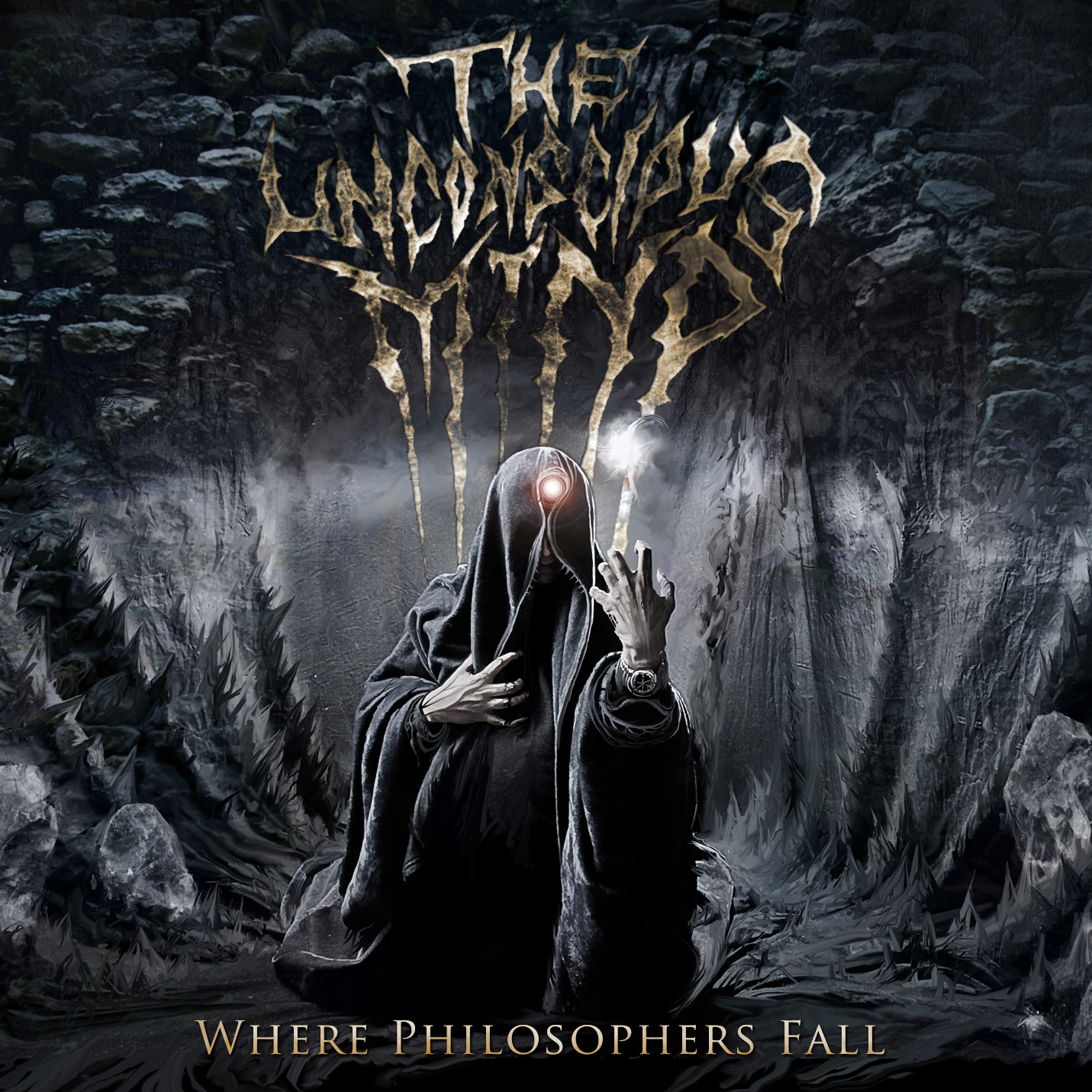
Angry and agile, Where Philosphers Fall is further proof of how metal musicianship in general has evolved. 15-20 years ago, you'd never expect a self-released debut record being written or performed at this level, and fuck, it even boasts some killer cover artwork. That's not to say that The Unconscious Mind are anything more than a pastiche of varied extreme metal styles that have risen or plateaued over that period, but they alternate between them with ease, and the range of the 50 minute debut is internally consistent, with enough symphonic/piano segues to break up the harsher content. Once in awhile, they'll lapse into a fairly generic mathematical chug sequence (like the bridge to "The Mirror of My Punishment") without setting up anything compelling, but more often you'll get at least an interesting fusion of notes and instruments. By far my favorite component of the record was the bassist...I could probably just listen to his tracks alone and be entertained, since he's got a lot of harried fusion chops redolent of groups like Cynic, Obscura and so forth, but the guitars also have a lot of surgical exaction that I also admired, and the black metal runs totally take you back to the heyday of Dissection, Emperor and early Old Man's Child.
The drums don't have a lot of character, but they exhibit all the appropriate brickwork and foot speed one would expect of this hybrid of styles. Perhaps the least impressive element were the vocals, which are a near constant pairing of snarls and growls that feels overbearing and monotonous like it would on a lot of similar, modern recordings in the realms of melodic death, metalcore or other, more insipid black/death hybrids. It isn't that the vocals are 'bad', per se, but they're simply never evolved beyond typical, and thus I don't hear a lot of passion or torment within them...I honestly preferred when it was just the more guttural style by itself. They also don't concoct a lot of riffs that really stick with me, but on the other hand there is so much happening that I was listening through the album a number of times and still picking out new phrases that just hadn't gelled in my brain previously. In other words, it's busy enough that it never becomes boring, though I could not choose out particular standout tracks that I wanted to keep re-listening through.
In the end, Where Philosophers Fall is a solid and exceedingly proficient debut for a band that likely will grow as songwriters as they conceive more material, but in the meantime more likely to thrill due to the contrasts of keyboard arrangements and pinpoint extremity. A curious combination of the mid 90s black metal boom and the sophistication of fellow Canadian death/thrashers like the popular Quo Vadis or maybe a few hints of older Neuraxis or Despised Icon. There are moments of inspiration and moments of retread coursing through the content, but it's clear to me that musicianship alone is not an issue...these guys can play circles around anything they desire, but this particular set of songs didn't really endure for me beyond the initial impact of their raw talent at stringing them together. Still, not a whole lot to complain about here, they are already quite seasoned and beyond ready for some label exposure.
Verdict: Indifference [6.75/10]
https://www.facebook.com/theunconsciousmind
Angry and agile, Where Philosphers Fall is further proof of how metal musicianship in general has evolved. 15-20 years ago, you'd never expect a self-released debut record being written or performed at this level, and fuck, it even boasts some killer cover artwork. That's not to say that The Unconscious Mind are anything more than a pastiche of varied extreme metal styles that have risen or plateaued over that period, but they alternate between them with ease, and the range of the 50 minute debut is internally consistent, with enough symphonic/piano segues to break up the harsher content. Once in awhile, they'll lapse into a fairly generic mathematical chug sequence (like the bridge to "The Mirror of My Punishment") without setting up anything compelling, but more often you'll get at least an interesting fusion of notes and instruments. By far my favorite component of the record was the bassist...I could probably just listen to his tracks alone and be entertained, since he's got a lot of harried fusion chops redolent of groups like Cynic, Obscura and so forth, but the guitars also have a lot of surgical exaction that I also admired, and the black metal runs totally take you back to the heyday of Dissection, Emperor and early Old Man's Child.
The drums don't have a lot of character, but they exhibit all the appropriate brickwork and foot speed one would expect of this hybrid of styles. Perhaps the least impressive element were the vocals, which are a near constant pairing of snarls and growls that feels overbearing and monotonous like it would on a lot of similar, modern recordings in the realms of melodic death, metalcore or other, more insipid black/death hybrids. It isn't that the vocals are 'bad', per se, but they're simply never evolved beyond typical, and thus I don't hear a lot of passion or torment within them...I honestly preferred when it was just the more guttural style by itself. They also don't concoct a lot of riffs that really stick with me, but on the other hand there is so much happening that I was listening through the album a number of times and still picking out new phrases that just hadn't gelled in my brain previously. In other words, it's busy enough that it never becomes boring, though I could not choose out particular standout tracks that I wanted to keep re-listening through.
In the end, Where Philosophers Fall is a solid and exceedingly proficient debut for a band that likely will grow as songwriters as they conceive more material, but in the meantime more likely to thrill due to the contrasts of keyboard arrangements and pinpoint extremity. A curious combination of the mid 90s black metal boom and the sophistication of fellow Canadian death/thrashers like the popular Quo Vadis or maybe a few hints of older Neuraxis or Despised Icon. There are moments of inspiration and moments of retread coursing through the content, but it's clear to me that musicianship alone is not an issue...these guys can play circles around anything they desire, but this particular set of songs didn't really endure for me beyond the initial impact of their raw talent at stringing them together. Still, not a whole lot to complain about here, they are already quite seasoned and beyond ready for some label exposure.
Verdict: Indifference [6.75/10]
https://www.facebook.com/theunconsciousmind
Labels:
2012,
black metal,
canada,
Indifference,
melodic death,
the unconscious mind
Odium Nova - Death Comes Sudden (2013)
Young, talented, and interminably ambitious (perhaps to a fault), Odium Nova offer us a pretty unique interpretation of the melodic death metal/ symphonic hybrid which is at the very least going to burst them onto the radars of those interested in polished and dynamic modern death with absolutely no shyness in terms of incorporating keyboards and pianos. I believe a direct comparison to any one precedent might be difficult, but I feel like this is somewhat of a spin on the Finnish formula of groups like Kalmah or Children of Bodom, only with a tinge of Amon Amarth's propensity for deep growls and driving, simpler guitar progressions; and then maybe a hint of Septic Flesh, Stormlord, or another Moscovian act you may know, Mental Home, in the use of sweeping but measured orchestration.
Of course, in a world so presently enamored with old school, dirty death metal, a record like Death Comes Sudden is anathema, but I think there's quite a lot of crossover appeal in what they write, perhaps to the Gothic metal crowd, aforementioned Finnish melodeath scene, the popular pagan/folk metal acts hailing from Europe, US groups like Alestorm and Blackguard, or even symphonic black metal stalwarts like Dimmu Borgir, Cradle of Filth and Chtonic. These Russians just capture that much of a range in the staggering 17 tracks of their full-length debut, but it's this very overwhelming scope of the album that also causes it to suffer from some inconsistency in effectiveness, and to be truthful I think it might have proven superior with just 9 or 10 of the better tunes packed together into a more concise exhibition of the band's strengths. That's not to say that the weaker tracks here suddenly fall off some steep incline of quality, and in Odium Nova's defense you're getting a broad range of stuff here, from straight riff-based ragers like "Paradise Sold" (a power metal and melodic death bastardization) and "Private Gehenna" (almost a rocking black/thrash) to "Sunset Over Styx" and "Hecatomb" which are more eloquent due to the keyboard arrangements.
The mix of the album is incredibly clean, if not entirely resonant. Rhythm guitars have a lot of punch but their particular neutered sense of saturation can lead to the subjugation of the riffs by either the keyboards, vocals, or more sensibly, the lead melodies and harmonies which are basked in brighter effects. The bassist is given plenty of space to breathe, and thus he's not always stuck to the rhythm guitar, and the drums performed with a mechanical precision that includes plenty of double bass and other mandatory techniques, even though they never really rise to the fore of the songwriting. Pianos are perfunctory but occasionally memorable, and other atmospherics like choirs and calmer clean guitar passages are strewn throughout the 55 minutes of content to help balance off the harder, driving sequences. Vocals are everywhere, from a deep guttural growl to a more Carcass-like snarl; nothing quite original, but effective and well structured to the verses and chorus progressions. If I had to pick one area that shined above the rest, it's got to be the lead guitars, which are very polished and balanced between flashy technique and emotional impact. Maybe not unique, but they certainly show a lot of effort there...
As tastefully executed as the atmospheric/symphonic based tracks are, I actually found myself siding more with the brutally inspired tracks like "Crypt of Fatal Truth" or "Human Larva" which feature a bevy of precise, exciting, death/thrash riffing. But ultimately, I think if you're going to hammer us with 17 fucking songs, it's best that they show a broader palette of ability, which Death Comes Sudden clearly does. This record was clearly a labor of love, perhaps biting off more than it could chew, but revealing that there is probably no limit to what Odium Nova will be capable of, if this is so early in their career. They formed in 2011, after all...hell, most bands couldn't write something like this after a decade. Even the lyrics are pretty goddamn solid and interesting. Is it mind blowing or intensely memorable? That I can't promise, but I was definitely surprised to get a recommendation out of left field for something I'd never heard of that was this fully realized. Fans of anything I mentioned in the first two paragraphs might wish to give this a whirl, or lovers of modern, hygienic extreme metal which splits its attentions pretty evenly between the graceful and grotesque.
Verdict: Win [7.5/10]
https://www.facebook.com/odium.nova
Of course, in a world so presently enamored with old school, dirty death metal, a record like Death Comes Sudden is anathema, but I think there's quite a lot of crossover appeal in what they write, perhaps to the Gothic metal crowd, aforementioned Finnish melodeath scene, the popular pagan/folk metal acts hailing from Europe, US groups like Alestorm and Blackguard, or even symphonic black metal stalwarts like Dimmu Borgir, Cradle of Filth and Chtonic. These Russians just capture that much of a range in the staggering 17 tracks of their full-length debut, but it's this very overwhelming scope of the album that also causes it to suffer from some inconsistency in effectiveness, and to be truthful I think it might have proven superior with just 9 or 10 of the better tunes packed together into a more concise exhibition of the band's strengths. That's not to say that the weaker tracks here suddenly fall off some steep incline of quality, and in Odium Nova's defense you're getting a broad range of stuff here, from straight riff-based ragers like "Paradise Sold" (a power metal and melodic death bastardization) and "Private Gehenna" (almost a rocking black/thrash) to "Sunset Over Styx" and "Hecatomb" which are more eloquent due to the keyboard arrangements.
The mix of the album is incredibly clean, if not entirely resonant. Rhythm guitars have a lot of punch but their particular neutered sense of saturation can lead to the subjugation of the riffs by either the keyboards, vocals, or more sensibly, the lead melodies and harmonies which are basked in brighter effects. The bassist is given plenty of space to breathe, and thus he's not always stuck to the rhythm guitar, and the drums performed with a mechanical precision that includes plenty of double bass and other mandatory techniques, even though they never really rise to the fore of the songwriting. Pianos are perfunctory but occasionally memorable, and other atmospherics like choirs and calmer clean guitar passages are strewn throughout the 55 minutes of content to help balance off the harder, driving sequences. Vocals are everywhere, from a deep guttural growl to a more Carcass-like snarl; nothing quite original, but effective and well structured to the verses and chorus progressions. If I had to pick one area that shined above the rest, it's got to be the lead guitars, which are very polished and balanced between flashy technique and emotional impact. Maybe not unique, but they certainly show a lot of effort there...
As tastefully executed as the atmospheric/symphonic based tracks are, I actually found myself siding more with the brutally inspired tracks like "Crypt of Fatal Truth" or "Human Larva" which feature a bevy of precise, exciting, death/thrash riffing. But ultimately, I think if you're going to hammer us with 17 fucking songs, it's best that they show a broader palette of ability, which Death Comes Sudden clearly does. This record was clearly a labor of love, perhaps biting off more than it could chew, but revealing that there is probably no limit to what Odium Nova will be capable of, if this is so early in their career. They formed in 2011, after all...hell, most bands couldn't write something like this after a decade. Even the lyrics are pretty goddamn solid and interesting. Is it mind blowing or intensely memorable? That I can't promise, but I was definitely surprised to get a recommendation out of left field for something I'd never heard of that was this fully realized. Fans of anything I mentioned in the first two paragraphs might wish to give this a whirl, or lovers of modern, hygienic extreme metal which splits its attentions pretty evenly between the graceful and grotesque.
Verdict: Win [7.5/10]
https://www.facebook.com/odium.nova
Monday, June 17, 2013
Neige Éternelle - Neige Éternelle (2013)
Neige Éternelle is a Quebecois black metal act which seeks a dialing back of the clock's hands to both the attitude and aural aesthetics of the earlier second wave black metal of the early 90s, characterized through a
sense of reductionism in production values that is responsible for both its stylistic parameters and icy, effective atmosphere. The band is well aware that that its intentions not to expand or complicate its medium, and thus settles directly into a sinister, distant and surprisingly elegant set of songs which I've found rather difficult to stop listening through. Having gotten a number of good promos via Montréal Sepulchral Productions lately, I can say that with no uncertainty that this was my favorite, and it scratches an itch I get every few years for the basest of black metal, steaming its open wounds out into a frost-tinged eveningscape, silent but for the howling of winds and wolves.
Naturally, my first comparison would be to Darkthrone's A Blaze in the Northern Sky, largely because it was the first album I owned to successfully dole out such an uncompromising, frigid atmosphere, but the marginally more melodic underpinnings inherent in Neige Éternelle's chord choices are actually more in league with Under a Funeral Moon or Transilvanian Hunger, De Mysteriis dom Sathanas or the first few Burzum outings. A melancholy captured in shards of ice, kept in a distant din beneath the drumming and the sustain of the vocalist's substantial rasp, like you were hearing it all performed half way across a frozen lake from an unheated cabin on the shore. The actual structure of the chord progressions is nothing novel, but doesn't really need to be...its nuance is strictly in its ability to cling to the listener's psyche like the uncertainty of surviving a blizzard in a primitive shelter void of modern amenities. To their credit, though, they mete out a fairly varied palette of riffing techniques which help this from falling into the quicksand of ceaseless repetition; "Comme une charogne" operates off eerie, mid-paced chords with a spiky emphasis on the higher notes in their respective chords, while "Fier patriote" incorporates some moody speed/thrash metal picking, or "L'appel de la mort" is your full-on, desperate blasterpiece.
But, while I enjoyed the writing, it's really the production that sold me on this eponymous debut, helped in part because I received this during the opening notes of summer, when the New England heat begins to swelter to a degree that I have simply never found comfortable (though I've no doubt many would consider it 'mild' at worst). All the instruments are audible, but never 'up front', if that makes any sense. The snares and crash along like an old Bathory disc, the double kick lines often feel like a bunch of rowdy fans thundering the bleachers during a hockey match, and the vocal sneer is constantly raving like someone stabbed and isolated in the woods, whose pleas may or may not reach the neighboring village. Granted, the actual timbre of the rasp is admittedly monotonous, but here that serves only to help distinguish the rhythm guitars and the sordid plunk of the drier bass guitar tone propelling alongside them. Feedback and subtle storm atmospheres greatly influence the direction of the music, as in the intro to "Pluie de couteaux", in which some dirty 'clean' patterns set up a dreamlike precipitation that really lives up to the band's name.
Ultimately, Neige Éternelle was an exhilarating 40-minute indoctrination into a genuine realm of suffering that I so rarely experience of late, perhaps due to some jadedness with a lot of the derivative works fielded in this niche that are ineffective at placing both production and compositional skills in proper context. This is raw, fundamental, wholly convincing black metal whose only 'crutch' might be seen its lack of originality, only not to the majority of those who are likely to invest in this. I thankfully felt my fingers and toes turning blue as I did with Anguished of Finland's debut or Atra's Death Coven, and the record struck me as a solid summer curative to help deal with the disgusting sweat on my forehead and limbs. After all, as Leonard Jeffries Jr. once reminded us, I'm one of those 'ice people', so I've somewhat of a bias for music that makes me feel so good by feeling pale and awful. Neige Éternelle does exactly that, and so I've got no choice but to recommend it to all the craven, despotic and the desperate who might crawl out from their crypts and rocks to acquire it. A great debut!
Verdict: Win [8.75/10]
https://www.facebook.com/pages/Neige-%C3%89ternelle/201509126585335
sense of reductionism in production values that is responsible for both its stylistic parameters and icy, effective atmosphere. The band is well aware that that its intentions not to expand or complicate its medium, and thus settles directly into a sinister, distant and surprisingly elegant set of songs which I've found rather difficult to stop listening through. Having gotten a number of good promos via Montréal Sepulchral Productions lately, I can say that with no uncertainty that this was my favorite, and it scratches an itch I get every few years for the basest of black metal, steaming its open wounds out into a frost-tinged eveningscape, silent but for the howling of winds and wolves.
Naturally, my first comparison would be to Darkthrone's A Blaze in the Northern Sky, largely because it was the first album I owned to successfully dole out such an uncompromising, frigid atmosphere, but the marginally more melodic underpinnings inherent in Neige Éternelle's chord choices are actually more in league with Under a Funeral Moon or Transilvanian Hunger, De Mysteriis dom Sathanas or the first few Burzum outings. A melancholy captured in shards of ice, kept in a distant din beneath the drumming and the sustain of the vocalist's substantial rasp, like you were hearing it all performed half way across a frozen lake from an unheated cabin on the shore. The actual structure of the chord progressions is nothing novel, but doesn't really need to be...its nuance is strictly in its ability to cling to the listener's psyche like the uncertainty of surviving a blizzard in a primitive shelter void of modern amenities. To their credit, though, they mete out a fairly varied palette of riffing techniques which help this from falling into the quicksand of ceaseless repetition; "Comme une charogne" operates off eerie, mid-paced chords with a spiky emphasis on the higher notes in their respective chords, while "Fier patriote" incorporates some moody speed/thrash metal picking, or "L'appel de la mort" is your full-on, desperate blasterpiece.
But, while I enjoyed the writing, it's really the production that sold me on this eponymous debut, helped in part because I received this during the opening notes of summer, when the New England heat begins to swelter to a degree that I have simply never found comfortable (though I've no doubt many would consider it 'mild' at worst). All the instruments are audible, but never 'up front', if that makes any sense. The snares and crash along like an old Bathory disc, the double kick lines often feel like a bunch of rowdy fans thundering the bleachers during a hockey match, and the vocal sneer is constantly raving like someone stabbed and isolated in the woods, whose pleas may or may not reach the neighboring village. Granted, the actual timbre of the rasp is admittedly monotonous, but here that serves only to help distinguish the rhythm guitars and the sordid plunk of the drier bass guitar tone propelling alongside them. Feedback and subtle storm atmospheres greatly influence the direction of the music, as in the intro to "Pluie de couteaux", in which some dirty 'clean' patterns set up a dreamlike precipitation that really lives up to the band's name.
Ultimately, Neige Éternelle was an exhilarating 40-minute indoctrination into a genuine realm of suffering that I so rarely experience of late, perhaps due to some jadedness with a lot of the derivative works fielded in this niche that are ineffective at placing both production and compositional skills in proper context. This is raw, fundamental, wholly convincing black metal whose only 'crutch' might be seen its lack of originality, only not to the majority of those who are likely to invest in this. I thankfully felt my fingers and toes turning blue as I did with Anguished of Finland's debut or Atra's Death Coven, and the record struck me as a solid summer curative to help deal with the disgusting sweat on my forehead and limbs. After all, as Leonard Jeffries Jr. once reminded us, I'm one of those 'ice people', so I've somewhat of a bias for music that makes me feel so good by feeling pale and awful. Neige Éternelle does exactly that, and so I've got no choice but to recommend it to all the craven, despotic and the desperate who might crawl out from their crypts and rocks to acquire it. A great debut!
Verdict: Win [8.75/10]
https://www.facebook.com/pages/Neige-%C3%89ternelle/201509126585335
Labels:
2013,
black metal,
canada,
Neige Éternelle,
quebec,
win
Mirthless - A Dirge for Your Suicide (2013)
While I'm sure I've seen Peru's Mirthless described as a 'funeral doom' band in the past, this full-length debut album is actually quite flexible in terms of how it balances the standard slog of the form with more up-tempo sequences that help to break up the longer cuts (of which there are only two on the recording). You'll hear a lot of 80s or 90s trad doom, straight rock 'n' roll or even punk influence in some of the chord selections, which are unfortunately rather standard in execution; but where the rhythm guitars might severely lack in the novelty department, the rugged analog mix and raw presentation of the vocals and instruments definitely gives it some character that it might otherwise have lacked if it were your straight up, garden of gravestones polished tribute to old Anathema, Paradise Lost or My Dying Bride.
In fact, A Dirge for Your Suicide feels so raucous and live that you could be sitting in the same garage or basement where the trio were performing. Meaty, driving chords cover up the bass a little, but you can totally feel the chugs in your gut as they creep along, morphing into and out of chord progressions that are surprisingly not as despairing and dreary as you might expect from the cover artwork alone. Which once again brings up the trad doom comparisons, for there's quite a lot of Sabbath, Pentagram and Vitus in the way the note patterns play out. That said, there's a slightly more sorrowful side to the band when they fuse in some ringing, Candlemass-like melodies during the slowly paced majority of the fix tunes, like the titular "Dirge" which also incorporates some cleaner, mournful vocal melodies reminiscent of My Dying Bride. Otherwise you're getting sustained guttural grunts interspersed with slightly higher pitched snarls, which are effective but occasionally a little contrasted to some of the more rocking chords that pop up in places like "Pantheon of Disgraces" amidst the depressing strains of harmony.
Wasn't totally impressed by the drum levels, since the kicks, toms and tinier hissing cymbals all seem to occupy separate planes, but they certainly contribute to this no bullshit, live vibe that Mirthless are giving off here, even when they toss in something like a blast beat out of left field. A Dirge for Your Suicide is almost entirely unprocessed, stripped down so that it wouldn't sound a lot different if delivered on the stage than the studio. Other gripes were that I felt myself wishing for more interesting bass guitar lines to help deviate from the pretty predictable rhythm guitars, and the melodies aren't exactly the sort to haunt you long after the fact. Sometimes transitions just seem haphazardly tossed into the songs so they don't achieve a high emotional impact, but then this is not constantly a soundtrack for suckling your regrets, since the Peruvians don't seem to share an interesting in boring the listener like many others clogging the medium. This is just unapologetic, rough, sincere death/doom more in sync with decades of olde than the heavily produced, over-tracked Gothic whining with female ethereal vocals that you'll hear in a lot of European bands of the 21st century.
I can't exactly say that I enjoyed the album, since I wish the rhythm guitars would attempt some more unusual and memorable riffs regardless of the pacing, but at the same time, it never once put me to sleep. Varied tempos and song lengths ensure that it remains marginally fresh on the ears, but both the chord progressions and melodies could use some work to become more melancholic, jarring or soul scarring.
Verdict: Indifference [6.25/10]
http://mirthlessdoommaniac.tripod.com/
In fact, A Dirge for Your Suicide feels so raucous and live that you could be sitting in the same garage or basement where the trio were performing. Meaty, driving chords cover up the bass a little, but you can totally feel the chugs in your gut as they creep along, morphing into and out of chord progressions that are surprisingly not as despairing and dreary as you might expect from the cover artwork alone. Which once again brings up the trad doom comparisons, for there's quite a lot of Sabbath, Pentagram and Vitus in the way the note patterns play out. That said, there's a slightly more sorrowful side to the band when they fuse in some ringing, Candlemass-like melodies during the slowly paced majority of the fix tunes, like the titular "Dirge" which also incorporates some cleaner, mournful vocal melodies reminiscent of My Dying Bride. Otherwise you're getting sustained guttural grunts interspersed with slightly higher pitched snarls, which are effective but occasionally a little contrasted to some of the more rocking chords that pop up in places like "Pantheon of Disgraces" amidst the depressing strains of harmony.
Wasn't totally impressed by the drum levels, since the kicks, toms and tinier hissing cymbals all seem to occupy separate planes, but they certainly contribute to this no bullshit, live vibe that Mirthless are giving off here, even when they toss in something like a blast beat out of left field. A Dirge for Your Suicide is almost entirely unprocessed, stripped down so that it wouldn't sound a lot different if delivered on the stage than the studio. Other gripes were that I felt myself wishing for more interesting bass guitar lines to help deviate from the pretty predictable rhythm guitars, and the melodies aren't exactly the sort to haunt you long after the fact. Sometimes transitions just seem haphazardly tossed into the songs so they don't achieve a high emotional impact, but then this is not constantly a soundtrack for suckling your regrets, since the Peruvians don't seem to share an interesting in boring the listener like many others clogging the medium. This is just unapologetic, rough, sincere death/doom more in sync with decades of olde than the heavily produced, over-tracked Gothic whining with female ethereal vocals that you'll hear in a lot of European bands of the 21st century.
I can't exactly say that I enjoyed the album, since I wish the rhythm guitars would attempt some more unusual and memorable riffs regardless of the pacing, but at the same time, it never once put me to sleep. Varied tempos and song lengths ensure that it remains marginally fresh on the ears, but both the chord progressions and melodies could use some work to become more melancholic, jarring or soul scarring.
Verdict: Indifference [6.25/10]
http://mirthlessdoommaniac.tripod.com/
Labels:
2013,
death metal,
doom metal,
Funeral Doom,
Indifference,
mirthless,
peru
Friday, June 14, 2013
Gaschamber - Gaschamber (2002)
With a provocative name like Gaschamber, you've really got your work cut out for you in sonically living up to it, something that this Pennsylvania trio did with their eponymous, obscure debut back in 2002. Granted, the album is little more than glorified Slayer worship, with song structures, vocals and even production choices eerily reminiscent of the masterpiece Reign in Blood, not to mention the faster elements present on South of Heaven and its successor Seasons in the Abyss, but if you're going to borrow...do it from the best, right? And I'd definitely point out that while there were always a handful of throwback bands in the 90s and early 'oughts who were also quite derivative in keeping the fire burning for the nearly defunct genre, Gaschamber was well ahead of the trending rethrash that has blown up over the last 6-7 years. It had been done before, but this was violence, speed, cruelty and an absolute lack of apologies...without the goofiness or image obsession that seems to make light of a genre that, apart from a few retarded gimmicks from bands like M.O.D. or Anthrax, was not in league with the irony some youngsters seem to believe.
Gaschamber is short and wastes no time getting to the point, with eight tracks in 24 minutes, a technique its mentor Reign in Blood mastered in the mid-80s. The songs are ALL fast without being excessively samey, and you're not going to have to suck up some ballad or worry about any experimentation. The guitars are a bit juicier than King and Hanneman on that iconic release, but they definitely cultivate that same sense of dry authenticity, not too harsh or distorted, but vibrant and thick enough that you can perceive all the acrobatic speed metal-inflections of the rhythm tracks ripping and racing all over one another. The vocal timbre and meter in many of the tracks (like "Defeating the Gods" or "Death in the Gaschamber") is highly reminiscent of Tom Araya, but this guy Karl Mitchell definitely sounds a bit more youthful and petulant, with a splash of more splatter- or crossover thrash frontmanship in there. But, clearly he's barking up that same tree, and a lot of the lyrical themes of genocide and warfare will naturally recount classics like "Angel of Death" in more ways than one; though something like "Trenchcoat Justice" helps update the topics to incorporate the social strife and mayhem of the early 21st century. Samples and vocal effects are used sparsely but tastefully, and I definitely never grew bored on any of the eight tunes, despite the glaring sense of familiarity.
The bass guitars are thick and quick but rarely stand forth from the rhythm riffs, though with Mitchell already performing vocals and other guitars, one can sort of forgive that lack of attention. At least you can hear them cleanly enough in the manic and pestilent thrashing of a "Hurricane of Blood" or "Raped to Death", and certainly there is more personality than a number of 80s discs I could think of, especially the punk/hardcore attitude they're given on the intro to "Civil War". Drums, on the other hand, sound pretty claptrap, organic but there's just something about the boxy snare that tends to distract me, and the tom fills can occasionally feel a bit too bulky. But you can't really fault the level of enthusiasm or energy there, and the beats are all fairly standard explosions of earlier Dave Lombardo which don't rely too heavily on the extreme metal drumming techniques (blasting and endless double bass) that Slayer helped pioneer. The leads are just as rough and frenzied as their spiritual successors on Reign in Blood, without wiring in a lot of cohesion or classical/scale influence, but they don't emotionally stand out from the supporting rhythm guitars too often, and internally rely on a lot of the same tremolo repetitions of notes, not taking much of an opportunity to rifle off the spurts of screaming, incendiary wizardry one might hope for.
Ultimately, the album is not a particularly great or memorable one, but it functions because of the timeless alternations between tight picking/sheer velocity and those gnarly, evil ascending or descending break riffs that Slayer or Destruction made immortal on tunes like "Raining Blood" or "Mad Butcher". These just don't get old, even if I have to give Gaschamber low marks for innovation or originality, and never feel compelled to listen to it over the genuine articles that inspired it. I'm loathe to call it a 'ripoff', since note for note it is not, but they were more than wearing their influence on their sleeves, and enjoyment of this lone album in their career will really depend on whether or not one wants to hear the 'magic' of 80s Slayer (post-Show No Mercy) resurrected, repackaged and force fed down your ears with a mallet. If the answer is yes, then try and locate a sample of this disc. Gaschamber, at the very least, had great taste, even if we'll never hear what they might later evolve that into. At least this album is blissfully void of the 'HEY U GUYS LOOK WE R SO THRASH' strike-a-pose bullshit that's due to send this excellent genre back into a state of hibernation for another 15 years.
Verdict: Indifference [6.75/10]
Gaschamber is short and wastes no time getting to the point, with eight tracks in 24 minutes, a technique its mentor Reign in Blood mastered in the mid-80s. The songs are ALL fast without being excessively samey, and you're not going to have to suck up some ballad or worry about any experimentation. The guitars are a bit juicier than King and Hanneman on that iconic release, but they definitely cultivate that same sense of dry authenticity, not too harsh or distorted, but vibrant and thick enough that you can perceive all the acrobatic speed metal-inflections of the rhythm tracks ripping and racing all over one another. The vocal timbre and meter in many of the tracks (like "Defeating the Gods" or "Death in the Gaschamber") is highly reminiscent of Tom Araya, but this guy Karl Mitchell definitely sounds a bit more youthful and petulant, with a splash of more splatter- or crossover thrash frontmanship in there. But, clearly he's barking up that same tree, and a lot of the lyrical themes of genocide and warfare will naturally recount classics like "Angel of Death" in more ways than one; though something like "Trenchcoat Justice" helps update the topics to incorporate the social strife and mayhem of the early 21st century. Samples and vocal effects are used sparsely but tastefully, and I definitely never grew bored on any of the eight tunes, despite the glaring sense of familiarity.
The bass guitars are thick and quick but rarely stand forth from the rhythm riffs, though with Mitchell already performing vocals and other guitars, one can sort of forgive that lack of attention. At least you can hear them cleanly enough in the manic and pestilent thrashing of a "Hurricane of Blood" or "Raped to Death", and certainly there is more personality than a number of 80s discs I could think of, especially the punk/hardcore attitude they're given on the intro to "Civil War". Drums, on the other hand, sound pretty claptrap, organic but there's just something about the boxy snare that tends to distract me, and the tom fills can occasionally feel a bit too bulky. But you can't really fault the level of enthusiasm or energy there, and the beats are all fairly standard explosions of earlier Dave Lombardo which don't rely too heavily on the extreme metal drumming techniques (blasting and endless double bass) that Slayer helped pioneer. The leads are just as rough and frenzied as their spiritual successors on Reign in Blood, without wiring in a lot of cohesion or classical/scale influence, but they don't emotionally stand out from the supporting rhythm guitars too often, and internally rely on a lot of the same tremolo repetitions of notes, not taking much of an opportunity to rifle off the spurts of screaming, incendiary wizardry one might hope for.
Ultimately, the album is not a particularly great or memorable one, but it functions because of the timeless alternations between tight picking/sheer velocity and those gnarly, evil ascending or descending break riffs that Slayer or Destruction made immortal on tunes like "Raining Blood" or "Mad Butcher". These just don't get old, even if I have to give Gaschamber low marks for innovation or originality, and never feel compelled to listen to it over the genuine articles that inspired it. I'm loathe to call it a 'ripoff', since note for note it is not, but they were more than wearing their influence on their sleeves, and enjoyment of this lone album in their career will really depend on whether or not one wants to hear the 'magic' of 80s Slayer (post-Show No Mercy) resurrected, repackaged and force fed down your ears with a mallet. If the answer is yes, then try and locate a sample of this disc. Gaschamber, at the very least, had great taste, even if we'll never hear what they might later evolve that into. At least this album is blissfully void of the 'HEY U GUYS LOOK WE R SO THRASH' strike-a-pose bullshit that's due to send this excellent genre back into a state of hibernation for another 15 years.
Verdict: Indifference [6.75/10]
Labels:
2002,
gaschamber,
Indifference,
pennsylvania,
thrash metal,
USA
Subscribe to:
Posts (Atom)