 The first impression upon seeing this album, and perhaps the best case scenario, is that it's going to sound somewhere like a cross between King Diamond and Cradle of Filth. You've got the period piece séance, the graceful but haunting specter possessing several of the attendants, all the staples for some good Gothic or Victorian horror writ unto metal. In fact, it's definitely a lot more in the latter's direction, an Austrian CoF with only a few subtle differences, largely the ramping up of the pomp and symphonic components to a near constant, a little less of the death and thrash metal that the Brits often verve off into as complement to their black metal core, and vocals that aren't as over the top as Dani Filth, though they definitely cover the same alternation between the black rasps and death grunts, or a combination of both, with some ethereal female/choir in there and that decrepit, whispered narrative on a few of the verses.
I guess this actually comes across as if Cradle of Filth extracted about 75% of their fundamentals and then spun them into an even more Wagnerian direction. The symphonics and riffs are on full thrust for a good portion of the record, more majestic than creepy, and I'm not sure that it's the best fit for an album that is ostensibly about haunted castles and classic horror. That said, it's pretty competent and enjoyable, from the sweeping orchestrations implemented by Hannes Sandrini who has also contributed similar to some of the Obsidian Chamber albums, to the slick guitar theatrics of Jürgen Klier (also doubling in that same band), there is nary a moment here to ever grow bored, because they are piling on some agile exercise in symphonic black metal over the blasting beats. Although this album is mostly on 'attack' mode, don't be fooled, there are plenty of intricacies in the guitar work, there is zero monotony as they like to rile up the songwriting with these epic breaks where either the symph synths will blaze off or some percussive, choppy riffing and drumming.
There are loads of melodies across these 40 minutes, with a huge neo-classical leaning layered into them rather than an excess of masturbatory noodling. Occasionally, it takes on a bit of a carnival vibe as in "Wartorn Lovelorn" which has a bit of an aesthetic fit to the period horror influences, and is one of the more memorable pieces on Candelabia. But it's all tight, tidily produced as obviously a great deal of effort went into the performance and balance of the instruments. The bass isn't a strong point, there aren't a lot of highly catchy moments throughout; you won't find that amazing, diabolical poeticism in the lyrics that is the unsung hero of Cradle of Filth's discography, but this Austrian trio's execution is undeniable. The symphonic instrumentals make for a nice backdrop to accent the adventurism of the heavier elements, nothing overstays its welcome, and if you're looking for another, comparable disc to fill in time between Cradle of Filth or Carach Angren marathons, you've found it.
Verdict: Win [7.75/10]
https://candlesandwraithsofficial.bandcamp.com/album/candelabia

Wednesday, October 1, 2025
Candles and Wraiths - Candelabia (2019)

Monday, January 27, 2025
Arcturus - Arcturian (2015)
 Arriving a decade after Sideshow Symphonies, I recall Arcturian being a relief for me, as I felt I might never hear from this Norse supergroup again, its members so involved with other projects that saw a more direct level of success. When this finally showed up, I was instantly smitten, as it sounded like the band hadn't skipped one scatterbrained beat, with material just as wild, varied and weird as La masquerade infernale or its 2005 predecessor, only catchier like the records I greatly preferred throughout their career (The Sham Mirrors). It's another fusion of black metal, classical influences, and experimentation, but matured and really well balanced to appeal to fans of all their catalogue, with little nods here or there to particular tracks or records from the past, but still feeling forward, grasping at new tricks as early as the tubahorn that blares through the opener "The Arcturian Sign".
And though that's probably my least favorite tune on the album, it's still an intense exhibition of the members' individual chops, like Hellhammer's percussive flexing and ICS Vortex' yowling, atop the sinister symphonic swells that tether it to the genre that birthed it. The songcraft dramatically improves with the lush, swirling "Crashland" and its beautiful strings, or "Warp" which sends the band out across the universe with its infusion of beats, ambiance, and weird sci-fi keyboard sounds, something that was surely hinted at through lyrics and tunes in the past, but here becomes the most apparent. "The Journey" goes even more electronica with those continued seasonings of world music, multi-instrumentation and odd but soothing whispers and choirs that stretch across the atmosphere like a membrane. There are even tunes here like "Archer" or "Pale" that wouldn't have seemed out of place on the debut album, so it's quite cool how this feels like an ouroboros that hears the band swallowing its own tail once venturing past its own brain area.
The instrumentation is supreme, from the little blitzes of flagellant leads to the stark orchestration and aforementioned drumming that is at times as fast and hard-hitting as anything else HH has performed. The production is airy but clear, capturing both the depths of space and the Renaissance quirkiness the group seems to shift between. There's still a little bit of the goofiness you'd expect, particularly in Vortex's vocals and the carnival-like structure of the closer "Bane", but it never pushes it too far so that it takes over the more serious side, it's more cynical than silly. This was just an awesome comeback, the first year or so I might have considered it their best work, but I think The Sham Mirrors still holds that honor, with this a worthy second. Sadly, the band has taken another ten year hiatus from the studio by this time, but they've stuck around for some great live performances, and there are buzzings of new material to come. If that's going to be the cycle, where I get new Arcturus every decade, then I suppose I'll take it.
Verdict: Epic Win [9.25/10]
Sunday, January 19, 2025
Arcturus - Shipwrecked in Oslo (2014)
 Arcturus was one of the bands that put on a pretty sweet live-set stream during the COVID 2020 period, something I really appreciated in those times as an example of bands thinking of their fans and trying to keep that interchange and communication together in the face of the uncertain. I'd not gotten to see them in concert before (still haven't), so it was at that point I decided to check out their earlier live album, at least the audio component taken from the Season of Mist DVD back in 2006. It turns out that Shipwrecked in Oslo is quite a substantial tour through the band's catalogue with around 80-90 minutes of material captured on a single CD (or the two-LP variant). This was the Sideshow Symphonies lineup for the band, with ICS Vortex instead of Rygg, and it holds pretty too with the overall atmosphere and tone on that studio record.
But yeah, they bust out a lot of material off most of their records to that point, with only Aspera Hiems Symfonia underrepresented via "Raudt og svart" at the tail end of the track list. It's great to hear favorites like "Ad Absurdum", "Nightmare Heaven" and "Painting My Horror" represented, and all of them sound as bright and detailed as they do in their studio incarnations. Sometimes frightfully so, played so cleanly that it occasionally feels like someone might be blasting the studio album over the loudspeaker without the vocal track and then having Simen go wild over it. His take on most of the earlier tracks is pretty close to his predecessor, but his voice definitely waves a lot here, as he's getting more emotional or aggressive on a lot of the lines. It does sound somewhat corny in spots, but then again, so did Garm on a lot of the studio originals, and I don't think the vocals ever become a detraction, he's just having a lot of fun with a band that has such a wild mesh of styles to begin with. Something else unique here are the solos, Steinar doing a sweeping classical piano piece, Tore an atmospheric guitar bit that sounds like Eric Johnson, and Knut deciding to go for a more brooding ambient interlude, which might seem pretty bland and minimalist next to Tore's, but I actually appreciate they tried to make these all sound so different.
Of course, these are just distractions against what everyone really came to hear, the album originals, which are all delivered with the grandeur and weird cosmic circus pomp that you'd expect. The electronics and symphonics both blend in seamlessly with the more acoustic impact of the drums and guitars, Simen sitting just perfectly in the mix, loud and distinct but even at his most spontaneous he's never drowning out the rest. I'd have probably preferred 1-2 more early tunes than some of the stuff off Sideshow Symphonies, but it's still a strong enough, professional set that makes me want to check them out if they're ever passing through New England in the future. Not the most exciting or explosive live you'll encounter, but a strong representation.
Verdict: Win [7.5/10]
https://www.facebook.com/arcturusnorway
Wednesday, January 8, 2025
Arcturus - La Masquerade Infernale (1997)
 If the masks, costumes and title don't tip you off, La Masquerade Infernale is the point when Arcturus decided to widen the net of their already expansive influences, and transform into a sort of oddity that dwells in that tent on the edge of the Norwegian carnival. Within moments, there's already a massive amount of experimentation and stylistic deviation from the previous album which is simultaneously jarring and compelling. There is still a sense of the same structure, the band largely lopes along at a slow to mid pace through the tracks, but that wintry atmosphere prevalent on Aspera has been replaced with a strange amalgamation of a dance hall, an Edgar Allen Poe story and a demonic ballroom serving the nobility on some random plane of Hell.
The first track alone, "Master of Disguise" has programmed breakbeats, numerous vocal layers including Rygg's wavering Gothic tones and ICS Vortex's yodeling guest spots, and lots of details and nuances above the rhythmic skeleton of an Aspera tune. Add to that a shredding lead, much proggier bass lines from Hugh Mingay, and a whole squad of guests performing traditional instruments, even the alumni Carl Tidemann pops in for a track (although he has stepped down for Knut Valle.) It's goofy as balls, but also pretty impressive in how the band has committed to this stranger, chamber-music style. That's not to say they don't drift backwards at times towards the gracefulness of the earlier material, as in "Ad Astra" with its great strings and atmosphere, or "Alone" which is probably the hardest hitting 'metal' track which sounds a little like Rygg-fronted Borknagar, but also the one tune here which seems like it fills in the 'missing link' between the members' black metal roots and the style adopted for Arcturus.
It also gets a little more frightening and exotic than its predecessor in tunes like "Painting My Horror", controlled bursts of chaos mixed in with graceful harmonies between the guitars and synths, but therein also lies one of the flaws I have with this one. The music is often brilliant, but the vocals, especially those in the mid-range, just come across as goofy as some of Vintersorg's lines when he was in Otyg. It's like some goofy drunken Goth rocker stepped into the sessions, and the tragedy is that Garm blends this with more effective, acidic delivery in "Of Nails and Sinner" and that style clearly wins out against that deeper tone. I love the bass, the drumming, the symphonics and guitars throughout almost the whole thing, the ICS vortex vocals in "The Chaos Path" are awesome, and there's no question that this is perhaps the most visionary leap they took in their career, but it's tarnished by just enough absurdity that it took me some time to really appreciate.
These days I do find myself enjoying it more often than not, but I can't help but consider it a blueprint for what would instantly become my favorite Arcturus. The image thing got a little weird, where their contemporaries The Kovenant (also featuring Hellhammer) would transform from start symphonic black metal hopefuls into the weird scraps left on the floor of a Marilyn Manson backstage dressing room, this was more of an avant-garde/historical/cabaret thing that they'd maintain, a little classier but just as necessary. The music speaks for itself, and indeed, most of La Masquerade Infernale does. I just think it could have used some select editing, especially in some of the vocal lines.
Verdict: Win [8/10]
http://www.facebook.com/arcturusnorway
Sunday, January 5, 2025
Arcturus - Aspera Hiems Symfonia (1996)
 Aspera Hiems Symfonia is essentially a blown out version of the Constellation EP, with the original tracks re-recorded, four more added on, into a proper full-length debut. Norwegian guitarist Carl August Tidemann, who would skirt around the progressive rock edges of that country's black metal for years through projects like Winds, stepped in for Emperor's Samoth, and the result is a more seasoned, graceful and atmospheric sound which invests fully into the symphonic/progressive style present on its predecessor. I remember this record as one of the earlier Century Black releases alongside Triarchy of the Lost Lovers, The Pagan Prosperity, Nemesis Divina, etcetera at a time when I was already fascinated by what was evolving out the black metal roots.
This project did not disappoint, an evocative and captivating spin on the genre which was in a whole different dynamic range than what Emperor and Dimmu Borgir were doing. Rather than storm and surge like a raging sea or winds striking a mountainside, this record is like wandering a frosty landscape, as a snow lightly falls, shadows playing at the edge of your perception with an orchestrated whimsy. As I had hinted before, the aurora pictured on the cover is a strikingly accurate (if simplified) visual for what the record sounds like, but it's not only gorgeous...it's also a little creepy due to the presence of some impish rasps and effects in Garm's vocals. These are often accompanied by some lower, clean croons in his usual inflection that would be evolved further through the diverse Ulver catalogue, and some reverse shifted lines and other weirdness that almost seem sacrilegious to the crystalline throb of the guitar melodies and rime-glistening synthesizers that dominate the nighscape above Hellhammer's dependable beats.
Tunes like the re-recorded "Wintry Grey" and the subsequent "Whence & Whither Goest the Wind" are flighty, catchy things which progress steadily like a carousel of lights amidst a surrounding squall. The lead melodies are integrated right against the backdrop with the keys and it creates a consistent outer shell that seems highly theatrical, as if a lot of film-scores were rubbing up against the classical composers and neo-classical folk and opera which obvious inspired these guys along this axis. To keep it moored in the metal realm, Hellhammer shifts into more intense rhythms, and this is to my memory one of the earlier examples of where those 'extreme' drum styles were being affixed to something other than the churning tremolo-picked guitars and flurries of savage chords. It's hypnotic and enchanting, largely due to how sticky Sverd's keyboards are throughout the experience, but maintains just the right level of mystique and danger in a tune like "The Bodkin & the Quietus (...to Reach the Stars)".
There are some areas where the material does border on the more traditional intensity of the black metal side, but never for more than a riff or two, in fact Garm's snarling is arguably the most evil and extreme thing present (ironic now that he's essentially an artsy pop guy). However, this album does lack the clownish pageantry that Arcturus would explore on the follow-up, there's a stark seriousness in the lyrics and delivery betrayed only by the glittering flourishes of synth and the obvious prog nerdery that went into its composition. It's not ultimately my favorite Arcturus album, but certainly among their better recordings, a substantial stride beyond the EP, and one I find myself returning to most winter seasons, this one included, and it would prove a huge influence on some of the band's peers and the members' other projects.
Verdict: Win [8.75/10]
http://www.facebook.com/arcturusnorway
Tuesday, February 16, 2021
Rage - In Vain EP (1998)
 The In Vain EP is part follow-up to the 1996 Lingua Mortis album, which featured the Germans playing alongside the Symphonic Orchestra Prague, and it features for my money a slightly better integration of the metal instruments and the sweeping bombast and dark overtures that come with that territory. There are actually three different editions of this one featuring three track-lists, starting with this "In Vain" orchestra version, and then usually a couple of live originals complemented by a cover tune. Personally I found this a bit foolish when you consider that you could have compressed them all down for a release that was under an hour, but I guess they were trying to push some sort of collectivity, and when you consider how prolific Rage had been through the 80s and 90s I guess such collectors might've existed.
At any rate, the vocals are still a bit disappointing here...he's better in the mix against the strings, drums and horns, but he still seems to strain a little with the longer notes, and he's doing it at higher registers here which can get a little awkward. The orchestra itself simmers, turning a lot of the subtleties of the metal originals into these harsher, Wagnerian swell-ups, and even in the calmer moments of "In Vain" itself it does sound quite lovely. Similar to Lingua Mortis, this has somewhat more of a live feeling to it and it's not your super polished studio attempt, but that actually gives it an organic feel that I quite liked. The live material on some of these EPs actually sounds half-decent, with the band having fun as it storms through "Higher than the Sky" and its cover of Metallica's "Motorbreath". That said, none of this is really a draw unto itself on such a short-form release.
I didn't even care for some of the covers like the Stones' "Paint it, Black" which I'd just heard too many times by that point in the mid-90s to really care when it wasn't the original. Ultimately this entire idea and release were drivel...from the kind of dull picture of the wolf's face which is then filtered to a different color for the various versions of the EP, and the really limited content. If you just took this version of the title track, through on the rest of the live songs and covers into one recording, I'd still find it mediocre and there is little chance in hell I'd have paid to import all the copies. It seems like a lazy way to cop a couple bucks from the band's audience which were all far better spent on the Rage studio albums or much of the rest of the burgeoning European power/heavy metal scene of the 90s. Skip it.
Verdict: Fail [4/10]
http://www.rage-official.com/
Sunday, February 14, 2021
Rage - Lingua Mortis (1996)
 Though trips to the symphonic well would become more common in the band's later years, Lingua Mortis was kind of a novelty at its release in the 90s and marked a potential new direction for a band that was likely already looking for some new tricks. In fact, the very idea of hiring some orchestra musicians for a heavy metal studio recording alongside a band that was hardly a household name was pretty new in general. You had a handful of acts like Therion who were already exploring this ground, but for a longstanding power/speed metal act like this one it was fresh territory. However, considering that Rage already incorporated some violins, contrabass and cello on certain Black in Mind tracks the year prior, one would hardly consider it a surprise, more of a statement that 'this is happening' and the band wanted to explore this side of their influences without being dragged down by the 'metal first' component...
...and yet, the metal is still present, in a somewhat slovenly and subdued way, meaning that the bulk of it is just used to prop up some of the darkness and moodiness within these converted tracks. Lingua Mortis is somewhat of a raw recording, in that the band's core rock instruments and Wagner's vocals don't sound so seamless alongside the orchestration. The guitars for "In a Nameless Time", for example, are a bit rough if you're going into this with some expectation of high studio gloss, but if you're more interested in how it all comes across live, they're adequate. Wagner's vocals, while largely on point with the 90s studio output, can also get a little too grimy, especially when he's sustaining a lower, angrier tone, and there a couple lines where he almost seems to fall on his face. It's almost a shame that they didn't just keep the whole affair instrumental, maybe keep the guitars, bass and rock drums and have more of Peavy's vocals be interpreted by a choir, because where this works best is as an atmospheric, eerie overture of cuts like the aforementioned "In a Nameless Time" or "Alive but Dead", the latter of which just doesn't sound that great with him adding in the singing alongside the pianos and whatnot...it almost sounds like someone is playing the music on a tape recorder while the conductor does his thing.
One of the other centerpieces here is a "Medley" which includes snippets of tracks like "Black in Mind" and "Sent by the Devil", recorded similar to the previous tracks with the orchestra and band in check, and then around these are arranged little vignettes like a purely symphonic moment of "Don't Fear the Winter" or "Firestorm". This is a giant mess, I can understand the idea being that with a limited amount of budget they can't really get a lot of hits onto this, but I'd have rather they let one or two of those smaller bits be played out in full. Again, the idea of MERGING these two forms here just hasn't hit its peak potential and that really drags down the effort as a whole. I actually like the orchestra side of this one quite a lot, but then the quartet of Peavy, Seven, Spiros and Chris sort of steps in its own ambition and gets its boots muddied. Not a total write-off, of course, because this is a learning step for how they'd work rather well within the medium in the future, and eventually and briefly spin it off into its own entity, but this one remains a curiosity for me more than anything else.
Verdict: Indifference [6/10]
http://www.rage-official.com/
Friday, August 16, 2013
Fleshgod Apocalypse - Labyrinth (2013)

The problem is, like with the last album, that a lot of focus here is on playing as quickly and intensely as possible with no regards to catchy rhythm guitars or truly brilliant dynamic shifts, and that's why it retains a sense of 'faux orchestration', like someone fast-forwarding an old black & white artillery march set to Wagner in an incessant loop of crescendo. Exciting in small chunks, but exhausting and uninteresting in the longer run. Probably a good eight of ten riffs, and about half the keyboards immediately depart the memory after entering, and so the listener is generally left to stand 'blown away' by the speed of the drumming and the spastic, spasming energy of the colliding and contrasted choirs and 'strings' flying around everywhere. But I wont' fault Fleshgod Apocalypse for not trying here. This isn't just a straight blasting migraine, they actually do embed the 54 minute track list with some versatility. There are a few 'breathers' among them, like the acoustic "Prologue" and the dramatic piano finale "Labyrinth", but I do wish they had come a little earlier in the run time. They also divvy up the importance of the orchestration and methodic guitar picking here, so while "Warpledge" might rely very heavily on the girly operatic screams and choirs over its raging substrata of kick drums, other tunes have plenty of surgical riffing harmonies.
But the intensity is a constant, and often a nuisance. We don't really feel like we're being allowed to travel on this journey of splendor and terror through Greek mythology, but rather, we're being kicked along, like by a cadre of annoying, bullying, brutal death metal ushers in a theater. 'You done with that popcorn yet?' 'Let me have those candy wrappers.' 'Shut up and LISTEN to the fuckin' choirs!' 'No making out in the theater!' 'This is the good part, now move along, nothing more to see here.' Any time I think they're on to some tasty flight of strings or pianos, or a delicious riff pops up through the surging bombardment, it's gone in a flash and I find it irrevocably frustrating. I won't doubt that many hours went into sharpening Labyrinth, crafting the densest and busiest recording imaginable, but when at the end of the day it sounds like Dethklok paying homage to Virgin Steele, I can't really give credence to this pushing the boundaries of 'extremity' like so many fans of Agony decried. And I'm not saying that as some crusty vest-metal advocate who defies everything that sounds like it came out after 1993 because it doesn't fit into my carefully-cultivated self image; I enjoy quite a lot of modern, triggered clinical tech death and always will. This has all been done: Fleshgod is simply filling in what few blanks remained in the phrasing, with symphonic overkill.
So, what DID I like about Labyrinth? Well, for one, considering just how fucking much is happening here, I was impressed that I could make out almost all of the details. Francesco Paoli, as usual, is a goddamned bull. Don't get me wrong, he's a 'mechanical bull', inhuman, and very likely to side with Skynet once our robotic overlords come to prominence, but if I were to watch this guy perform I'd have to untangle my jaw from my shoelaces. Meticulous, brickwork blasting and untiring kicks everywhere, I just don't see drummers going further than this without cybernetic implants. That's not to say the beats are interesting, they're really just setting the pace for the sum shitstorm of Labyrinth's components, but that he's incredibly driven and talented is impossible to deny. The soaring lead harmonies, where they appear, are also like a spike of sunshine parting the turbulent storm-clouds of orchestrated excess, rays of 'class' amongst the barrage of cheese. The screaming, wannabe King Diamond vocals here are consistently irritating, but hey, at least they try and break up the monotony of stock growls that, while loud, are nothing all that special. The bass lines are probably sick, but they blend in too well against the rhythm guitars and I often lose them altogether...
Ugh. I wanted to like this so much more than I did. Labyrinth might not be the most unique choice of Greek mythological concepts, but I think the lyrics are handled with some passion and knowledge of the subject matter. Minos, Daedelus, Icarus, they're quite thorough with this little subsection of the lore, even throwing in a reference to Procrustes the Stretcher. Not to mention, the title alone seems to gel well with Fleshgod Apocalypse's style, because there's much to traverse and pick apart here, even if most of the riffing ideas wind up at dead ends like Asterion's maze. 54 minutes is quite long here, and the flow of the record would have been bettered served with a piece like "Labyrinth" earlier in the roster, but then, this is not something I'm going to find myself listening to in its entirety very often (if ever). 1-2 tracks I can stomach, but even then there are few which really deserve the attention. Despite the sheer magnitude of the Italians' efforts and capabilities, I always had the feeling I was headed somewhere but never arriving. I guess that's the point of a 'labyrinth', to trap the aspirant into a sense of claustrophobic, unending dread, but unfortunately there's no aural ball of string, no Theseus to give us the comeuppance, the payoff all this chugging, banging and sweeping calamity deserves.
Verdict: Indifference [6.5/10] (for I will slay the shame of Crete)
https://www.facebook.com/fleshgodapocalypse
Friday, April 1, 2011
Sons of Seasons - Magnisphyricon (2011)
 'Supergroup' styled bands don't always have a tendency to work out in the long run. Very often, some of the guest stars will simply dabble and then return to their primary institutions, leaving the lesser known members to replace them or simply hang the project out to dry. So I was a little surprised that Sons of Seasons, known for fusing the talents of Henning Basse, Oliver Palotai, and others not only held itself together for some European touring, but managed to upstage themselves with a superior follow-up to 2009's Gods of Vermin. Magnisphyricon (I haven't the foggiest idea) is ultimately just a good progressive metal effort, hoarding Basse's mighty range within the walls of restraint, and incorporating bold symphonic elements as well as harder, thrashing rhythms when it suits them.
From the description I had read in advance, I expected something truly bizarre here, but it plays out more like a mesh of Helloween, Rhapsody, and perhaps Labyrinth. Songs like "Soul Symmetry" and "Into the Void" are leveled with potent grooves that contrast the buzzing key pads or the more epic, symphonic sweeps ala The Dark Ride. They'll also use whispers, female backing vocals (Simone of Epica), and worldly music influence (the intro to "Nightbird's Gospel") to create a truly 'international' balance over the substantial duration of the sophomore, which is nearly 70 minutes long with 14 tracks. Occasionally, the lower end guitar chugs will feel pretty vacant in creativity, but they're used largely as an accent to the bass player, and the real focus is what's happening above them. There's a vibration here of fey-like dalliance which is manifest through the subtler, pretty keys, female vocals and so forth, but then you've got elements like the crushing verse rhythm in "Lilith" which leaves an almost Morgana LeFay level of bruising.
Basse reminds me a lot of Andi Deris with this one, he just uses that same, satin range of seductive elegance, and rarely transforms into the screaming banshee we remember from Metalium's finer hours. But I found his performance here the most impressive. The other musicians are quite talented, but for all the variation and obvious effort, I was not able to pluck out a good many distinctive riffs from the mesh, nor symphonic sequences outside of the more obvious like the bold intro "Magnisphyricon: Temperance". You've got the powerful, pristine studio sound here that you'd expect of such veterans or really any signed, modern band in the style, but there's a slightly pervasive cheese cast over the otherwise intelligent content. Despite the promotional claims to the contrary, I honestly found Magnisphyricon to be a more modern, traditional progressive/power album than the debut, but where it might have sacrificed some of the Gods of Vermin's unique characteristics, it slightly inches past in its overall quality.
Verdict: Win [7.75/10]
http://www.myspace.com/sonsofseasons
Thursday, February 24, 2011
Turisas - Stand Up and Fight (2011)
 To put it bluntly, Finland's Turisas has no place in the collection of anyone unwilling to appreciate 'epic cheese' in their metal. Devout, nerdy and glorious simultaneously, few bands are so able to make a listener crack a smile as he/she reminisces of his/her last battle in some fantastic or historical war simulator. Even the image of the band is ridiculous, going at great lengths to appear more viably battle scarred and hardened than the next. But you know what? I've come to enjoy their sound, if only because of that rare place it takes me, to realms of nearly Romanticized majesty and manliness that simply do not exist in the current spectrum of humanity. So if you've ever found yourself smitten with the sounds of Equilibrium, Thyrfing, Bal-Sagoth and Manowar, then the Finns are a natural curiosity. If not, then stay well clear of this album.
Battle Metal and The Varangian Way were both great fun in their time, but I feel like Stand Up and Fight is better at meshing together the more authentic symphonic elements with their simplified power/folk metal discourse. "The March of the Varangian Guard" is an impressive opener, with manly choirs and orchestration that escalates into theatrical glory, the perfect melodrama to accompany some bad big screen epic. But "Take the Day!" takes it to a whole other level, like something you might hear in a Rocky film, or Starblazers. The bass, horns and strings swell up to an instant climax, the head nodding in rhythm to the straight rock guitars before 'Warlord' begins his deep, Gothic intonation. "Hunting Pirates" and "Venetoi!" Prasinoi!" stir the content into other directions, the former a raucous maritime roast and the latter an enthusiast splice of opera and charging war metal. But my favorites come later, in the dreamy hearth-stoking sweeps of "End of an Empire" and the calm, narrative closing of "The Bosphorus Freezes Over."
If you snag the limited edition, you get a bonus disc with some worthwhile acoustic renditions and a pair of covers. Jethro Tull's "Broadsword" is a natural in the hands of Turisas, and had it not already been written decades ago, would probably feel like one of the band's own original compositions. In other words, they do a great job with it, and I enjoy it almost as much as the content of the core album. Black Sabbath's "Supernaut" is also given an acceptable treatment, obviously asserting the band's 'epic' qualities over the original version, and once again tasking the listener with an acceptance of the Finns' tongue in cheek bombast. And that really sums it up for Stand Up and Fight, a finely wrought piece of fun that will offer no shelter to those who deign to take it too seriously. It's sleeker and more polished than either of the band's prior full-lengths, and yet I cannot say that I enjoyed it at that level, but if I need a surefire fix of swaggering, ale swigging battle orchestration to soothe my dorked up mind, then Turisas has yet again provided a reliable vessel upon which to sail, and miraculously managed not to insult anyone's intelligence. Lighten up and fight.
Verdict: Win [7.75/10] (I have never stepped from this road)
http://www.turisas.com/
Monday, November 15, 2010
Hellveto - Wiara, nadzieja..., potepienie (2010)
 Concluding a trilogy of works that debuted with last year's excellent Od Południa na Północ.., and continued through the similar, slightly less impressive Kry, Poland's one-man epic audio force, L.O.N. has now arrived with Wiara, nadzieja..., potepienie (faith, hope, damnation). Another foray into wild, majestic overtures that operates on much the same principles as its direct predecessors. Thus, you will hear swelling keyboard symphonies, acoustic guitars, metal riffs and a variety of raw, rasping vocals and narrative outcries in conjunction, with his unique sense for composition, all cast in the expansive and echoing, low fidelity production atmosphere he is known for.
It's a joyous but morose saga, each piece the herald of a new, obscure glory, dramatized as if a play upon the stage of history. "Gdy ogien u bram zaplonal" features flights of descending, acoustic guitar passages above grooving, programmed percussion, breaking for brief segues of deep, distant chants and brooding ambient tones. The title track functions on a more direct, charging aesthetic, blasted beats lightly supporting the rising textures of the piano, and the slightly audible guitar riffing, into voluminous magnificence. "Od zachodu na wschod" thrashes along desperately atop steady rhythm, tremolo picking patterns and stilted choirs. "Jam glosem niemych" creates a dire, mourning mood that for at least the intro, stands apart from most of the Hellveto material of the past few years. "Swit zalamania" is perhaps the most cohesive and breathtaking piece on the album, filling out its 7:30 playtime with ardor.
In order to celebrate the conclusion of this saga, L.O.N. has included a bonus disc with three 20+ minute tracks, each of which celebrates the title track of the corresponding release with a massively inflated remix featuring new music. Of these, the "Od poludnia na polnoc" obviously holds my attention the most, as it hails from my favorite of the albums, but all three are a welcome addition that bolsters the overall value of this release. In fact, this second disc is even longer than the first (almost 70 minutes). Combined, you can't really turn this down if you're into this most noble of Hellveto eras, though I do feel the sounds and techniques used here were already mastered on the first effort in the trilogy, and thus there can seem a redundancy (as there was with Kry, but the new material here is slightly stronger). Still, I'm assuming he's wrapped up this phase of his existence, and we should look forward to newer style the next time around.
Verdict: Win [8/10]
http://www.hellveto.com/
Friday, September 17, 2010
Therion - Sitra Ahra (2010)
 It's a safe assumption that Swedish mainstays have jumped the shark at this point, their best material long behind them, their last stretch of interesting work beginning to gather dust. Sure, Secret of the Runes, Lemuria and Sirius B all had their moments, but the previous album Gothic Kabbalah was average its best, lamentably lame for the remainder of its playtime. The problem really is that the band has become a caricature of what it once created: the fusion of dark, occult themes and symphonic overtures lanced through a fat metallic boil. The male and female choirs have grown stale like old bread, no longer feeling so fresh as they did in the days of a Theli or Vovin, and the band seems to be recanting themselves and not progressing forward. Stale bread might be suitable for starving dogs or the squirrels and crows that clutter your back lawn, but not for someone seeking a deeper musical inspiration.
The reason that Therion's progression is important, is that the band carved out their name upon such an inflated sense for exploration in sound, transforming their death metal roots Of Darkness... and Beyond Sanctorum into the slightly bewildering Gothic death/thrash masterpiece Lepaca Kliffoth and then into a more accessible, bigger budget productions that launched the band out of the underground and into the radar of Nightwish drones, Everquest addicts and closet Renaissance fairgoers the world wide. Truth be told, though, they were still putting out some good music, but that all changed with Gothic Kabbalah, which felt like some phoned in approximation of the band's former strengths, drowned in pomp and cliche. I might not have been the hugest fan of, say, a Deggial or Lemuria, but at least there I still recognized the craft of Christofer Johnsson and his troupe, deep at work. With Gothic Kabbalah, that all came to a roaring halt as the lame fairy metal vocals and such overtook the work.
I feel like Sitra Ahra continues along this same downward, weeping path, though the album as a whole is subtly stronger than its predecessor, successful in at least a few of its tracks. With all of the original lineup now long in the past, only Johnsson remains, surrounding himself with his latest traveling circus. Johan Koleberg of Lion's Share on the drums, Nalle Påhlsson of Treat and recent prog metallers Vindictiv, and guitarist Christian Vidal make up the core, with vocals contributed by Lori Lewis of Aesma Daeva, Snowy Shaw of Notre Dame, Dream Evil, King Diamond and so forth, and primarily Thomas Vikström, who fronted Candlemass on their worst album, along with several progressive metal oriented projects. Obviously, this is a metric shit ton of talent and experience, not selling short Christofer himself, who is the sun at the center of this mutant solar system.
Like previous Therion efforts, both the male and female vocals are contrasted between a pair of styles that provide for most of the album's 'diversity'. The male opera choirs and shrill female opera vocals are both executed well enough, as we've come to expect since the band dropped Theli in the 90s. Whether or not the actual lines are that interesting depends on the particular track, but the non-operatic vocals on the entire album are generally quite weak, from the acidic and goofy males to the standard fairy metal tripe of Lewis. Occasionally, you will hear additional voices in between these two sets of poles, usually acceptable, but the album is constantly cycling through highs and lows of brilliance and awkward, unformed ideas that should have been left in the Johnsson's belly to gestate before being shat out across the album. Below this, the music shifts between traditional metal with sporadic flavours of ethnic and progressive influence, woodwinds and so forth.
It's a giant mess, with a number of songs jumbled together like a jambalaya of suck. "Land of Canaan" in particular is a snoozefest of laughable constituents shoved together to prove the band's ability to drop on a dime through various genres, as much Billy Joel as Diamanda Galas. Hearing such a 10.5 minute monstrosity makes me long for a simpler time, when Johnsson himself performed Tom G. Warrior-like riffs and vocals and the band kicked ass upon a dark, mesmerizing platform. This track is simply folly, and so many unfortunately follow suit, like the forgettable and predictable "Cú Chulainn" or the not so epic progressive metal opener "Introduction/Sitra Ahra" with some pretty terrible female vocals that only occasionally border on welcome (it sounds like something Epica might write, but with a male opera singer guesting). Of course, the band drops in hints of power metal as they have since "The Wild Hunt" on Vovin, appearing here on the brief "Din", "Hellequin" or the often raging "Kings of Edom", which in parts is one of the best songs on this album.
I mentioned earlier that there were several effective compositions here, and that is the truth. I found myself somewhat submerged in "2012", which feels for the most part like a mid 90s Therion piece, despite the acidic, higher pitched vocals which counterbalance the shrill female backdrop and doomed atmosphere. This seems to gel together through its entirety, and I appreciated the Godzilla-like horn sections. "Unguentum Sabbati" makes the best use of Shaw's vocals and a dirty, pumping gait whilst the guitars and horns once more excel in unison, though there are a few puddles of weak sauce dotting its landscape. "The Shells Are Open" has the best, pure choral segments on the album and "Kali Yuga III" feels like Therion took a bite out of Senmuth's acid ethnic doom-prog and supplanted it back within its own fertility center to spawn a beautiful little offspring. "Din" rocks, even with the King Diamond wannabe vocals.
So, with half the album being a busted vein of scrotum tightening Gothic vampirella vaudevillian wretchedness, and the other half proof that Johnsson still has the muster to craft the carnal, occult mystique that made us adore his band in the first place, the ability to immerse oneself in this spectrum of sound will rely on just how apathetic you've been towards the last (shitty) record and all the superior work that came before it. There are bits and pieces for fans of almost any phase in this band's career, with the exception of the first two death metal records, but it very often clashes, with the band lurching from one style of music into the next, the only glue fixing them together being the vocals or production. Nothing feels so fresh or fulfilling as the band's evolution throughout the 90s, and to that extent it does seem to be playing it safe, treading little to no new ground. For about 20-30 minutes of Sitra Ahra, I sat with rapt attention like the rest of the squirrels and birds as they squabbled over the scraps being fed out, squandered against the lamer compositions, but too soon did I feel the urge to go inside and close the door on this forever.
Verdict: Indifference [5.75/10]
http://www.megatherion.com/
Thursday, June 3, 2010
Rhapsody of Fire - The Frozen Tears of Angels (2010)
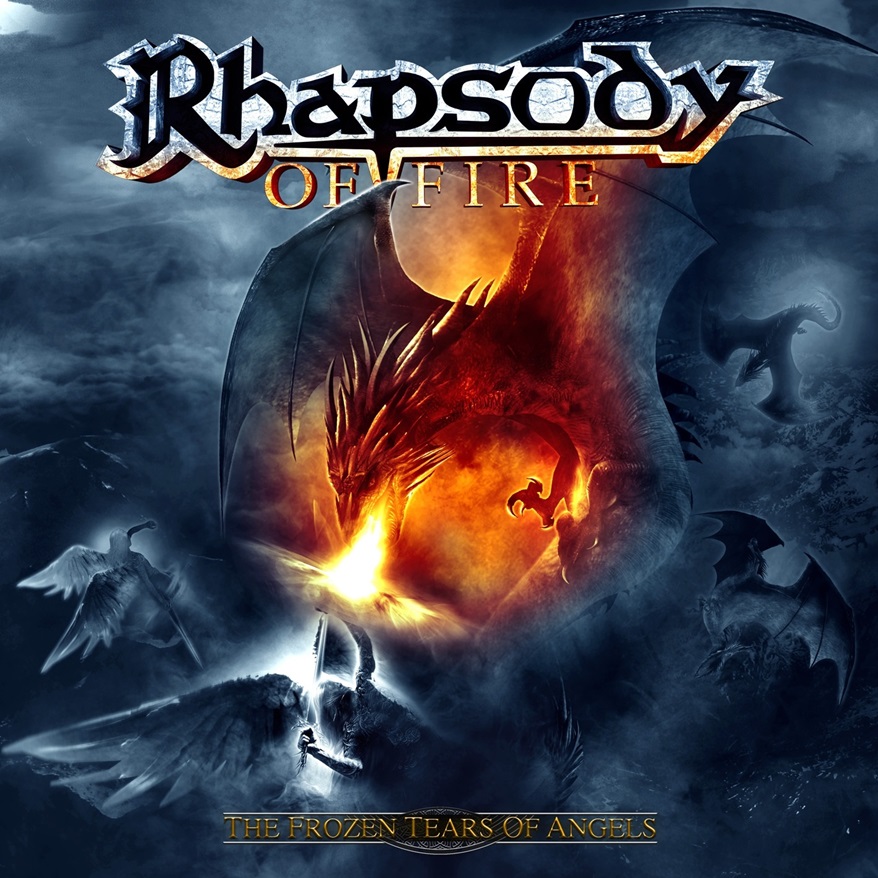 Rhapsody of Fire return with their seventh full length album chock full of neo-classical shred, operatic choirs and a bevy of well-done power metal tropes.
The Frozen Tears of Angels opens with a standard intro for the genre. The synth slowly builds the sound over a few minutes, and, since it's a Rhapsody album, actor Christopher Lee begins his narration.
"Sea of Fate" shreds in its introduction. Singer Fabio Lione pulls the song along with a building lyric that hits peaks and descends again through a stretched out melody. Later the guitar breaks down into a bouncy playful melody before moving into the synth solo. Each musician is on show here with their own solos. Its a proper opener to this kind of album, not the strongest musically, but flashy.
"Crystal Moonlight" reintroduces the symphonic elements teased in the intro track. Nice gothic elements abound in this song, yet the star is an extremely catchy chorus. "Moonlight / take my emotion now / moonlight / never forgive me." The emphasis on the first syllable of "moonlight" will have you humming this bastard in your head all day long.
"Reign of Terror" opens with a whisper then a tightly wound riff. This song introduces harsher vocals, which may be a turn off for traditional power metal fans, but they aren't that obtrusive and necessarily thematic. They compliment the super operatic lyrics. A choir backs up Lione, singing in Latin, while the harsh vocals tug and pull at the choir.
"Danza Di Fuoco E Ghiaccio" brings back Christopher Lee for narration. This one is the slow acoustic number genre fans are accustomed to; however, its fun because of the Italian sound Rhapsody brings to it. Additionally after the four minute mark, guitarist Luca Turilli breaks the mold with a very upbeat and playful solo. It sounds great and is very refreshing against the dark classical sound that inhabits the rest of the album.
One problem with the album is that most of the fast numbers have the same opening. The guitars shreds around the fret board waiting for the rhythm kicks in. "Raging Starfire" and "On the Way to Ainor" begin the same way, so you start to develop some fatigue with the style. Each song has its own flourishes, a harpsichord in "Starfire" and a female operatic voice in "Ainor." Unfortunately both songs would be stronger if Rhapsody had mixed up the formula.
Finally we arrive at the title track and the big 11 minute epic. The first two minutes are dedicated to narration, not Christopher Lee this time, and a nice building symphony in the background. The rhythms in this song are the strongest on the album. Around the three minute mark there is a really nice interplay between the riffing and the drums, something other songs could have used to mix things up a bit. The song doesn't really surprise much after that, but it also doesn't overstay its welcome.
The Frozen Tears of Angels has its strongest songs up front. It doesn't peter out; it simply doesn't mix it up enough later in the record. At this point Rhapsody fans probably know what they are getting, and this is a solid effort. Newcomers, interested in neo-classical shred
and symphonic power metal, could do much worse than checking out this album. Overall it is very well put together, but could stand a little more variety.
Verdict: Win [8/10]
http://www.rhapsodyoffire.com/
Wednesday, May 5, 2010
Astel Oscora - Eridan (2010)
 The barbed, yet tranquil, alien atmosphere of this album's cover art presents quite a mystery. Clearly from the logo one would guess the band's style at either death or black metal, and true enough it falls somewhere within the latter category. Yet I was actually quite taken aback by the graceful, hugely atmospheric sound this band creates, which slowly grows upon the listener with repeated listens. Astel Oscora are quite good at what they do, though they are playing in a genre that sadly does not get much attention these days, due to the polarizing effect of its top end contenders upon the metal populace.
By this I mean to say that Astel Oscora are a keyboard heavy black metal band whose focus is on the over-arching, picturesque landscape of the composition, in place of brutality or conjuring a pervading sense of evil within their rhythms. There is sorrow, truly, and there is beauty, but you will not find much in the realm of blasphemy, and if anything, this should separate them somewhat from the ministrations of their famous symphonic black metal peers like Dimmu Borgir, Old Man's Child or Cradle of Filth, beloved by some and hated (perhaps unfairly so) because of their easy target status as actual money makers. But I would urge the listener, even if he or she loathes the aforementioned acts, or symphonic black metal in general, to give Astel Oscora more than a passing glance. For this is a band of no obvious complexity, but a subtle sense for the dynamics of song that can both engage and haunt the beholden.
This is especially true of the more mesmerizing tracks like "Cherta Mirozdaniya (Feature of the Universe)", which rolls across a lush cosmic valley of slowly driving melodic chords and simpering synthesizers that use only simple patterns to ensnare. The vocals of Anubis are the fairly standard variety of well-produced black rasp, but they are used well, echoing where needed like a planetary body through the alien night. "Nimfa Kamney (Nymph of Stones)" is another quality track, with more intense drumming and arches of synthesizer that drift across the base of chords like stardust in a vacuum. I was also caught within the clutches of a "Sea of Malice", and the beautiful swelling of the flutes and chords in "Crimson World".
At times, I am reminded of the once great band Mental Home, or perhaps the older work of Nokturnal Mortum when they were far more heavy on the lush, gothic keyboards. But Astel Oscora is topically very different, their focus a mesh of folklore and philosophy, and the great skies across which only the unknown awaits us. There is nothing savage to this particular album, and in no way will it appeal to one whose ONLY ideal of black metal music is that laid upon him by Quorthon or Euronymous. This is more like a laid back cousin to Tidfall, Sirius or Alghazanth. The guitars are decent, but their priority does appear to be a complement to the lush, hazy atmospheres rather than the central instrument of the band. But it all works well in tandem, and this proves the band's ability for seeing the bigger picture. It's not entirely original, but I certainly enjoyed myself when listening, and Eridan is the type of effort which seems to increase in value with each successive exposure. A promising band, in both sadness and majesty.
Highlights: Feature of the Universe, Nymph of Stones, Sea of Malice, Crimson World
Verdict: Win [8/10]
http://www.myspace.com/asteloscora
Friday, April 2, 2010
Whispering Tears - Carmina Lacrimosa (2001)

Tuesday, January 19, 2010
Sigh - Scenes from Hell (2010)
 Scenes from Hell must seem like both a renewed revelation to fans who had desired an extension to the symphonic thrust of Hangman's Hymn, and a kick in the teeth to the eight people or so like myself who desired a return to the abstract and absurd sounds of Imaginary Sonicscape. In the end, of course, we both win, because what manifests here on Sigh's 8th full-length effort is a vision of Hangman's Hymn done proper, without the few filler tracks that album had and a far superior balance of the band's raw, blackened thrash/speed metal and the orchestral accompaniment. Where it's predecessor was a full-on blast of raging, racing hymnals to celebrate the raw human emotion and bestial spirit within, Scenes from Hell offers a more morose, ghastly picture within a wider range of tempos.
From the opening salvo of "Prelude to the Oracle", we are treated to a thick, bludgeoning guitar tone which works wonders alongside the orchestration, and the immediate connection in style towards the writing of Hangman's Hymn is evident, though the song seems to contain more subtle atmospheres that dawdle off against the backdrop while the multi-tracked vocals howl and hoot over the horns and swelling strings. The band's rawness is redeemed at around 2:20 when a skinny solo tone erupts over a rocking, 4 chord rhythm. "L'art de Mourir" starts cruelly with some old tech thrash riffing over some of Mirai's best vocals in years, and the change up before :40 creates some dense nightmarish volatility before the graceful symphony charges forward like a ballroom dance from the deepest levels of the inferno. "The Soul Grave" pummels through a jazzy organ strike and them some Wagnerian orchestration behind yet another forward momentum, in particular I like the ascending rhythms that transform Mirai's vocals into a squat, Japanese valkyrie.
"The Red Funeral" and "The Summer Funeral" offer two of the longer tracks on this album; the former lavished in a disturbing poetic intro alongside jarring pianos, before a quirky doomish segment which happily brings me back to the days of Scenario IV: Dread Dreams; the latter a bombastic funeral march, and while I really enjoyed some of the symphonic breaks and the overall atmosphere before the 2:00 point, there were actually a few times I found myself rather dulled by it. Not so for the frantic "Musica in Tempora Belli", which seethes in pounding footwork and descending guitar lines, with ballistic Mirai vox and a true attunement to the chaos inherent in some of their earlier works. The gothic, spoken word outro creates a fine bridge into the savage "Vanitas", which takes a few moments to escalate into a striking bridge with winding thrash rhythms that pounce like a leopard in the bush, and an operatic, symphonic punctuation. "Scenes from Hell" itself is the perfect little closer, an upbeat, rhythmic onslaught of the band's classic metal guitar melodies strung about a thundering folk rhythm that makes one want to laugh and duck at the same time.
One thing I enjoyed about Hangman's Hymn was the album's 'fun factor', that is, it made for a great time speeding around in your car, blaring tracks like "Me-Devil" and "Death With Dishonor". This record really follows suit, about 75% of the material is perfect for the same situation, but there is a slightly more noticeable edge to the writing which hearkens back to what I'd consider this band's 'golden age', 1997-2001. Still, even if this is not a masterpiece at the level of, say, Imaginary Sonicscape, it is dense and packed with Sigh's energetic discontent and creepy serial killer enthusiasm. It's an amazing effort which should have the legs to stand on until Mirai & company once again grace us with their diabolism.
Highlights: Prelude to the Oracle, L'art de Mourir, Musica in Tempora Belli, Vanitas, Scenes from Hell
Verdict: Epic win [9.25/10]
http://www.sighjapan.com/
Thursday, December 24, 2009
Hellveto - Kry (2009)
 Thank you ever so much, L.O.N., for I am only recently recovering from your previous album (and career height) Od południa na północ when you have so courteously sprung this upon us all. Granted, Kry is not quite so impressive as its recent sibling, but only because you feel like you've just heard it. If there is a difference with this album, it is that the orchestrations are more firmly entrenched in the driving black metal tones that propel them. I would argue that this has a tighter production value than any of Hellveto's previous work, but few of the songs here sound like more than a simplified reduction of Od południa na północ.
Kry is actually a brief effort, with only six songs at about 31 minutes, and its brevity makes it easily consumable. What I'd recommend is to queue it on your playlist right after its spiritual predecessor, if only to extend the duration you can be immersed in the scintillating symphonics and glorious thunder hymns. "Kry" descends like a crystal tear from the heavens, a monument to sadness and loss, while "Glod" blasts at a furious pace, with L.O.N. contributing some guttural vocals alongside his usual pagan rasp. "Powiedz Mi..." is both martial and beautiful, with sultry guitar lines that saunter across the march of the percussion. "Kraina Mgiel" shines with its collision of acoustics and symphonics before entering another forward black charge, momentum encapsulated in great sadness. "Rzucone na Wiatr" is the real highlight here, with a few rhythms that actually branch out into separate territory, and some good basslines that crawl about its depths. "Smak Zniewolenia" is a suitable effort to close the album, with some ringing guitars and tiny angel voices that glare at you through the mix.
Much of Kry plays out like outtakes from Hellveto's last effort, but this is not necessarily always a bad thing. Still, it somewhat lessens the value of this release. But the final two tracks here are more than enough for a fan of L.O.N. to digest, and there is nothing here that could qualify as bad. Just not as inspiring in full as the last one, and perhaps a little overkill.
Highlights: Rzucone na Wiatr, Smak Zniewolenia
Verdict: Win [7.5/10]
http://www.hellveto.com/
Tuesday, November 17, 2009
Sound Storm - Twilight Opera (2009)
 Italians Sound Storm have presented me with quite a dilemma, for I enjoy the meat of their symphonic sound. They manage to merge the synthesized orchestration very well alongside the riffs without really drowning them. However, this is another case where the band's own vocal ambitions are thrown a little overboard, leaving a bad taste in my ears while I try enjoy the underlying quality of the musical composition.
Filippo Arancio has a pretty good voice, when he's sticking to his guns and delivering a more aggressive middle range. Sure, there is his accent, plain as day, but it only adds character. They also use operatic vocal choirs, which sound angelic off in the background, and detract nothing from the music. But, every so often, you will hear this horrible feminine vocal erupt into the mix, for no reason. Point in case: "Bound to Hell" at :45, it sounds like a bad fairy tell...why wouldn't you want to edit these out when you were finishing up the record? Or mastering out? Other examples include the bridge of "The Nightmare", where more of the fem vox pop up to accent Arancio's barking in the bridge, and "Lord of the Blood" which gets a little awkward when Filippo delivers some of his screams. Little things like this nearly drew my attention to the edge of oblivion.
Otherwise, the band is strong, and tracks like "Falling Star" and "Always Be the Same" are great examples of the symphonic style, catchily written. Valerio Verderosa is truly impressive, his pianos are sweeping and complementary, and alone he can carry a track, as proven in the closer "Queen of the Ice". There's also a little teaser/intro with acoustic guitars called "Ecclesiae Lucidium" which is excellent. I feel that if Sound Storm would take this back to the studio, edit out a few of the annoying bits, they could return with one of the stronger symphonic/power metal albums I've heard in recent years. As is, I could recommend this only to die hard fans of other Italian bands like Rhapsody and Dark Moor.
Highlights: Falling Star, Always Be the Same, Ecclesiae Lucidium
Verdict: Indifference [6.5/10]
http://www.myspace.com/powerofsoundstorm
Saturday, November 14, 2009
Suffering Souls - Sadistic Goat Complex (2009)
 Suffering Souls is a symphonic black metal band out of Germany, and Sadistic Goat Complex is their third foray into creepy castles and haunted house environments. I kid, of course, the band is a little more serious than that, and this ultimately an enjoyable album, if not groundbreaking. To arrive at their sound, take the more playful black rasping and frenetic organ driven black metal of Dimmu Borgir, Gloomy Grim and perhaps a little Hangman's Hymn from Sigh, and lavish it all in even more use of the keyboards. The material has a tendency towards faster material, but the band does make use of breakdowns and the entire album is paced well.
Most bands today shy away from this style, or simply fail to deliver, but Suffering Souls is successful because they fully embrace all the cheesiness and the sadism required to pull it off. There are some fine songs on the album. Notable is the glorious, broken charge of "Cursed Gates of Heaven", which makes me want to don some awful corpse paint, a plastic barbarian sword from the local Dollar Store, and a cape and run around the woods near my neighborhood howling blasphemy until the cops pick me up. "Resurrected Messiah" is even better, with an incredibly catchy orchestration that sounds like a choir of angels cannibalizing one another, drunk with blood and the stained with the tears of heavens. The vocals of Lord Esgaroth are consistent, though as you listen to them impart their diabolic lyrics they are also quite funny (in a good way). Though the album reaches its high water...err...slaughter mark within the first few tracks, the rest does not disappoint. The bloody "Elegance & Perversion", the thundering "Art of Arrogance" and the closing anthem "Bloodstorm" are all pretty fetching, especially the orgasmic male whispers in the latter.
This is really the perfect album to recommend to fans of Covenant's Nexus Polaris, or Dimmu Borgir's recent material (though Suffering Souls are not as brutal or unrelenting). I was quite thoroughly entertained throughout, and some of the songs here are good enough that they would transcend my ribald fascination with the cheesier aspects of the lyrics and performance. I think a lot of people will hate this because they won't approach it in the proper mindset, but I am fortunate to not count myself among them. If you don't look down upon the few bands that still exercise this form of symphonic blackness, you should probably hear this.
Highlights: Cursed Gates of Heaven, Resurrected Messiah, Elegance & Perversion
Verdict: Win [8/10]
http://www.myspace.com/sufferingsouls6666
Tuesday, November 3, 2009
Hollenthon - Tyrants and Wraiths EP (2009)
 After the excellent Domvs Mvndi and the monumental With Vilest Worms to Dwell, Hollenthon had blown the ailing Therion out of the water and established itself as the new standard for dark, symphonic metal. While it was no jumping of the proverbial shark, year's Opus Magnum took a few spins to get into, and even then did not live up to the greatness of its predecessors. As if in response, Martin Shirenc and his stalwarts have released a 4-track EP with some great new tracks.
Phantom crows brave the skies
Fallen squires branding the cross
In the wake of rebellion Lucifer's morning star
By the light of the ages the damage is done
Burying the laughter the bright light of darkness is undone
None of the material on Tyrants and Wraiths is as memorable as an "Y Draig Goch", but certainly a small step beyond what was accomplished on Opus Magnum. The production is as bold and bombastic as ever, and most of the tracks are straightforward black/death metal with slight embellishes of symphonic grace and chorals: "Tyrants and Wraiths" is heavy and effective, but not as strident and immediate as "Innocent Sin" or the mystical "Deathly Dirges". Closing track "Of Hollow Men" is the longest track and boasts some excellent choir work, dark and thriving like a ritual about to fall at the next eclipse, a sacrifice.
With luck, this is a teaser for what's to come when Shirenc drops his next full-length album. It's only 4 tracks and 20 minutes, but individually these were more exciting than most of the tracks on the last album. The EP also features two live videos from the 2008 Graspop Metal Meeting in Belgium.
Verdict: Win [8/10] (fractured tombs and catacombs of woe)
http://www.hollenthon.com/