 Having now weathered the tragic passing of two of their most popular singers, Metal Church pressed on with the increasingly heavy and angry sound they had struck on the later Mike Howe records, once again flirting with a style we'd most associate with USPM, which they were both inspirational towards in their early years, and then ultimately found themselves embracing rather than watering down their sound as they often did throughout the 90s. Marc Lopes is brought on, another beast of a front man, who could embrace the style of David Wayne and Mike Howe quite well, while bringing his own spin on it. He'd already played on a bunch of the Ross the Boss records, which were impressive, and he slides right into the formula here; some have stated that this guy might be a little TOO over the top, and we'll get into that.
Congregation of Annihilation often sounds like Painkiller with David Wayne singing, and that can only be a good thing, brought out by a lot of the riffing patterns in tunes like opener "Another Judgement Day". They also do some heavier, chugging groove riffs to keep it a bit more modern and close to the belt, but for the most part this album has a lot of parallels to Priest of perhaps even some of the Halford solo stuff. Lopes doesn't sound quite the same as Rob, but he loves to inject a lot of one-line screams, so he's always bouncing back and forth between the mid-ranged, angrier pitch and then this shrill pitch which can often come across a little forced and tacky. That's not to say he isn't hitting the notes right, he is, if you've heard him with Ross then you know the guy has pipes, but it seems like he could have been managed better on a few of the tunes here so that that back & forth technique didn't feel so predictable; though to be fair, there are a couple screams he embeds in tunes like "Me the Nothing" which totally smash you. There's a natural feel to his voice that sometimes he's about to lose his breath or choke, but that's not always a bad thing. Otherwise, his middle range timbre is pretty awesome, certainly even trumping Howe in terms of viciousness, even if I don't quite like the voice as much as his predecessor.
The rest of the band is just handing out a beating throughout so much of this, whether it's on the more obvious power metal thumpers or the most atmospheric pieces like "Me the Nothing" which sound more like an amped up, muscular take on the Tony Martin Sabbath years or maybe some Dio solo stuff. There's a good balance of bluesy, heavy grooves and thick palm muted passages which might not feel like some of their most creative material, but certainly propulsive and powerful, especially with the meaty studio punch giving by the mix. The drums are hammering along, the bass beefy and the leads are also pretty good here, although usually brief and not terribly adventurous. Though it's not perfect, this one definitely continues what for me is the strongest streak of Metal Church since the first two albums, and if they can rein in the vocals just a fraction, maybe get more ambitious with the leads and have a few more of the slower, atmospheric tunes to balance out the raging, we might still hear some magnum opus with this very same lineup.
Verdict: Win [7.5/10]
https://metalchurchofficial.com/

Showing posts with label washington. Show all posts
Showing posts with label washington. Show all posts
Friday, March 8, 2024
Metal Church - Congregation of Annihilation (2023)

Thursday, March 7, 2019
Queensrÿche - The Verdict (2019)

I'd like this to an update of 1994's Promised Land, with that same concoction of progressive and groove metal, driving a little harder than the commercially colossal Empire, but just lacking the great hooks they could come up with back then, or the overall atmosphere and majesty of that album. This one feels as fat and modernly produced as their last album, only that clarity isn't being used to push their best material. Lots of those Eastern-flavored, Tate-like vocal lines populate tunes like "Light Years" or "Propaganda Fashion", driven by Rockenfield's loud drums, but I feel a lot of the groovier rhythm guitar riffs on this album are entirely too bland and predictable, not as thoughtful as what this band has been capable of in the past. The ballads are likewise forgettable, with glimmering acoustics that hearken back to "Silent Lucidity" but no potential at all to be that radio ready. "Dark Reverie" was one of the more solid tunes here, starting off soft and picking up into something enormous, but this too is plagued by a lack of strong ear-worm vocal lines. There are in truth a few choppy metal riffs throughout, but the guitars just don't pan out into interesting progressions except maybe on the track "Launder the Conscience" with its perky melody. Too many are banal, and the leads, while fittingly placed and appreciably emotional and gleaming, aren't enough to elevate the total tracks.
I feel that too much of this disc is left upon the shoulders of la Torre, and while the guy still sounds like the perfect replacement for his infamous predecessor, he's just not working alongside good enough riffs on this one to sell it. The production is massive, but too modernized and polished to feel natural at all, which is not the first time, but harder to overlook when you're not having fun with the tracks. Don't get me wrong, it's slightly better than the self-titled, and far superior to later Tate-era albums like Dedicated to Chaos, Operation: Mindcrime II or Q2K, but with so many other prog metal bands out there exploring such wide swaths of their styles and instruments, elder statesmen like these heavily depend on writing those enduring songs. While lightning struck for me unexpectedly in 2015, this one barely gets beyond a slight, static discharge. I'd honestly go a lot more towards the mid 80s metal direction, which dates you in a positive way, and ditch all the tidy 90s alt-rock groove licks that date you to your detriment, as they have almost all the Queensrÿche albums that so tediously employed them. They hit the target once in awhile, but too often fire off like blanks.
The Verdict: Indifference [6.5/10]
https://www.facebook.com/QueensrycheOfficial/
Friday, January 6, 2017
Substratum - Substratum (2016)

Substratum might not come across as science fiction as its cover artwork implies, but the band has a number of weapons at its disposal which bear mentioning. First, there's a real strength to the rhythm guitar riffing which isn't founded on aggression or technicality, but on nuance and detail and just enough of an adventurous bent that each tune feels like it's bringing something newer than the last. From the raw chugging mid-paced neckbrace riffs to the more melodic maneuvers, each feels fairly fleshed out, while leaving space for some busy and interesting, nimble Harris-like bass lines that don't simply clone the rhythm guitars 100%. Leads erupt with precision, but again we're not dealing with a band that tries to be too cocky or flashy, so they never bite off more than they can chew, and the solos are memorable enough on their own to stand up against the excellent, choppy riffing dispersed over the nine tracks. Add to this a solid, bright, crashing drum mix and the rather organic, not overly processed tone used for the guitars and you've got an album that feels like it could be played right in front of you in a studio session or on a stage.
But for many listeners, it's vocalist Amy Lee Carlson who will steal the show, possessed of a rich and bewitching timbre that is both varied and just edgy enough to sound like she means it. It's hard to pin it down exactly, because I can hear elements of everyone from James Rivera and Eric A.K. to Ann Boleyn and Debbie Gunn, and she's not afraid to mix up the bite or sustain with which she delivers each verse or chorus. I won't say they're all equally perfect lines, but that's another thing...she's just getting started here, like the quintet as a whole. There still seems plenty of room to grow, but this debut is already a formidable springboard from which to launch future ideas. A great balance of tempo and technique, Substratum is a debut disc which feels 'lived in', like a lot of care was placed into creating something genuine and not just a soulless doppelganger for the sounds that inspired it. That's not to say it's strikingly original or immortally catchy, but it's more than just checking off its necessary boxes, and more than enough to subscribe me to whatever they'll pursue next.
Verdict; Win [8/10]
https://www.facebook.com/substratumseattle/
Thursday, November 12, 2015
Queensrÿche - Condition Hüman (2015)

Let me clarify...this is not EXACTLY the Queensrÿche of old, at least not in terms of how the music itself is structured. There are traces of that, with a more muscular sculpt to the guitars and a recognition of the groove and hard rock influences which informed much of their material over the last few decades. Todd La Torre maintains his best Geoff Tate impersonation while simultaneously shoveling in his own higher range by the truckload. In fact, he's the shining beacon of this affair, with a number of memorable chorus hooks that rival the best that bands like Fates Warning, Ivanhoe, Angra and their peers have produced in a very long time. The music is a hybrid of their 80s style and a few more modernized, groovy prog metal elements that characterize the verse hooks in cuts like "Guardian" and "Toxic Remedy". Atmospheric dual harmonies and gleaming leads are cautiously applied where they are most useful, and there are even moody moments prog metal moments in cuts like "Arrow of Time" which hearken back to stuff like Fates Warning's Perfect Symmetry. But holding it all together is La Torre's propensity to just soar across the skyline of the rhythm guitar and capture the ear every time.
Scott Rockenfield might not seem the most technical drummer by today's standards, but he charges what might otherwise be some standard hard rock riffing with a lot of genuine momentum and energy that strips away the listener's immunity. Love his fills here even if they're nothing new, and I'd say his performance plays second fiddle only to La Torre, as much as I like the guitars. The bass lines were probably never the forte of the band, yet Jackson's tone here is just perfect for placing such a simple low end to the busier melodies constantly frothing off the imaginations of Wilton and Lundgren. But what's even more impressive is just how damn well paced this album is...it remains fairly weighted throughout, if not with the meat of the riffs than with the emotional impact of choruses in slower, more measured tunes like "Selfish Lives" and the beautiful "Bulletproof". No cheesy or weak ballads, included, even the record's softest cut "Just Us" is firm and memorable. Production is pristine, even elegant. Musicianship restrained to peak effectiveness. A few rungs below perfection, perhaps, but this is just such a joy to listen through, and for a good number of spins it was improving with each successive exposure. Pure class, and with this record, they can finally take back their seats near the head. Hell, they could teach it.
Verdict: Win [8.75/10] (welcome to a generation)
https://www.facebook.com/queensrycheofficial
Tuesday, November 10, 2015
Operation: Mindcrime - The Key (2015)

Of course, this is not the first time that he and his former co-conspirators have gone back to the conceptual/thematic pseudo-universe of Mindcrime, since we got the abortion of a sequel already in 2006. Could The Key possibly be that bad? Surprisingly, it isn't. It's not as weak as American Soldier, either, or Tate's previous band album with the his own appropriation of the Queensrÿche name. If we were to pretend that none of the clusterfuck of recent times had ever happened, it would seem like a somewhat subdued version of the mediocrity he was churning out with his old band through most of the 90s and beyond. Progressive rock, largely, with a few of those same tendencies towards alt rock which seems no less irrelevant now than when they thought it would be cool for an album like Q2K or Hear in the Now Frontier. Bland, noncommittal, and severely lacking in the level of vocal hooks Tate and friends banked heavily on during an age when Operation: Mindcrime and Empire were such inescapable success stories. Aside from a few acceptable leads and nerdy synthesizer flights, the other musicians here have been roped into such an underwhelming set of compositions that one wonders if they're suffering from some kind of collective suspended animation. To say there is not a single lick on this album heavier than the Stone Temple Pilots is one thing, but what crushes me is that a little more speed aggression could have really rounded this thing out to a tolerable level.
Because as it stands, The Key is not actually not complete shit. Just a half-shit. A safe, sedate selection of half formed riffs and ideas that occasionally jive with the pleasure receptors of the ear when they rely on their most unusual, brief melodic phrasings or grooves. Little ventured, littler gained, weaving a conceptual narrative that nobody is honestly going to care about using voice clips, and then attempting to emotionally drive those points home. You wouldn't be able to tell these were a seasoned array of musicians, because the music is just not deserving of their best effort, nor the huge slew of guest musicians ranging from Chris Poland and K. K. Downing to Ty Tabor and Paul Bostaph. It never matters, because they all sink into these simple songs like so much boring wallpaper. The heaviest the record gets is when it grooves out a little with a slightly dreary, doomed feel as in the closer "The Fall", but even then there is a heavy reliance on the atmosphere provided by synths, so when it cuts into those threadbare chugging rhythms, the most 'prog metal' point throughout the entire experience, it is far too little and way too late.
I could forgive some of this if Geoff goddamn Tate would strain himself a little harder in the higher pitch...but he rarely ever escapes his middle range and frankly that's been the case for so long that I'd have my doubts if I hadn't seen him pull off some older material live. It seems a crying shame to have such an iconic register and then fail to use it to its fullest, but The Key is all about rainy day escapes and dramatic, predictable chord progressions that stir an almost cinematic quality, only for a really boring movie. You'll get streaks of world music and echoes of prog rock from 30 years ago, a 'maturity' that betrays any possibility for genuine excitement, but seems serviceable for background music if you've run out of Rush albums and your co-workers are exhausted with Geddy Lee anyway, so you'd spin this and nobody would pay attention whatsoever but they also wouldn't call Security. The mix is fine, and none of the tunes are truly offensive except for the broken grooves of "The Stranger", which seem like a lame callback to Geoff Tate's laughable 'streetness' on some of the prior albums. It doesn't work any better here, but this is the sorest thumb on The Key. In the end, while this record is a step up from its predecessor, it lurks just below banality, and it still seems such a long distance from mattering.
Verdict: Fail [4.5/10]
http://operationmindcrime.com/
Thursday, September 5, 2013
Slutvomit - Swarming Darkness (2013)

Swarming Darkness has pretty much everything I need in my dirty vest-slinging speed-death thrashing black madness. Nasty and lecherous vocals with a nice resonant echo that recollects the proto-Teutonic hostility of bands like Kreator and Sodom. Fast riffing patterns that, while obviously reformed and rearranged from an array of classic records circa Slayer, Possessed, etc, still come across as driven and incendiary, with no shortage of effort in their execution. Warped leads that add an otherworldly, underworldly aesthetic of flair to the more workmanlike speed of the rhythm tracks, and take the whole experience to a level above the mere median of metallic efficiency. Drumming consistency that sounds like the guy's seat is on fire, with plenty of kick strength, fills and yet still a cohesion to the classic, punishing styles of a Hoglan or Lombardo. And last but not least, a clear but not obscene polished production which provides for the little inconsistencies or flaws that give a metal record some actual character. Swarming Darkness did not disappoint me on any of these levels, and though much of the content was already available on their previous demo and EP, its all splayed out here with a level production and impish, charismatic glee.
To be honest, much of the album plays out with an uncomfortable level of sameness that might have been better served with a broader array of riffing variation, but that's not to say that they don't insert a few more mid-paced breakdowns. Some of these instances (like in the titular opening cut itself) definitely seem to take their cues rather closely from classic cuts found on records like Kreator's Pleasure to Kill, and quite a number of tunes have similar speed-picked patterns that vary only in a few chord selections or note intervals. The song titles themselves seem like they've just been paraphrased from their influences ("Bombing the Chapel", etc) and the respective songs aesthetically close to those influences, but it's not like this is a niche brimming with originality...pretty much all of the international acts in this category are recycling Slayer, Kreator, Destruction, Possessed, Bathory and their ilk into hellish breaths of inspiration, and mileage will vary on how they stick the evolved leads, choruses, and rhythm guitars into the listener's memory. I found that Slutvomit has just enough of this to remain intense throughout, in particular on the more substantial tracks like "Morbid Priest (of Hell)" or "Harbinger of Doom" where they really go off the hinges and burn the audience to cinders. Swarming Darkness is perhaps not the equal of Forbidden World, or Aura Noir, or Germany's Nocturnal, but its entertaining enough to start a drunken riot of horn throwing and bottle smashing on whatever native plane of the Abyss you call home. Hail...*hiccup* Satan!
Verdict: Win [7.25/10]
http://www.myspace.com/northwestmetalofdeath
Tuesday, June 25, 2013
Geoff Tate's Queensrÿche - Frequency Unknown (2013)

I'm going to ignore getting into the absolutely idiotic decisions this man has made in recent times, because Frequency Unknown fails entirely on its own demerits, without any historical context required. It's more or less a revolving door of guest solos, vocals and other session performances that ultimately ends up a fairly weak production with a slew of forgettable songs that aren't about to change anyone's mind that this guy has earned himself the shorter straw. Surprisingly, while Tate has given the impression on numerous occasions about how he has moved on from the metallic years of his alma mater, he opens this with a pretty straight forward muted riffing piece in "Cold", as laconic and lazy as it ultimately proves. Almost as if he wanted to prove to the world that he could still rock hard, but sadly it devolves into a standard rock chorus no more poignant or interesting than much of what he's released over the past decade, and not even near the level of numbers like "I Am I" or "Empire" when his former band had started to wane, but still held on to that edge of relevance through strong record sales and loyalist fans. It's not the only instance, either, since you've got the tune "Slave" with its brief spurts of speed licks and groove metal, and then some truly awful groove metal in the track "Running Backwards".
But largely, Frequency Unknown drifts around in context from textural melodic rockers to other bland commodities that probably wouldn't break regulation-rock radio-space even in a time when they might consider supporting a washout pariah from a once-famous metal band. Riffs are abysmal, never standing out on their own and at best just vomit-soaked rehashes of tired ideas with no fire lit under their asses. Organs and other instruments are used to dress up the atmosphere, and the bass guitar bumps along with a very deep but digitized feel, but neither area is particularly compelling. Most importantly, the production of the album feels as if its been glued together from a patchwork of piecemeal recording sessions he had to put together just to accommodate all his guests, who hail from everywhere: Rudy and Robert Sarzo, K. K. Downing, Ty Tabor, Brad Gillis, hell even Chris Poland shows up for a lead on "The Weight of the World". Yet the power chords sound pretty unconvincing, the shuffle of the palm mutes mediocre, and the drama of power ballads ("Weight"... again) overwrought and having no definable payoff in terms of melody or structure. With different people playing in different songs, Tate has crippled any possibility of consistency, except consistently sucking.
I could only suffer through a lot of the numbers here due to my own self-constructed obligation to give the records I cover a minimum number of cycles to properly feel them out, and even then I was compelled to cheat. What's even worse are the gimped re-recordings of tunes from Operation: Mindcrime and Empire. There are four of these bonus tracks, and they utterly fucking blow, devoid of the solidarity and formative power of their original incarnations. I mean, listen to that woeful guitar tone on "Empire"? What the shit is wrong with you people? How could, in any ordered and rational, cold universe, ANYONE think that this was a good idea? Did you not listen to these things before releasing the album, and decide to yourself "yeah, people are going to have enough of a problem with the crappy new originals, we'd better leave these off". It's this sort of misinformed decision making process that contributes to how rushed and pathetic Frequency Unknown feels as a whole, and I really hope Tate gets the message when no one inevitably gives a shit...
But what of Tate? How has his voice fared through this new material? I'd consider this the equivalent of a live performance with 'the actual Queensrÿche' over these last 10 years. He still has his range, a few chops, but he's obviously not as seamless and ambitious as his younger self. That the vocals aren't the worst component of this record is to his credit, but no way in Hell are they strong enough to carry such a forgettable selection of songs, and even in the lead-off single "Cold" the chorus seems to evade my mind after mere seconds. I mean, I'm not going to completely toot the horn of the Todde La Torre-fronted, eponymous new album from Tate's former business partners, but compared to this it seems positively inspirational. Goddamn, Mr. Tate, if you ultimately wanted a clean break from this whole situation, you should have put out a Timbaland- produced pop album (like your fellow Washingtonian crooner Chris Cornell) or gotten a strong songwriter to come in and build some strong, supporting hard rock for your vocal assets... Frequency Unknown doesn't cut it. Seek help, go and listen to your 80s output, and plead for an inevitable reunion tour/album. Or at least pull a Halford Resurrection. With this sorry package/entourage, you've only flipped yourself off.
Verdict: Fail [2.5/10]
http://www.queensryche.com/
Queensrÿche - Queensrÿche (2013)

Would Queensrÿche, at long last, release the musical (if not conceptual) successor to Mindcrime that I had long fantasized and drooled over in some alternate dream-reality? The pieces were in place: the band had admitted their desire to return to the material that once excited their fanbase in the 80s. The new singer could more or less deliver a close impression of his forebear. Fuck, they even signed to Century Media, a label that (despite many missteps) still holds a fraction more 'metal cred' than the majors. And, last but not least, while they never abandoned 'the icon', here it returns to the forefront of attention with a clearly rusted, old metallic sheen to it that simply reeks of some nostalgic retrogression 'to form'. So, have they actually succeeded in sticking it to their old main man and launching the monumental comeback so many have craved? Well, yes and no. I'd be a fool to deny that this was better than anything they've put out since Promised Land, and it certainly arching back towards the metallic angles dominant on the first three records, but apart from its general sense of competence and an earnest attempt at sinking some hooks into a long-jaded audience, I can't say that it's a substantial triumph when acts like Angra and Pagan's Mind have already flipped its script and widened this medium's parameters to a breadth that the Washington rockers can probably never reach, hand in hand, with all their collective arms spread to the maximum.
What this record is, is a collection of glossy, polished, out-of-date progressive rock songs which do once in a while hint at some greater heaviness, but even then usually have to rely on more of a light grooving texture with a figment of crunchy tone than the trad metal leanings of The Warning. In other words, it's more or less a Promised Land or Tribe 2.0, including even a few of the Eastern rhythmic influences, where most of the meager riffing progressions take such a back seat to a showcasing of La Torre's range and ability that they'd might as well relocate to several vehicles behind them on the freeway. Granted, they hadn't really been a 'riff first' band since the Mindcrime years, but the guitars fused so atmospherically to Tate's arrangements that they were brilliant anyway. Oh, there's metal here, with tracks like "Redemption" and "Fallout" offering some 18-wheeler aggression and grooviness, but by this point we've already heard these sorts of riffs so many times in even harder edged glam rock that I just never found myself engaged. Ultimately, if you're expecting some sort of mind warping transition using the 80s as stock, or a progressive metal gem at all, then this is not the droid you're looking for. If you want an album that's more or less the same thing they've been peddling for the past 20+ years, then this is that, with a little more bite due to the new singer's conviction.
Now, since it's the question on everyone's tongue: yes, Todd La Torre is a healthy replacement for Tate, in part because his inflection is so similar (allowing him to 'slide' right into the earlier material), and in part because he's got a power to his lungs which his predecessor no longer seems fully capable of, but can also pull off the dramatic, sustained mid-ranged huskiness Tate had brought in the late 80s. Admittedly, Geoff is still a little silkier and smoother in delivery, but with decades of experience, he should be. La Torre pulls off a number of ace choruses, like in the opening rocker "Where Dreams Go to Die", and he's got a nice sustain when he layers on the higher notes, similar to Nils K. Rue (Pagan's Mind). But let's face it, he's really not that unique in a field that has already given us a Tate, a Midnight, a Tom Mallicoat (Lethal) or even a Michael Kiske. It's been done, and so La Torre is relegated more to 'holding the line' than improving or expanding upon it. It'd be a stretch to say that in a lot of the verses and a few of the choruses, he was doing anything more than going through the motions, because the supporting music is just not that inspirational...but I'd still green light his artistic visa to remain in the Ryche-ranks for years to come, until those group therapy sessions and inevitable reunion. Hey, Dickinson, Halford and Osbourne returned, so it's highly unlikely that Geoff Tate won't.
Otherwise, it's the same band we've been hearing for years. Eddie Jackson returns to the fat, propulsive bass tones here that occupy a great deal of space, while Rockenfield continues to hit hard through a selection of basic, but tribally-injected rock fills that lend that larger than life quality to the production. Harder rhythms have the requisite crunch, but there are still a lot of classic clean, chorused, ringing, sparkling strings that signal a lack of total commitment to going balls out, which frankly I would not have minded. They haven't gone heavily synthesizer based, with only a tangential keyboard presence, and there's still a lot more of a Rush lineage than Yes, but the atmospheres seemed to fade from my memory almost as soon as I'd heard them, a trait also typical of their last 7-8 records. The production is really loud and even, but even though I've no idea what software and equipment they actually used in-studio, it has a pretty 'pro tools' feel, if that makes any sense. Punch, volume, brightness and lots of space for seamless overdubs, but maybe a bit too tidy. I read that Wilton used a lot of his old amps to achieve the 80s/90s tones, but I certainly felt like this was an album recorded in various places at various dates, which it apparently was.
The short length of the disc (about 35 minutes) might shock some people, yet I really don't mind it. The intro ("X 2") and ambient interlude ("Midnight Lullaby") are entirely throwaway, but I realize some people even thought that way about the story-filler bits on Mindcrime. I guess I just wish that the 33 minutes of rock were far better written and prone to delivering stronger riffs and choruses. As it stands, I'm pretty lukewarm on Queensrÿche. It proves to me that, in a less diminishing capacity, the boys might still 'have it', but if so they are just not spewing it all over us this time around. A solid effort, and practically a masterpiece when compared to tripe like Q2K or Operation: Mindcrime II, but my hopes of this creating the magic I used to feel in their music of the mid 80s were dashed against the rocks in just the first few songs, and then never restored through the scant remainder of new material. Not bad, but with luck, in further warming up to this flexible and capable new frontman in their midst, they'll also challenge themselves to write and perform at the level they've long abandoned. This material is basically like they're toe-testing the jacuzzi's temperature. Dive right the fuck in. Don't be afraid to beat the shit out of us, Queensrÿche. We deserve it.
Verdict: Indifference [6.25/10]
http://queensrycheofficial.com/intro.cfm
Thursday, June 20, 2013
Alice in Chains - Jar of Flies EP (1993)
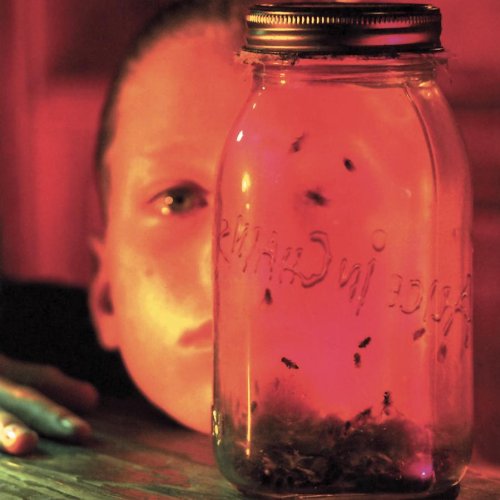 Alice in Chain's second EP, Jar of Flies, is an enigma in my personal hierarchy of the band's discography, in that while it is far from their heaviest work, it is unquestionably my favourite. There are a myriad of personal reasons that inform this declaration (young-adult angst, mostly); but its an impeccable album in its own regard, with brilliant songwriting (almost) all the way through. There's something remarkably pure about this album, possibly thanks to the circumstances of its recordings (the band supposedly wrote and recorded the entire EP in a week, while living in the studio after being evicted from their shared apartment after the Dirt tour).
Much like Sap, the songs feel more personal here; less about the wallowing in the mud and more about wondering where you are, and where life's taking you. To a young nineteen-year-old who was going through the aforementioned angst (not looking for sympathy, honest), a lot of this album rang true on a few levels. The stripped-down arrangements, dominated by acoustic guitars, evoke a more reflective side of a band that seemed to have a lot to reflect on, not the least of which being newfound critical acclaim after the release of Dirt.
The band isn't afraid to experiment beyond the acoustic arrangements here, either. "Rotten Apple" showcases one of guitarist Jerry Cantrell's best solos, played through a talk-box; "I Stay Away" and "Whale & Wasp" both feature strings, with the latter having the honour of being the band's only instrumental piece. All the songs here are unique and manage to differentiate themselves in bold ways, which is all the more remarkable with the EP being - for all intents and purposes - an impromptu jam session. The level of craft on display here is incredible, and its made even more so when considering it was done such a short time. The fact that something so beautiful and completely integral to a band's ouevre as a song like "Nutshell" appears here is astounding.
"No Excuses" is arguably the centrepiece of the EP's concentrated genius. All four members are at their A-game here, with an incredible rhythm section consisting of Sean Kinney and Mike Inez (replacing the late Mike Starr on bass) supporting Cantrell and late vocalist's Layne Staley's impeccable harmonies. Once again, the guitar is nothing to scoff at, with Cantrell's playing absolutely shimmering during the verse, all building to an incredibly memorable solo. The song is more upbeat than AiC has ever sounded before and since then, a stark contrast with the remainder of the disc yet never feeling out of place.
The same can't be said about my only real slight against the album, that being the final track, "Swing On This". A bluesy track ushered in with a walking bass line, there's nothing inherently bad about it. In fact, its just the kind of off-kilter track, with a chorus that reminds me a bit of Dirt's "Hate to Feel", that really characterized some of AiC's deeper cuts. That said, I feel like it doesn't flow very organically from the rest of the album. The first six songs form such a cohesive picture that "Swing On This" comes off as jarring. Some will certainly disagree, but for myself, its the only reason why I would refrain from calling Jar of Flies perfect.
Last song woes aside, however, Jar of Flies remains an introspective, honest, and unpretentious work from a band that had worldwide acclaim at its fingertips. To take the time away from superstardom and and bare it all on a work so genuine is nothing short of remarkable, and I recommend everyone give it a listen. No excuses.
Verdict: Epic Win [9.5/10] (Take me home)
http://aliceinchains.com
Thursday, August 30, 2012
Queensrÿche - Operation: Mindcrime II (2006)

Last weeks theoretical minutes from the meeting of a band that next to no one had cared about in a long time: Our star is long past rising, folks. In fact it's sinking faster than a ten ton turd in a swimming pool. How do we turn this around? Well, what's our best album? Empire, dude! *the band laughs, the management smirks* Well, then, Operation: Mindcrime, the rest of the members agreed in unison. Yeah, yeah, I dig it, claims the singer, stroking his chin while giving his best Sartre impersonation. I'm not really into that metal music bag anymore, but the kids seem to want it. I've a few ideas. We can make it even more 'street' than the original, and use real orchestration than just keyboards. We've got enough in the budget. But it can't sound like Tribe, say the rest. We need more metal elements again, like the old days. Yes, yes, the BRAND will rise again. We'll get some TV spots, and merchandise rolling pronto...lighters, headbands, and maybe even Dr. X tees. But, Geoff, you know we don't have Chris in the band now, right? Ah, shit, well let's just scrape it together, man. Pull it together. This is the Jesus Christ of undertakings. We are saved. Saved!
All supposition aside, though, it was really inevitable. I wouldn't have been surprised to discover that the band had thoughts of a Mindcrime II since shortly after the original. I'm sure they received countless fan requests for that very thing down through the years, the only question is why it didn't happen earlier? Very simply, because this band was more concerned with tapping into the commercial success of the original's followup, Empire, and took this imperative far beyond the reasonable, leaving us with a string of ineffectual refuse like Hear in the Now Frontier and Q2K. To their credit, the Queensrÿche of the 21st century does their utmost to make this a heavier effort than the 4-5 leading up to it. That's about as far as the album's successes take it: songs like "Re-arrange You", "I'm American" manage to evince more aggression than anything I can recall of Tribe or Q2K. The incorporation of the symphony also feels natural with the loud, abrasive production of the album, not unlike Judas Priest's weakly Nostradamus. Queensrÿche went big for this, pulling out all the stops, and attempting to conjure the grandeur they'd lacked for almost two decades.
Unfortunately, no one reminded the band that this effort would be entirely misspent without the great songs that defined the first Mindcrime, and what we've got is a fraction of mediocre rhythms buried in a hulking heap of underdeveloped feces. The riffs suck throughout, juvenile note progressions you'd hear from any rehearsal room anywhere in America where some axeslinger is just fucking around (not even planning to use them). The muddied guitar tone here lacks gravity and power beyond the visceral, and the band keep a lot of their alt rock and grunge influences patterns in play, a handful of tracks like "A Junkie's Blues" reminding me once more of something left on the cutting floor by the Stone Temple Pilots. Really, Mindcrime II seems to have no precise idea of what it wants to be. Some songs want to be rock, some metal, some rock opera ballads cashing in on the "Silent Lucidity" idea but falling well shy of that song's consistent catchiness. For example, the finale/duet "All the Promises", with Tate and Moore playing off one another in their respective characters, is laughable tripe; "If I Could Change It All" trying its hand at the spacious 80s Pink Floyd aesthetic (which Queensrÿche had used on the prior albums) and conjuring boring drama.
The whole album lacks the poignancy and domineering melody of the original, and instead feels like a group of festive old farts leaping around to a selection of raucous distorted rock riffs. Tate can still scream, he proves this in a few of the pieces like "Re-arrange You", or his duet with Dio in "The Chase", which is sadly supported by some of the most mediocre guitars on the record, but in general he seems like he's putting too much effect on his tracks to make up for a slightly diminished power to his delivery ("Signs Say Go", for example). That seamless clarity and pitch from Rage for Order and Mindcrime has unraveled, and beyond that, the melodies in his lines have little impact. There isn't a single chorus on Mindcrime II that I can say captured me whatsoever, never mind with the surge of urgency and emotion in a "Speak" or "Eyes of a Stranger". A lot of backup shouts are used in tracks like "Murderer?" to make up for the lack of a hook, but they just sound silly rather than the menace exuding from a lot of the tough guy gang core.
A few of the leads and melodies show a modicum of skill and harmony ("I'm American", "The Hands"), but they don't really jive with the rest of their surrounding tracks, and stand out like sore thumbs. Supposedly some of the guitars were re-tracked at the last minute by one of the assistant engineers on the records, so it's unclear exactly who is playing what throughout, and Stone and Wilton were clearly under utilized. I've also read that Scott Rockenfield was absent here. Regardless, whatever person is drumming here is hitting with the about the same strength under such a mire of creativity, but I actually didn't enjoy how loud he was compared to the guitars on much of the album. Jackson has some freedom here, and he does his best to ground the punch of the guitars and the dominance of the vocals, but really, there's no room for him to vastly improve on such a cruddy selection of note progressions.
Lyrically, though the first Mindcrime wasn't exactly poetry in motion, this still seems a step down, a tired series of cliches that one can experience in just about any rock or pop song. Again, a listener can displace most of the individual tracks from the concept and appreciate them for any personal relevance, but there were no clever phrases here that caught my attention. The story itself takes place nearly almost two decades after the first (equivocal with the gap between album releases), and it deals with the primary perspective character Nikki getting his revenge on Dr. X and struggling through a downward spiral that leads to conversation's with Mary's ghost and all this other typical nonsense. It never needed a sequel, the story as it plays out is all too predictable, and it might have been better just to leave the original alone, with a more ambiguous ending. Even if the sequel was fucking Faust-level Goethe quality, though, the music is middling garbage that did not deserve a release under this banner.
Operation: Mindcrime II is terrible, and even if I could muster no expectations towards it due to the band's record of mediocrity post-1994, it still arrived as a great disappointment. Because, really, that's that. This part of the saga is canonized, and it's never going away, like the memory of putting on vomit-soaked socks one hungover morning. It will stink forever and it will sting forever.
Verdict: Fail [2.25/10] (reasons are damned)
http://www.facebook.com/QueensrycheOfficial
Queensrÿche - Operation: Mindcrime (1988)

However, despite its massive commercial success, and the endless landfill of praise and detraction that has been laid upon it through the ensuing decades, Operation: Mindcrime is not a record without some baggage, and this I would largely attest to conflicting perceptions of its conceptual merit. Queensrÿche's third full-length was not its first with a unified theme, but the first to really splay it out into a narrative rock opera involving brainwashing, political assassination, and a clear violation of doctor-patient confidence. The band hired on friends and actors to perform brief character roles, and they set it up with a number of briefer story vignettes to round out the metal tracks. For some listeners, this is a huge hurdle, but personally I rather enjoyed each of these pieces, not only for their value to the central theme, but also because of the clinical atmosphere and sense of gravity they lend to the story. They're also musical for the most part, with but one or two exceptions; for instance, "Anarchy-X" is a 90 second anthem with brazen guitars, dual leads and warlike drumming cadence that fully fits with the lengthier cuts. It's not like Pestilence's Testimony of the Ancients, where the interludes seem to be incorporated just for the sheer whim of experimentation. No, these pieces actually seem to belong to their surroundings.
Of course, one of the joys of this album is that it can actually be listened to in two ways: straight through the story sequentially, or by skipping the central narrative and appreciating each of its regular length tracks for their individual values. Some might contain snippets of samples or story, but the lyrics behind a tune like "Eyes of a Stranger", "The Needle Lies", "I Don't Believe In Love" could hold some relevance for a listener whether or not he/she gives two shits about Sister Mary, Father William, or Dr. X. Nor would it take a high intellect to be able to make an 'abstraction' out of "Suite Sister Mary" or the title track. Much has been said of how 'genius' or 'brilliant' the album's concept was. I myself was incessantly exposed to such praise in high school to the point that I couldn't stand it, joyous that, for once, the hairspray-drugged Poison and Bon Jovi crowd, and the male students chasing their tails, had invested themselves in an album of quality. But let's be honest: Mindcrime's story is an average psychological thriller at best. It's not a Gravity's Rainbow, or Foucault's fucking Pendulum. It doesn't have the same pulse pounding action and intrigue as Robert Ludlum's Bourne series. The twists and turns are fairly obvious, and the lyrical diatribe used to convey the tale is hardly complex or inventive prose. That said, though, so what? Compared to most of the driven being spewed upon the radio to glam fans, or the same half dozen issues being beaten to the floor by the more serious metal acts of the 80s, Operation: Mindcrime was indeed something special. Different.
What's more, the music itself is superb. Bearing aside the standalone intro and interludes, which I've discussed above, the level of composition on this album is far beyond that of its predecessors, and needless to say any of the miserable albums since. Tate and DeGarmo, Wilton, Jackson and Rockenfield create this monstrous admixture of melody, harmony, atmosphere, power and drama through a riff-set that even for its day would hardly be considered complicated or technical, and yet its impact is timeless. After a few cycles of the ten 'core' tracks, I have never been able to get them out of my head. Aesthetically, this is an album which walks the line between the mainstream hard rock sounds of its day and a slightly more progressive metal inclination. The writing is similar to Rage for Order, but with an exponentially superior polish and level of refinement. I mean, for fuck's sake, I like every single (complete) song on this album more than Rage for Order in TOTAL, and sitting here a quarter century after its release I can't hear a single flake of rust on this whole spectacle. Sure, you could 'date' this to the 80s, but three decades later I find it all too rare that I pick up any album which covers so many bases as this.
All five of the musicians deserve top honors for this feat, but I suppose, to start at the top: Geoff Tate. There is a reason this man built a legacy which brought him in firing range of legends like a Halford or Dickinson. Some consider the guy the greatest vocalist in the field, and you're listening to exactly why. His timbre is impeccable. His range, perhaps not limitless, but so fully utilized that he's the equivalent of a living siren. Had the sailors of antiquity heard this voice through the maritime mists, and changed course to find a naked, German-born man calling them to their deaths from a rocky outcropping, they would have questioned their own sexuality before hull breach and drowning. Higher pitched, inspirational and unforgettable pre-chorus and chorus sequences litter this record like lemmings a cliff-side, and he structures every individual line with skill and quality. Where he hits those highs in "Speak", or "Revolution Calling", or the eternally pleasing chorus to "Eyes of a Stranger", all 6'2", 220 lbs of burly, bald-headed, linebacker-like, (nearly) middle-aged me wants to break down into tears; partly because of the sheer level of emotion inherent in the melodies, and partly because I know I could never sing that beautifully in my entire life, with or without computerized assistance...Tate even excels when it comes to adding a playful or maniacal component to the verses, and his lower range is cautionary, moody and eloquent where it appears.
Yet the chords, leads, and rhythm section support his crystalline delivery brick by brick. DeGarmo and Wilton weave the sorts of gracious, burning melodies over the lattice of backing guitars that I so loved about a song like the Scorpions' "No One Like You". I must have spent hours in my formative years with the instrument scratching out the chorus melody to "The Mission", or the Maiden-esque, opening volley of "Speak" which is probably better than anything those same Brits wrote at their own peak. But the MVP award here might go to the rhythm guitars, which are muscular and spacious, whether chugging or hanging on an open chord. DeGarmo earned a paycheck for the next century with these riffs. If I were to dissect all of the album's central songs, or even "Anarchy-X" measure for measure, remove the drums and bass, the beautiful vocals, the subtle but effective synthesizers, each of the guitar progressions would be enjoyable by its lonesome. That proves just how well-composed this is, and in fact I can barely understand how they were able to arrive at such impressive riffs and vocal lines individually, both so glorious in tandem. The leads, too, are all wonderful, though they've got their work cut out for them to even ATTEMPT to live up to the other riffs and choruses that lead into them.
Jackson and Rockenfield should not evade mention, either, for while the ears might remain affixed to Tate and the guitar harmonies throughout Mindcrime, their steady pummeling is part of the appeal. Jackson's tone is punchy and plodding, especially for a lot of the mid-paced numbers where he's repeated such simple note sequences below the workmanlike gait of the guitars (reference "Breaking the Silence" or "I Don't Believe in Love" for a prime example). Rockenfield doesn't overdo anything here, as usual he gives a mightier than typical approximation of the standard rock beat, but he earns his signature steel cage, and those snare hits really drive home the emotional wait of each mournful chord sequence and palm muted mugging. Nothing too technical, which would feel arbitrary in the universal grasp of these songs, but it sounds like it must have been quite fun to lay these out. James Barton and the rest of the engineers did a knockout job of fusing the varied elements together, none ever too loud that they drown out another, despite the 80s proclivity for setting the vocals so high in the mix. Like the satisfaction of finishing a puzzle, everything seems to snap into place, even the less pronounced components like airy synthesizers and the vocal acting used for the intros/interludes. I still have my original CD copy, and it sounds unbelievable cranked up.
In terms of individual songs, there are no personal favorites, or to be more accurate, they are ALL favorites. I could not choose one over another, since the consistency of quality is omnipresent. Even comparing two of the most 'contrasted' neighbors on the playlist, the 11 minute epic "Suite Sister Mary" with its ominous, operatic choirs, overcast clean guitars, and varied, almost frightening arrangement; to the succinct power metal pummeling of "The Needle Lies", there is no lapse in fulfillment. I suppose the songs that were made singles are sensible, like the soul searing, climactic finale "Eyes of a Stranger" or the hard rock pleaser "I Don't Believe in Love", but even the more unsung entities "Spreading the Disease" and "Breaking the Silence" are better than anything most bands ever concoct in their entire careers. Lyrically, while the album serves to follow its character perspectives with a blue-collar rage, its perfectly cast to the music, and there are a number of unforgettable phrases throughout. 'Twenty-five bucks a fuck and John's a happy man', 'People always turn away from the eyes of a stranger', all great stuff that most of us can relate to.
Like any masterpiece, there will be opposition to a record like this. Hell, even the most recognized chefs attract roaches to their kitchens. Crunch. Operation: Mindcrime is an indisputable, indispensible cornerstone of the progressive/power metal field, even if most bands in this niche seem to take more direct cues from the wonkier Rush-like expressions of an act like Dream Theater. It might not be jammy or improvisational, or as nerdy sounding as Rage for Order, but it was blessed with an accessible edge that somehow managed to blow the lid off the band's potential audience, while not insulting the more underground sensibilities of the serious metal fan. It 'speaks to all of us', if you'll pardon the phrase. While its far from the first rock concept album (the 60s and 70s had some pretty heady stuff), or even the best of its type in 1988 (Voivod's Dimension Hatröss was more interesting, if not musically superior), it set the bar for many to follow it. In fact, it set that goal so high that its own creators have failed to match it since, even with the greater mainstream success of its follow-up Empire. That's the one 'down side' to Mindcrime. It won't happen again. Perhaps the album's narrative saga is not the most brilliant of ideas, but the music didn't get that memo.
Oh, and as for my teary-eyed confession above, well... I never wrote that. Never happened. Forget it. I'm sending someone over. I've got a job for you. Time to make something of yourself. Take this number and welcome to: da-neh-na-neeeeh.
Verdict: Epic Nun [10/10] (we've got so much to do)
http://queensrycheofficial.com/home.cfm
Wednesday, August 22, 2012
Queensrÿche - Q2K (1999)

Of course, the very notion of Queensrÿche as a proper 'metal' band was already a decade old. Bands like Tool were outpacing them in terms of base aggression and lyrical gravitas, but then they were never exactly comfortable on the heavier side of things, so perhaps its a moot argument. Rush's Counterparts is about as far as this record goes. At its limit, it's endowed with Pearl Jam style grooves ("Sacred Ground"), and deeper, thickened grunge paste riffing ("One Life") that attempts to contrast Tate's melodic business as usual. The problem is, none of the songs come anywhere near sticking to the listener's conscience. Even if I were to ignore the past and accept Queensrÿche as some sort of melodic rock band, they're still behaving like they belong deep on the bench. Second stringers at best. Just who is this for? Thirtysomething Goo Goo Doll and Soul Asylum fans pining for those college years in which they got laid to "Silent Lucidity"? As much as I might despise those other bands, they at least had the irritable characteristic of songwriting infectious enough to coerce millions of radio listeners...Q2K was nowhere to be found.
The best I can say for this is that Geoff Tate's voice still sounds reasonably well sharpened, though we were well past the point where he had anything new to offer. He syncs up well, loads of harmonies and piercing tones that would have sounded superb over an actual riff set worth a damn, but the band seems to think some reduced, rock & roll groove is squeak on by. Q2K practices a similar airy devotion to the rest of the band's 1994-2011 catalog, so you'll experience a lot of streaking melodies and tribal drum sets that would be better implemented on the followup (Tribe). To be fair, there are a few moments here, like the climax of "Burning Man" or the dreamy spaciousness of "Beside You" where the band does achieve the revelatory bliss you might recall from, say, Janes Addiction in the later 80s, but this comes through the arrangement alone, not from any particularly memorable vocal line or guitar progression, and thus the whole of the record is so painfully easy to forget. Production-wise, it's not a far cry from its nearest neighbors in the 'ryche catalog: clear, professional, pop-oriented, but just not as vibrant or effective as Promised Land.
While there weren't as many tracks here as its bloated predecessor, I have to wonder why, throughout 11 tunes (before re-issue bonus material), the band can't muster even ONE equivalent to something like "I Am I" or "Empire", at the very least. I'm not asking for or expecting Operation: Mindcrime level output, since that inspiration is clearly all washed up, but this is perhaps some of the most frustrating material they've released. The rockers rarely go anywhere, the softer tunes are meek, some of the lyrics are pretty awkward (I ain't no Romeo/I'm just the man for you, "Liquid Sky"), and you just get the sad impression that there is no more thunder down under, burning at this band's loins. After all, Hear in the Now Frontier might have just been a fluke, right? Any minute now, the band will return to form and shake this bullshit out of its system, right? Those were the questions this album posed, and we all know how they turned out. Were it not for the disgraceful disappointment of Operation: Mindcrime II, this would have nadir scrawled all over it in feces.
Verdict: Fail [2.5/10] (nothing seems to work as well)
http://queensrycheofficial.com/home.cfm
Tuesday, August 21, 2012
Queensrÿche - Promised Land (1994)

No, Promised Land is not on par with the more metallic Queensrÿche of the previous decade, but it's at least more solid than its predecessor Empire, and while it's readily accessible for all rock fans, the album doesn't feel like so much of a sellout. The music and production come first here, and both are vibrant and worldly, qualities I would not have thought of when listening through their earlier fare. In fact, if I'm basing the decision on just the mixing and engineering, then for sure this is their most beautiful full-length to date. The drums, the vocals, the bass and guitars are all prominent and brilliantly defined here. In those few instances where the band gets heavy (at least for Queensrÿche), you can really feel the emotion come out, despite the stark simplicity of the actual chords being used. Vocal arrangements are incredibly melodic, often crooning with such crystalline abandon that I am reminded of California's Lizzy Borden (in "One More Time", "My Global Mind" and a few others). What's more, this album manages to sound exotic, not only for the Eastern and tribal influenced percussion, cello and sitar progressions in the powerful single "I Am I", but even in the drifting, folksier Floyd-like pieces like "Bridge".
It's one of the few albums in my collection where I find myself forgiving of its power ballads, its numerous 'tender' moments, because they are very well written, whether it's "Bridge" and its warm everyman family appeal, "Out of Mind" with its tear wrenching chorus, or the sultry escalation of "Lady Jane". They don't quite shine as brightly for me as the soaring semi metallic anthems like "Damaged" or "Disconnected", the former with its pumping bass-lines, catchy and minimal chords and superb, rising vocal lines; the latter a lazy groove with a bit of Zeppelin influence and a mix of moody, lower ranged vocals and an almost funky/80s clamor. There are exceptions here, like the piano/vocal closer "Someone Else?" which I struggle to recall even moments after hearing it, but in general this is a tremendously focused and balanced effort, each of the members contributed hugely to its inspired swath of sound, whether it deigns to occasionally rock your face off or soothe and steady your troubled thoughts.
Since I'd rather erase its sad successors from memory than continuously suffer them, I often think of Promised Land as a personal 'last hurrah' for Queensrÿche. Granted, by 1994 the band was thriving off its name and its earlier hits, and despite solid sales (and high initial charting) this album didn't create quite the same stir as that before it, probably because it didn't possess a dreary-eyed prom ballad like "Silent Lucidity" for the 80s hairspray sect who gobbled that up alongside Warrant's "Heaven", Slaughter's "Fly to the Angels" or Extreme's "More Than Words". But fuck that crowd, because this is superior to Empire in all regards, and the thing sounds so gorgeous on most of my speakers that it doesn't even seem to have aged a day since its release. Producer James Barton truly killed it here. It's like the flimsy songwriting of Hear in the Now Frontier or Q2K done RIGHT, and would have made a great swan song to kick off a permanent vacation for the band...
Verdict: Win [8/10] (standing neck deep in life)
http://queensrycheofficial.com/home.cfm
Monday, August 20, 2012
Queensrÿche - Dedicated to Chaos (2011)

I do appreciate this album more than the two before it, but really, that's like saying I enjoy being kicked in the balls more than having those same 'nads crushed via mallet. It still sucks, I just found myself cringing that much less in the process of revulsion that defined my relationship to the band's discography post-1994. As I stated, it has quite a lot in common with their sixth album, but there seems to be a darker atmosphere here that weaves its way into the selection of chords and glaring melodies that dominate tracks like "Hot Spot Junkie" and "At the Edge". A few pieces, like "Higher" would not have seemed all that out of place on their overrated 1990 smash Empire. Tracks "At the Edge" and "I Take You" practice a lot of the dark, almost tribal rock grooves omnipresent on Tribe. The choruses seem to nudge themselves slightly beyond those of American Soldier, not sticky to the brain but not entirely unpleasant when you're thrust into their presence. The band also experiments a little more with more electronic sounds, though these are usually delegated to intros ("Drive") or brief sequences in songs, rather than overwhelming experimentation, a tactic that, frankly, would have made for a stronger record in the long run, even if it alienated them further from their roots.
Rhythmically, this is Hear in the Now Frontier with slightly more meat to the guitars on the front end of the record, Michael Wilton reliving and reconfiguring the mediocrity of the prior 14 years. The drums are decent, with a nice pop to the snare and a more muscled execution in the mix than recent records. Where Tate uses his voice atmospherically, as in "At the Edge", to spark off the ambient bridge sequence, Dedicated to Chaos, there are hints of something far more interesting, which he then proceeds to shit on in the ensuing seconds as Jackson's bass builds back into the track. In addition, the lyrics are so thoroughly embarrassing through this record that I found myself laughing out loud in at least half a dozen places. They range from the plebeian and uninspired ("Get Started") to sheer, misdirected comedy, like "Hot Spot Junkie" and its musings on the internet: "get some wave time, air wave time, this Wifi frenzy world". This isn't Queensrÿche's first cautionary flirtation with the repercussions of technology induced into civilization: Rage for Order was littered with them; but where that sounded genuinely concerned, this is just fucking silly, especially in how Tate's vocal patterns attempt to make this all seem 'sexy' in delivery.
Queue the 'Caberet' tour, and try very hard not to choke on your own vomit. Yes, read the lyrics to "Got it Bad" and then picture in your imagination Geoff Tate trying to create sexual tension on stage with a bunch of strip...I'm sorry, 'dancers'. Seriously, go watch a video of this, and then gouge out your own eyes. It's worse than that time Dani Filth was dancing around with the painted gargoyle gals on tour. In attempting to tap into the social or antisocial 'current' of the internet and its devices, a society saturated with instant access, limitless pornography, Facebook/Twitter bullying, and scandal, Queensrÿche ends up seeming treacherously dated and lame; coupled with the mundane and often inane level of musical composition, you've got yet another in a long line of stinkers from this once proud and infinitely promising group, seemingly incapable of figuring out what they themselves, or their audience could possibly want from their music. I've got a hint for you, Q-boys: it begins with an 'm', and ends with an 'l'. Good to see you finally work that out on your own. I'm sorry the realization did not dawn on you any sooner.
Verdict: Fail [3.5/10] (if we ever make it out alive)
http://queensrycheofficial.com/home.cfm
Queensrÿche - Hear in the Now Frontier (1997)

Much has been made of Queensrÿche's sixth studio full-length as their 'grunge' inflected work, or their 'coping with the 90s' sound in which they were attempting to stay competitive with the enormously popular indie to radio rock 'alternative' market (which itself had already begun to peak by the later half of the decade) reared on Lollapalooza. This is certainly true to an extent. Tracks like "Anytime, Anywhere" or "Miles Away" shoot for vapid, uninspired heavy rock riff patterns redolent of the Stone Temple Pilots or any of the other hangers on of the whole Seattle vibe. But I think, viewing the album as a whole, it's far more of a hearkening back to the band members' own roots in classic rock. I can hear a lot of Beatles, for instance, in the vocal arrangements and general pop attitude of the music. Perhaps some Cream, or non-metallic Black Sabbath in the bluesier elements that permeate the guitars. Certainly Pink Floyd finds its way onto a track like "Some People Fly" or "All I Want", the latter of which boasts a surprise vocal spot from none other than Chris DeGarmo, which is competent if nowhere near so powerful as Tate. But you really get a sense Hear that Queensrÿche was continuing to distance itself from the metal foundation that built its audience and industry support net, even further than Empire or Promised Land...
To put it bluntly: I was not on board for this flight, and neither were many other Queensrÿche fans. Sure, with the incendiary commercial success of Empire, and its higher quality successor, this album was bound to push units on its name brand alone, but I was stunningly disappointed with what manifest here, from the limpid Jars of Ears generic progressive rock cover art (Rush pass on this one?) to the music itself, which at best is inferior, throwaway radio rock uninspired that I felt myself longing for even a return to the glories of the harder songs on the previous album like "I Am I". Usually, a band evolves through its career but retains trace elements of its formative, rugged youth, but I'd honestly find it impossible to connect this with something like The Warning or Operation: Mindcrime if it weren't for Tate's smooth, melodic vocals. In all fairness, he still seems to put some effort into his arrangements, and the range is still there, but he so rarely flexes his pipes since they'd seem at odds with the boring rock being performed by the band. The lyrics run through the usual gauntlet of social relations, introspection, aging, and they're not entirely shabby: the real problem is that the album lacks even a single, distinct and staggering chorus sequence...
A few of the harder, grooving guitar rhythms, used at their best in "Hit the Black" or "Get the Life" seem like they might have been mildly engaging for a group like STP or Alice in Chains. Wilton and DeGarmo use a huge tone with a lot of low-end to amplify the grooves, but the actual patterns of notes become tired even after a half dozen repetitions, and add to this the fact that the drums usually move at two speeds: slow and simple tribal thunder to mid-paced rock. Even where Rockenfield is hitting as hard as possible, the very banal nature of the music just doesn't lend itself to much percussive excitement, and once again Eddie Jackson is just sort of plumbing along below the guitars without much personality to his own choice in lines. The production is comparable to some of the sounds Rush was using on its 90s output, fluid and crystal clear, a cushioned seat for just about anything the band are willing to mete out, but it's just one of those albums which had me scratching my head as to who its intended to impress (only a few seconds in "You" with the higher pitched, counter rhythm guitars remind me of the 80s 'Ryche I so adore.)
This also turned out to be the first in a long series of quickly stagnating sounds and poor choices the band would pursue over the course of 15 years, before the recent split in 2012 (Tate going solo, the rest of the roster replacing him to return to their metal roots). There is not one album post-Promised Land that I can honestly say I enjoyed, so Hear in the Now Frontier serves like a flagship or herald of diminishing relevance and misery. It's a weak album in just about ever department outside of its studio sound. Sterile songwriting that should have been relegated to a side project or 'solo album' for one of the members. Gone are the epic overtures and ambitions of the 80s, replaced with snugly vapor-rock for sad, aging men. To even think back on this disc fills me with emptiness and bafflement at who thought it was a good idea.
Verdict: Fail [3.25/10] (has the captain let go of the wheel?)
http://queensrycheofficial.com/home.cfm
Tuesday, August 14, 2012
Queensrÿche - Empire (1990)

That's not to imply that Empire is the worst note in the strident and disheveled legacy band has built unto the 21st century, but it's a clear downturn from its impressive predecessor, and even at best, it seems like it was attuned to same the Gold and Platinum defining hard rock audience obsessed with Def Leppard, Bon Jovi, the Scorpions, and other arena-packing leviathans of the late 80s, more so than the prog nerds who enjoyed the two albums prior, or the leather savages lusting after The Warning Pt. II. Queensrÿche had taken a taste of the bubbly with hits like "Eyes of a Stranger" and "I Don't Believe in Love", and now they wanted a larger slice of the vineyard, which they certainly acquired with this album. I'm not going to lay this all at the feet of the frustratingly catchy sissy-ballad "Silent Lucidity", a song that infested my high school years and the ensuing decade through countless overplay on imagination-lacking video and radio channels, High School proms, and music lessons for aspiring vocalists who were tired of aping "Stairway to Heaven". No, really the whole of Empire is ridden with flimsy rock songs, and it seems to lack the unified themes threaded through the earlier full-lengths, not that I mind Queensrÿche decision to step away from the concept album, I only wish they had made it...well, a little more metal than this. Translation: a lot more.
As soon as "Best I Can" rolled out of my speakers as a teen, I was stranded in some sort of nebulous cross-worlds of Rush and Van Halen, the one distinguished difference being Tate's familiar cries. I've got no problem with those bands at their prime, but compared to the emotional and inspired gauntlet the 'ryche had run me through just a couple years prior, this seems like vapid audio vaporware, posi-cock-rock wearing a great big happy face. There are still some muscles to DeGarmo and Wilton's guitars, this isn't a complete 180 from Mindcrime in terms of tone and style, but until at least the bridge vocals and their pulsing undertow, there isn't much of interest to this song, no dramatic and mind spiking chorus despite the crystalline, clean delivery of the vocals and guitar melodies. More successful is "Another Rainy Night (Without You)", with its woozy, driving chorus, bumping Eddie Jackson bass-lines and strong note progressions; and the title track "Empire" itself which is the heaviest song on this album with its gang, race and corruption related lyrics and an exquisite chorus harmony that has Tate stretching his pipes to appreciable ends; but even the latter is goofed up a little with the lower pitched speaking the man disperses through the more majestic moments.
Otherwise, there aren't many tunes in place here that stir any response from me whatsoever, which was a real shock considering what an earection (apologies in advance) I sport for its predecessor. "Della Brown" is wimpy overpolished cubicle rock. "Anybody Listening?" is like a weaker back-up power ballad for the more fetching "Silent Lucidity", with a ballsier, electrified chord chorus; and other tunes like "Hand on Heart", "One and Only" and "The Thin Line" were entirely forgettable. "Jet City Woman" and "Resistance" had a few classy components, but they're just not strong enough to singe themselves deep into my conscience. This was a hot, hot record upon its release, and I couldn't escape it through anything less than a complete suspension from my teenage academics, but so much of it seemed watered down for mass consumption, and frankly it's become their most dated sounding record, even moreso than the synthy, divisive sophomore Rage for Order. Clearly there was some strong composition still coursing through the band's veins. You don't come up with something so sugary sweet and catchy as the clean guitars or orchestration for "...Lucidity" by sleeping on the job...
...but unlike Operation: Mindcrime, on which I never felt a single note was out of place or less effective than the next, this material seems inconsistent in its ability to stick. The production is spiffy, clean and safe for the whole family, with a lot of glimmer to the clean notes dancing alongside Tate's melodies, but the rhythm guitars never pack that much of a punch, even in "Empire". Rockenfield is still hitting hard, but he just sounds so clean on this album that you could have almost replaced him with a primitive drum machine and gotten a comparable result. Guitar melodies are strong, as in "Another Rainy Night" or the intro to "Resistance", yet there aren't enough of them that burrow themselves inside my cranial meat and lay their parasitic progeny. Hell, even the cover art seems bland this time, the band's icon against a black backdrop with yet another indecisive 'logo' and some chic, corporate block-text that would have been better served in Janet Jackson's Rhythm Nation. Granted, Empire wasn't the first Queensrÿche album to flirt with a then-modern, sleek safe for work rock sensibility, but Rage for Order was far stranger, with better lyrics, more compelling subject matter and quirkier choices of instrumentation; it had a looser, more experimental appeal than this.
Empire doesn't suck. It's got a few strong songs, and the music and lyrics do exhibit a modicum of effort, but this was clearly the first symptom of the Washingtonians' slide into creative poverty that would define the next few decades of their continued careers. There are about 15-20 minutes here which I'd consider to approach par with the earlier Queensrÿche. The remainder is a mild and mediocre kowtow to the grazing masses while they waited for the next Hall & Oates record. Letdown central. Naturally, it's gone triple platinum (at least) and is their most financially successful venture.
Verdict: Indifference [6.25/10] (game point, nobody wins)
http://queensrycheofficial.com/home.cfm
Subscribe to:
Posts (Atom)