Sunday, August 1, 2010

Demiurg - Slakthus Gamleby (2010)

As someone unfamiliar with much Swedish language or Swedish history, and only the tether of musical fanaticism to bind me to that region of the world, the title to this record threw me for a loop. I translated that 'slakthus' meant slaughterhouse and Gamleby was a geographical region of the country, so perhaps this is connected to some historical murder that I am unaware of. At any rate, it's safe to say that this is a striking title for a death metal record, and anyone that has enjoyed this supergroups prior output The Hate Chamber and Breath of the Demiurg will be very pleased, since the members have gone all out to write some good songs that keep you involved without any surplus of self-indulgent brutality or pedestrian, misogynist gore tropes.

Of all Rogga Johansson's projects, this is likely the one with the most high profile collaborators. The incomparable Dan Swanö performs the keyboards and leads, Ed Warby of Gorefest, Hail of Bullets and many others (including The 11th Hour band with Rogga) is on the drums, Johan Berglund (Ribspreader, The Grotesquery) on bass, and some added, clean vocals are contributed by Pär Johansson of Satariel, The Few Against Many, and so forth. Rogga adds the brutal vocals and guitars, and the sound evoked is pretty reminiscent of the earlier work of another Swedish all-star team, Bloodbath (connected here through Swanö). As with any of these 'one degree of separation' acts, you can expect the collective experience of its members to shine through in the songwriting, and Slakthus Gamleby is no exception. Carefully crafted, evil death metal rhythms wind through atmospheric phrases, synthesizers are used to a great, bombastic effect, rounding out the deathly core, and the band even explores a little of the doom element of the Rogga/Warby project The 11th Hour on a track like "Travellers of the Vortex". The strength of the melodies here might also remind one of another project both Rogga and Swanö have been involved with, the mighty Edge of Sanity.

The band keep it simple, and they keep it fun through the steady chugging of "Life is a Coma", glazed in one of the most clear and punchy guitar tones I've heard from Sweden in years. Simple grooves abound and Rogga does his best to channel the thick vocals akin to Swanö or Mikael from Opeth. The girlish clean vocals did throw me for a loop, and were completely unnecessary here, but they do at least function over the music and it's not a major distraction. "Death Grasp Oblivion" is a better track with some melodic power/death that busts out into this truly grisly old school riff to die for. "Travellers of the Vortex" is slower, almost a death/doom piece, while The Cold Hand of Death feels comparable to some of Rogga's other bands ala Ribspreader or Carve, with the added element of the keyboards. Other highlights include the strangely uplifting melodic froth of "Cold Skin" and the grooving, measured mystique of "From Laughter to Retching".

Slakthus Gamleby is a more accessible effort than either of the previous records. There is simply no denying the studio polish here, nor the friendly composition, but it still maintains the evil intentions of the genre, they're simply 'fluffed up' by the atmospheric ingredients. Rogga's voice sounds fantastic, if derivative of the better known vocals of some of his Swedish contemporaries, and it's great to hear Dan playing the synths like he did on his solo record Moontower. The rhythm section is ample, and thankfully the clean vocals are not overused. I had a pretty great time listening to this, though I won't say the individual riffs are always that impressive, and the album is not incredibly memorable, but if you enjoy the first few releases of Bloodbath, or Edge of Sanity's The Spectral Sorrows or Purgatory Afterglow, then this is worth a listen and perhaps a purchase.

Verdict: Win [8/10]

http://www.myspace.com/demiurgofficial

Saturday, July 31, 2010

End Amen - Your Last Orison (1992)

In 1992, Germans Deathrow and Americans Psychotic Waltz were among the few bands carrying the torch for progressive thrash metal at large, though the former's career was waning and the latter simply never got the established fanbase they probably deserved. People don't like to think and they don't often like their metal to think, but that's another story for another time. At any rate, the bands had the opportunity to tour together for the underwhelming Life Beyond and Into the Everflow albums they had recently released, and it appears a good friendship was formed between guitarist Uwe Osterlehner (who had joined Deathrow to help create their masterful Deception Ignored) and Dan Rock and Norman Leggio of Psychotic Waltz. Thus, the three of them enlisted bassist/keyboard player Siggi Blasey and decided to write and record an album under the name End Amen.

Stylistically, we really have a natural merger between the two 'parent' bands, with some liberties taken to incorporate synthesizers and a tendency towards accessible, progressive rock patterns. Uwe decided to take up the vocal reins, and he's got a nasally, melodic voice that is not entirely out of reach of Milo's performance on Deception Ignored, with a streak of less inspired Kai Hansen. The riffing is complex and quite good throughout Your Last Orison. The songs don't really create the schizoid scenarios found in the maze-like compositions of Deception Ignored, but most of the guitars and leads are well plotted. In all, this is a rare one-off album that should please fans of the bands Mekong Delta and Depressive Age, who showed a similar restraint to their explosive abilities on a number of records.

"World in Decay" functions on a heavy use of synthesizers against which the guitars throttle and thrash. The verse is quite simple, with simple mutes creating groove and momentum below Uwe's charismatic but awkward vocals, but it really picks up in the chorus with a sweet speed metal lick. The chorus vocals are predictable but the shriek was not, and the lead sequence is rather good, as notes crescendo across the immediate sky. I like the mood of the synth in the bridge, subtly elevating alongside the mutes (for more of this style, try Sadist's 2010 album Season in Silence which is superb). "Prisoners in Posterity" erupts with some bleating, glorious guitars scintillating alongside keyboards, almost with a power metal mentality, and for a few seconds it erupts into full-blown Deathrow territory before the simpler verse chugs. "End Amen" is a prog piece with clean guitars, samples, and vocals howling for a few minutes before a metal rhythm at last blows in over some funky percussion, and "Rebirth" has riffs very much reminiscent of Deception Ignored, and I wonder what would have happened if that band had stayed writing in this style instead of Life Beyond.

The latter half of the record follows suite, but perhaps takes off further on a tangent with the bizarre interlude "Mystic Mountains", which balances guitar feedback, Rush-like bass, pitch shifted, sparse vocals and jamming drums into something unusual and indulgent. "A New Day's Absurdity" once again laminates Norm Leggio's drumming with a tribal slant before the phased bass starts to pop in and out and then the band breaks out their most varied composition on the album, and quite a good one if you can bear the vocals. "Nocturnal March" and the title track are nice thrashers with some synth lines, the title evoking some desert-like mystery through the shining guitars and mystic vocal lines. Closer "Silence" is another oddity with programmed drums, swelling guitar chords and moody ambient atmosphere, but I kind of liked it.

Uwe and the Psychotic Waltz really were a match made in heaven, and if you can stand a few of the small faults of this project, it's quite a great listen with some depth and diversity. They're talented musicians all around, but perhaps Osterlehner was not quite ready for the vocals. He excels in places, sounding like a Milo (Deathrow) or Leszek Spiegel (Mekong Delta, etc), but seems as if he could use more gestation or training of his pipes. Either way, though, I honestly enjoyed this more than Life Beyond and a number of albums by the American component, and it's a shame End Amen couldn't take off into something more than a one-shot. Frankly, though, it would have fallen on deaf ears at the time it manifested. If you find yourself enthralled by the works of Mekong Delta, Watchtower, Calhoun Conquer, Paradox, Depressiv Age/D-Age, and later Deathrow, then this is certainly something you would value in your collection.

Verdict: Win [8/10] (there's someone in the silence)

Emptiness - Oblivion (2007)

Guilty to Exist had already proven an adequate foundation for this Belgian experimental death metal squad's immense and immersive permutations on the genre, but what it lacked was a truly distinct riffing ability, the means to draw the listener back beyond its elemental, atmospheric outreach. Oblivion addresses these issues and more, with an incredibly rich production that was easily one of the best of 2007, in death or any other metal, and a slew of full bodied guitar work that more than apologizes from the shortcomings of its elder sibling. But behind this, Emptiness remain loyal to their grim, engrossing aesthetic, only tightening the duration and number of tracks they will require to cave in the listener's cranium while having he/she drooling for more.

No time is spared in parading the three years of evolution this band has undergone; "Truth of Trinity" comes out with all cylinders firing off into the void, a brief wash of noise and samples exploding into a well of complex riffs that constantly lay scourge to the mind, produced with as much discord as a technical black metal record, a mix of the band's guttural and higher pitched rasping vocals, and a tendency to continue quickening until the deeper, thrashing segments of the track that are bathed in pale, clinical lighting. "Summon" goes beyond even this, with one of the most superb arrangements on the entire record, an unforgettable stream of melodic wildfire and intense bass playing that stands out well on its own below the descending dementia of the guitars during the jazzy, atmospheric break at 1:00. This is followed by a great, twisting mute riff before 1:30 which dominates its own lead accompaniment, and the tracks wailing climax imprints deep into the memory.

Merely half a second later, the frenzy of "Feeding Force" continues the compulsive brilliance, a roiling mesh of brilliant grind/thrash, deep battering grooves and sporadic bursts of arching melody that once again pass unto legend. Essentially, you are given no chance to rest your bones before the next ass kicking, the rising hostility of "Crushing Ignorance" which completely rocks your kneecaps off again, sprawling you upon the asylum floor. "Forgotten" offers a glint of melodic despair, once again hinting at black metal through its morose hysterics, later adapting a gliding, pensive death metal structure which feels like parasailing across a dense, black sun. Also of note would be the chaotic crusher "Beyond the Rites", the thrash and bounce of "Guilty to Exist" (named for the debut album), and the sleek, memorable grooves that inaugurate "Exhausted Forms". "Slave" and "L.E.A.D." are likewise worth hearing, but they are the least of the band's compositions here, so it's just as well that they arrive so late in the duration.

Oblivion sees Emptiness reaching their true potential, and it's easily one of the best Belgian albums of its class. It may lack an engrossing industrial sequence as the one which closed the debut (though there are a pair of title track segues that fit this bill), and yet it compensates with so much good riffing that you'll very quickly lose count. Dark, concise, and compelling, there really are not many other albums out there like it, and it's set up some huge expectations for anything the band could possibly produce in the future. My initial reaction to this album was one of disturbed enticement, but through only a few shorts years it has grown into a tense rapture. Well worth whatever you would need to spend on it.

Verdict: Epic Win [9.5/10]

http://www.emptiness.be/

Emptiness - Guilty to Exist (2004)

I'm surprised Belgians Emptiness have not caught on by this point, because surely they offer one of the more unique experiences in European death metal, and stand as one of the finer examples of the medium from their home turf. I might be hard pressed to call their approach 'experimental', but there is a particular progression at play throughout their works which is refreshing and difficult to peg on any specific influences. The band's 2004 debut Guilty to Exist is not the better of their albums, but it establishes the band's uncanny taste in mixing grooves, flowing melodic chords, industrial/ambient segues, and guttural poetry into a distinct portrait of depressive aggression which parallels their tasteful eye in cover packaging.

The band has shared members with a number of other Belgian bands, in particular the black metal veterans Enthroned and death unknowns Hybrid Viscery, but Emptiness is by far the most enthralling of their creations, and the 17 tracks and 44 minutes of Guilty to Exist are at the least a rounded introduction. Few of the compositions here are substantial beyond a mere 2-3 minutes, with the exception of the finale "The Loss and Blind Perceptions", but strangely they need little time to envelop the listener in a cerebral, subterranean state of bewitchment channeling everything from Morbid Angel, Vader and Napalm Death to the morbid, abstract striations of a Demilich or Alchemist, bleak bottom feeding of a Disembowlment, and even the primal melodic/industrial leanings of a Fear Factory.

"Tyrants Forever" serves as hors d'ouvres to the remainder of the record: a slight, grating intro descends into hammering grooves and then a splash of pensive, melodic guitars that reverberate across a landscape of punishment. There are no truly compelling riffs within its borders, but it sets up a style that the band will keep coming back to through "Subhuman Submission", "Age of Nothing" and "Xenomorph". These are not among the album's better selections, yet functional as a backbone to more wide ranging pieces like the septic, blackish metal that drives "None Existence", the immensely atmospheric "Tenebrium Prophecies", or the desperate fury of "By the Loss of Our Dogma". Coupled with some interesting industrial intros/interludes like "Into the 11th Blackshell" or the pair of tracks titled simply "Interludium", you are cast to and fro upon a sea of negative psychic turbulence that resonates in atmosphere (if not notation) well past the records playtime.

However, the best single piece on Guilty to Exist is the beautiful, harrowing industrial/ambient finale "The Loss and Blind Perceptions", which swelters through a carefully measured filtration of rambling yet sparse percussive beats and synthesized melody. Here, the artist's vision is so well realized that you wonder why they didn't just scrap the metal pieces and write us a dozen such excursions. I personally loved this, and would love more, but I can ultimately understand its place in the band's broader cosmos of thought. Emptiness will immediately capture the attention due to their unique style, but in the end, the sum of their debut is far more palatable than many of its individual parts, which do not promote careful composition in the guitars so much that they forge many brief links in an unforgiving whole. The band will destroy this effort with the following Oblivion in 2007, but its still one of the more intriguing Belgian death records I've come across.

Verdict: Win [7/10]

http://www.emptiness.be/

Friday, July 30, 2010

Invasion - Orchestrated Kill Maneuver (2010)

I once picked up this Indiana band's previous offerings Conquered and Berserk Artillery Barrage at a discount rate online, expecting very little but receiving a heaping helping of pure war metal in a thrash/death style not unlike Bolt Thrower, but in seeking out further information, found that they hadn't been active in some years. Well, an eight year silence is broken with the spending of munitions as the band arrive at their most punishing effort, Orchestrated Kill Maneuver, which is out through Rotting Corpse Records. The focus of the album is World War II, with broadcast clips and samples of gunfire and engagement scattered about the intense thrust of the music, which impacts like a repeated explosion of heavy guns straight into your unprotected ears.

You can still hear a little of the Bolt Thrower influence, but the band have adapted a very thick, almost Swedish style tone to the guitars which is perfect for their brand of simplistic, grinding thick rhythms that develop mood more so than complexity. The band also has a penchant for incorporating strings of bleeding melody right at the margin of perception, while vocalist 'Phlegm' has a voice like Karl Willetts and Martin van Drunen sharing a cigar as they witness radar points blinking out of existence from some bunker. There is no intricacy to this music whatsoever, so its surprising just how the band are able to offer dynamic variation from track to track, and I have to hand it to them: they are the best US war/death metal band, especially if feel you would fancy a blend of Asphyx, Pestilence, Bolt Thrower, Death, Incantation, Dismember and Autopsy.

If you want fast, you've got it in "Devil's Garden (Journey Through...)", a disgusting, hammering fit of shell-shock with evil melodies repressed to twist their way forever through the grinding bursts of sheet metal. Here, snarls accompany the lower guttural vocals, and the band visits a bluesy, wailing lead over thick chord-smudge and thrashy plodding. "Firestorm in Dresden" feels like Bolt Thrower performed at Entombed Left Hand Path speed, and "When Trumpets Fade" wraps itself up tightly, a savage bombing run but about as stealthy as a tank airdropped into your living room. Honestly, though, it is the band's slower and mid material which really drives the bullet fire home, like the slower chugging in "And Three Survived" or the pulverizing, thick thrash of "Infinite Waves of Human Flesh" and the breakdown in "War Machine". Other great songs include "Black Thursday (Trapped in a B-17)" and the finale "Breach of the Siegfried Line".

Invasion might not win points for originality, but they receive them for effectiveness. The tones, riffs and vocals will all seem familiar to some degree, but its the way the band puts them together in such a hostile envelope of hopeless brutality that makes this a go-to album for those seeking the black/white imagery of war documentaries manifest through death metal. This album will easily please fans of pundits like Hail of Bullets, Bolt Thrower, Napalm Death, Asphyx and perhaps even the crop of newer, atmospheric death metal bands worshiping Incantation, that is, if they don't mind an increase in propulsion and firepower and lyrics that take one out of the corpse eating catacombs and onto the fields of battles past. In the end, a band that many had probably thought was history has just taken history and smeared it across your face.

Verdict: Win [7.75/10]

http://www.myspace.com/saturationbombing

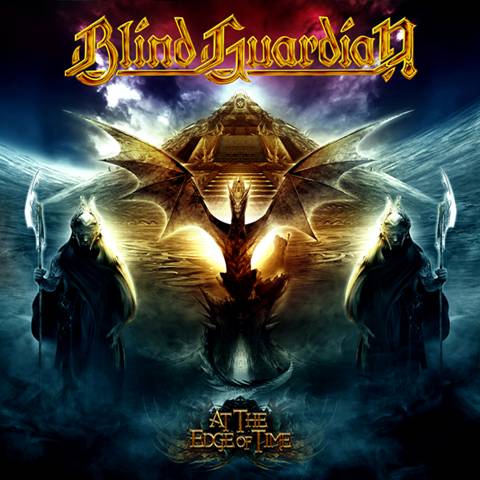
Blind Guardian - At the Edge of Time (2010)

Once more, a period of massive anticipation subsides for the latest effort from Germany's most visible metal export and one of power metal's royalty, and the product rolls out into hobbit holes, LARPs and out across gaming grids the world-wide. Another cycle of interesting literary subjects has been gathered for discussion, and the band have kept their fans in on the recording process, samples, and probably even the dietary supplements when recording their 9th full-length effort, At the Edge of Time. The band is so transparent and builds hype so well for each new release that I'm surprised we haven't been forced to suffer through a Hansi Kursch reality TV show in the months before each new release.

Judging from the single teaser, "A Voice in the Dark", my expectations were not sky high for this effort, as the two songs there felt like simply more of the same that the band had been rattling out forever, only lacking that certain explosive, memorable ingredient they'd perfected though the 90s in their rise to power. But the samples on their site held out some hope, and now that I've gotten to tear through the album a number of times, I can honestly say that the remainder of this material makes up for the few, forgettable pieces. It was probably foremost on the fans' mind whether or not Blind Guardian would be pushing to an even more poppy level than they did with their previous A Twist in the Myth, or regressing to their far more inspirational past, and I would offer that this represents a mix of these directions. There are no outright, cutesy rockers like "Another Stranger Me" or "Fly" (which were not bad), but several segments that feel close enough; and the straight speed metal raving doffed throughout this album recall the days of Somewhere Far Beyond and Imaginations from the Other Side, with a studio gloss every bit as modern and layered as their former 21st century arrangements.

It's off to a damn fine start with the symphonic suite that heralds "Sacred Worlds", which is an extended version of the song "Sacred" that was used in the computer game Sacred 2: Fallen Angel. In all, this rendition is over 9 minutes in length, but the orchestration truly helps flesh out the track, and if you can wipe your mind of goblins and trolls dancing and head banging to a computer generated cast of Hansi and crew, you are subjected to a reasonable measure of emotional power. "Tanelorn (Into the Void)" returns to the world of Michael Moorcock's Elric saga, a sequel or sorts to "The Quest for Tanelorn" from Somewhere Far Beyond, both lyrically and stylistically, for this is sheer speed/power metal with some excellent vocal arrangements that don't ignore the Queen-like rapport the band had developed in the past decade or so. "Road of No Release" centers on a Peter S. Beagle story, who you might know better as the author of The Last Unicorn. It's one of the most proggish pieces on the album, and could have easily appeared on the previous record, but not the most enticing here, despite a quality burning lead segment with some vocals cascading across it.

Next, "Ride Into Obsession" explodes into the realm of Robert Jordan's haughty and far too worded Wheel of Time saga, doing great justice to the meandering narrative, with a fairly catchy chorus sequence and a nice lead sequence as payoff to the storming aggression that the band have once again found themselves attached to. "Curse My Name" is another of the band's 'bard-like' pieces', slowly developing and steeped in flutes and windy, soaring background vocals. Like many similar tracks throughout the band's career, this would normally represent a sappy and unnecessary lull from their true strength (the metal), but the percussive climaxes here at least give something for the ears to latch upon. "Valkyries" might tease itself as yet another ballad, but soon matures into a multi-tiered, melodic prog piece that was one of my favorites on the album, a fitting enough tribute to the mythological, beautiful entities. Like "Curse My Name", "Control Divine" is based on John Milton, but this time his famous Paradise Lost. The various shifts in tempo and surges of melody do well to capture the desperation of the epic poem, but one wonders if this subject would have been served better by one of Blind Guardian's 8+ minute compositions instead of stuck into a shorter length.

We've already heard the next pair of songs from the single leading up to this album. Both "War of the Thrones" and "A Voice in the Dark" represent George R.R. Martin's sprawling, unfinished political fantasy epic A Song of Ice and Fire. The former is a calmly thriving ballad that blows into some soothing, sailing vocal passages, and I feel like the version presented here is superior to that of the single. "A Voice in the Dark" is probably the least interesting of the metal tunes here, with really only one catchy bit in the bridge riff. It conjures up Somewhere Far Beyond in style, but not execution. "Wheel of Time" revisits the Robert Jordan novels, a nearly 9 minute piece with plenty of savage orchestration and glistening melody to resonate through a long series of listens. This has some of the best individual licks on the record, so its almost a shame its tucked into the finale, but then, like any good stage performance, its indeed climactic.

At the Edge of Time is overall a pretty good record, though far from the best the band have produced in their 20+ years of existence. The musicianship is stunning, Hansi's vocals still honed and sharp, and the writing good enough to support longer and shorter tracks. Not everything here is gold. There were moments in "War of the Thrones", "Road of No Release" and "Curse My Name" in which I felt I was nodding off, and "A Voice in the Dark" is simply average at best, but you've still got about 45 minutes minimum of excellent writing that will hook onto your psyche and have you back, feeding for more until the inevitable follow-up. I truly believe that if the band is going to devote chunks of the album to specific writers or fantasy series, that perhaps the Germans should strive for another pure concept album like their finest, Nightfall in Middle-Earth. It just seems clunky to my mind having pairs of songs devoted to George R.R. Martin or Robert Jordan, it'd be nice for them to go all out. By this point I don't feel the band have much ground to cover musically. Everything here is old hat, a classy retread of former works, with perhaps the exception of clearer orchestration, so a singular lyrical focus is one area in which they might keep us enthralled for another decade or beyond.

Verdict: Win [8/10] (it is more than a game)

http://www.blind-guardian.com/

Thursday, July 29, 2010

Cubbiebear - The Rape (2008)

Funny name, hip-hop album, metal review site. Seems like all three strikes necessary to toss this abstract piece of insanity to the dogs, right?

Wrong.

The Rape is a showcase of serpentine lyrical abilities, aschewing verse/chorus/verse club bumping for progressive song layouts and an affinity for post-production touchups that drive the songs further down the rabbit hole. Far from being pop-sensible, and sometimes far from sensible period, the songs often deconstruct themselves into an array of sonic chaos, scattershot samples, and potshot drumbeats amongst emotional assaults of some of the most venomous put to tape in years, the rebuild from seeming chaos into a tangible form.

Essentially, this is not Kanye West. This is Baltimore's Cubbiebear and, while the album displays a bit of immaturity and the lack of big-time financial support can hinder things, the thought process behind The Rape is pure, if a bit off-kilter, and a completely original take on the rap genre as a whole.

Trying to describe the music contained here is a bit difficult. Samples are chopped, slowed, put through turntables, twisted, and filtered to a degree that can almost seem excessive at times... but when the vocals and the beats are given the same treatment, often molding the entirety of the track into a stuttering digital trainwreck, you can't help but notice the amount of effort put into each and every tune. The samples, beats, and vocals are all extensions of the idea, and the idea is the prime controller of the process.

The rap performance here is pretty astounding, even if it is a battle-rap style. Cubbiebear does, in a way, battle through the entire CD: He passes off line after line of jagged cement haymakers at modern hip-hop culture with a certainty and conviction that's difficult to second guess. Tough shots like this one directed at 50 cent from the song "Contra":

You're not a bad motherfucker
If your demographic is only 13 and under

I can't recommend people check out The Rape enough, and the video for "Contra" can easily be found on Youtube if you're so inclined.

Verdict: Epic Win [10/10]


Heretic Soul - Born Into This Plague (2010)

Turkish metal has always fascinated me, as I attended University with a friend from the country who got me into the band known there as Pentagram (Mezarkabul elsewhere), but there doesn't seem to be a whole lot of coverage in the more extreme field of death metal. I'm aware of the band Cenotaph, listened to a few of their albums, and thought they were decent, but outside of this, Heretic Soul is one of my few exposures. Born Into This Plague is the band's debut, issued through Chicago's Rotting Corpse Records to follow up their Life Becomes Our Grave EP (2008), and though it shows some potential, it suffers from a few issues that mire it down into relative mediocrity. The band is brutal and attempts to capture an array of dynamics within their music, but some of them feel all too familiar and there is just not enough worthwhile riffing to push them over the top.

There is no single vantage point for which to compare this artist. They seem to have a penchant for the grooves and squeals common to brutal USDM bands, and even sprinkle in a few simplistic chugged breakdowns, but they also have a faster, blasted side which carries more of a Morbid Angel or early Suffocation influence, so most of the bases are covered. They are not the most technically endowed band, opting instead for straight up brutality conceived through primordial writing, and there would be nothing wrong with this, only that there seems to be a dearth of truly compelling riffs manifested across the album. The initial track, "The Truth Dwells In Your Head", is not the strongest, opening with a brief volley of blasted, old school rhythms that dives into a typical chug/squeal breakdown that was used up by the mid 90s. Later in the song is another series of open mute chugs that really could have been opted out for something better, and in all, its very underwhelming. Not a best foot forward scenario.

The album tries to clean up after itself with the following "Deadliest Enemy", a blasted slab of murder wrought from the inspiration of USDM like Malevolent Creation, Suffocation, Diabolic and other East Coast criminals. The first breakdown in this song is a little better, with some clean notes dragging up the tail end to make it feel less frivolous. I was not engaged by the melodic bridge, and unfortunately there's another chugged breakdown near the end which feels like something Earth Crisis or Hatebreed would have written many a moon ago. "Mental Decay" is far stronger, with some harmonic saber rattling over the intro riff and then a big, Sepultura-like groove ala Chaos A.D. before they pick up speed. I especially enjoyed the riffing later in the song, which created a huge atmosphere over the growls, and reminded me of Bolt Thrower. Not a single, shitty breakdown found here, and thus it's easily superior to the first two tracks.

"Suffering From Existence" maintains a warlike pacing with a mix of rolled double-bass tank segments and blasted bits, with a better breakdown that makes good use of the drummer. "Faceless" ranges from thunder to thrash, to war metal and back to thunder and thrash, with only a menial breakdown; "Worship Me" is another mix of Sepultura/Bolt Thrower; "Beyond Hatred" is introduced through some clean guitars and moody atmosphere before transforming into a solemn, melodic floe over hammering mid-blasts; and both "Life Becomes Our Grave" and "Twenty One Grams" combine some reasonable grooved walls of chords with disposable breakdowns.

Born Into this Plague never truly escapes the low expectations it sets up for itself, and that's a shame, because there is clearly some passion for old school, 90s extremity at work. There are a few good riffs scattered throughout, but even these could use some further gestation to increase their ear candy resonance. The vocals are nothing out of the ordinary, and the compositions do not set up any impressive musicianship due to its primitive, mosh-fueled nature. There are points at which the album captures to great old vibes of Bolt Thrower, Morbid Angel, Malevolent Creation, Incantation and a number of other bands, but it does nothing to vault itself into their unhallowed company. There's nothing grating or 'wrong' with Heretic Soul, aside from the use of a few cheap and unimaginative breakdowns, but an added element of intricacy would go a long way towards helping them identify against the endless legions of other bands out there.

Verdict: Indifference [5.75/10]

http://www.hereticsoul.net/

Demonical - Servants of the Unlight (2007)

When Centinex called it quits, we lost one of the very best of the loyalist Swedish death metal movement, a band who produced a long line of good to great records honoring their roots and in a few cases even expanding upon them. We've suffered a metric ton of carbon copy bands in the past few years, all paying their respects to the godfathers Nihilist/Entombed, Dismember, Grave and Unleashed, but very few have done a knockout, drag down to the grave job of it that Centinex had done for years. All was not lost, however, since three members of Centinex decided that wild hell steeds could not drag them away from their beloved style, and in 2006 they put together the entity Demonical with vocalist Ludde Engellau (of death/grinders Remasculate).

Servants of the Unlight was the result of their first forays back to the sepulcher, and what a great fucking album this turned out to be! A dark, unflinching sprawl of all the elements that made Left Hand Path so great in the first place, delivered with brute grinding force and an incredibly strong set of songs, which could easily sate any Swedish purist whether their fancy lies in the cryptic death metal itself or the more grind-endowed bands to take a bite out of the style (i.e. Nasum and Rotten Sound). You are all familiar with the epic guitar tones that helped place Entombed onto the radars of nearly every sick fuck in society, the bludgeoning hostility of the vocals and the inherent, punkish fervor underlying the outbreaks of D-beat malignity. Demonical captures all of these qualities on their debut and then pushes them over the threshold to the abyss below.

"Suicide Throne" arrives in a cadence of storm, bleak peril and titanic percussion as the chords of walls crash upon the shore of enticing, melodic filth; and then Demonical REALLY let loose with a steady, grinding rhythm of ominous depth and darkness. If can't throw behind that breakdown around 3:10, well I don't think there could be any cure for you. "Revel in Misanthropia" blasts open and then cedes into a series of blazing chords, each hammering down a charnel house, pillars and thrones of bones and skeletal remains shattered and creating an avalanche of dead-waking frenzy. Proof that a good, forceful riff does not require complexity, it completely conquers the listener under Engellau's brute formations of the prose, and when it finally segways into the moshing monolith that you know is coming, it's surprisingly understated and no less effective. The intro riff to "Burned Alive" sounds like something straight off of Death's Leprosy, if played by Entombed, and once again a slight dynamic difference helps the pace of this record enormously, though it soon crushes with the weight of a hundred siege machines, blasting everyone in its path.

The album's loving embrace never lets you go, as it clutches you so tight your blood hemorrhages and your organs burst out through your ribs. "Feeding the Armageddon" does exactly that, lifting your pleading, flailing body off the ground like some unfeeling Hulk and casting you straight into destruction. "United in Torture" takes a tank-like approach, with a Bolt Thrower vibe in the scorching, diabolic melodies; "Slaughter of All Hope" is a sheer, endgame riffing scenario with minor variations twisted about the steady drumming core, and then a huge chorus with enormous vocals. "Unholy Desecration" takes the speed down to another mid-paced piece alternating D-beats and Bolt Thrower segments, and "Leipzig 1945" takes it down another notch to a doomed leviathan of WWII agony. The limited edition CD also comes with a cover of Onslaught's "Death Metal" which is performed extraordinary well, fitting hand in glove with the originals.

Speaking of 'original', that's about the one complaint you could ever launch at this album. It's a mix of Centinex and all that band's inherent influences, from the grinding hardcore of Discharge to the graveyard ethics of early Entombed. Of course, I'm not complaining, and Servants of the Unlight is one of the very best records I've heard to follow in this path. It's not complex, it's not graceful, and it's not for the weak of stomach. The tones are gigantic, the intent only to crush and kill, and the post-mortem emotions of having just been audibly incinerated (which accompany all good extreme metal) fully in position.

Verdict: Epic Win [9.5/10]
(shedding off all ties to life)

http://www.demonical.net/

Damien Breed - Ave Satani (1994)

As the 90s battered on, it soon became a test of strength and will for nearly any surviving thrash band to persist in their career, much less attempt to begin one. The 'fallout' period would see a number of late comers falling directly on their faces, the relatively unknown Damien Breed among them, but unlike much of the uninspired rabble that were half the reason the genre couldn't hold out, here was a band who actually had a touch of originality and could have evolved into a worthwhile band. They did evolve into something, but it was called Seelenwinter, abandoning the short-lived Damien Breed brand and signing with Massacre Records, earning them some small measure of success, and leaving behind the 7 year career that culminated in this sole full-length shot in the dark.

The Germans stood out a little for their approach which tended to consist of dark, brief intros of clean guitars that would transform into slowly paced thrash rhythms with a progressive element. The guitars can rarely be accused of storming along in typical style for this genre, but very carefully working themselves upon the listener while Olaf Schultz' dark, accented lyrics weave tales of horror and despair. The guy does a number of vocals, including a clean tone, an almost death metal tone, and a deep, nasally tone which reminds me of other European thrashers like Midas Touch, Vendetta, etc. The mix of eerie synthesizers into the steady, largely slow to mid paced thrashing creates a genuine touch, as this is a concept album dealing with the classic Omen films about the spawn of Satan to mortal humans and the 'problems' that evolve out of such a relationship.

An intro, "Prophecy" develops into a tight, picked regiment before the deep, almost cerebral "Conspiracy" explodes with simple but effective thrashing riffs and Schultz's mix of narrative and ritual chorus repetitions. I was very heavily reminded of Midas Touch, who had a similar if slightly more technical element to their music, with comparable riff style. "The Evil Inside" begins like an elegy before a mix of uplifting muted rhythms, spooky muted breakdowns and a few gang shout backing vocals. It's a little long, but I do enjoy the solo breakdown around 4:30. "The Warning of the Priest" has a more melodic, storming feeling, picking up some steam, but the band doesn't really explode into faster territory until "The Sign", which reminds me of Mekong Delta's earlier material, and at points a marginal helping of Deathrow's Deception Ignored: bursts of well structured, melodic riffing that obeys convention and yet shifts into the realm of the abstract. This is one of the better songs here, followed by the creeping and pretty "(It's Time Damien) The Revelation" which does also not disappoint. The rest of the album is sadly average, but not devoid of nuance.

Ave Satani is one of those cases where each disparate element of the writing could have just used a little more push. The riffs are decent, but there are not enough of them, or they are just not as powerful as they might have been. The composition flows pleasantly through between lighter and darker segments, providing an aural narrative to the films, but you always wish it were that much scarier. The production is alright, but the vocals seem disheveled and often tripping over the accent of their bearer. It's a shame that the band would change faces, because they had a half-decent name here which seems to draw the attentions, and if they'd considered continuing into the realm of cerebral, horror thrash concepts, perhaps exploring other classics like Dracula, The Exorcist or Frankenstein, they might have build a reputation. Then again, this might have been a one shot from its conception. We may never know. Ave Satani is not a good record, but its worth hearing once if you're into all things German, thrash and obscure, like Depressive Age, Mekong Delta, Vendetta, Assassin, Deathrow and the like.

Verdict: Indifference [6.5/10] (cast out of Heaven)