 The last Skyforger record I covered was Kurbads back in 2010, and while that was a pretty damn good one, there were points where I felt the band was in danger of lapsing into some of the sillier folk metal tropes that a couple other bands have ridden to fame upon. That said, they definitely reversed course with the excellent Senprūsija in 2015, an absolute riff-fest which deftly combined the Latvians' black metal roots with some more accessible thrash and heavy metal moments what proved the most I'd enjoyed them since their late 1998-2000 era. I am telling you that because Teikas is an even better record than that one, possesses all the chops needed for greater recognition, an awesome cover, flawless production and a level of consistency you don't hear quite so often these days.
To a newcomer, I'd describe this as a Slavic alternative to Amon Amarth, with the same pagan and historical focus on lyrical matter, and about the same career length, only vested more in a black metal foundation rather than the death metal, and in the case of Teikas, better than nearly anything those Swedes have released in nearly two decades. However, the embedded sense of melodicism and extremity, the high productions standards, tight as fuck musicianship will no doubt appeal to fans of that more 'big budget' style of melodic death or black metal. Peter's vocals are incredible on this one, raving and barking in his native tongue with just the right level of effects to sound distinct from pretty much any other black metal band I can think of (maybe a Latvian Martin Walkyier?). Each lyrical line has so much impact that they actually compete in catchiness with the unending onslaught of memorable, melodic riffs that are hammered out across tunes like "Spēlmanis", "Zilaiskalns", and "Mājas kungs". There is a ton of versatility, from slower, churning rhythms, to the dissonance you expect of black metal, to the aforementioned storm of melodic tremolo picking.
Teivas sounds huge, but with every instrument audible, an appreciable level of crunch on the slower rhythm guitars, nice acoustics and ambiance on some segments which never wear out their welcome. It doesn't fully abandon the folkish, simpler stuff they were exploring a few albums before, but it's just so much more serious and refined and hard-hitting. Even the little folk instrumental with the harp and pipes is just catchy as all get out. It's honestly hard to imagine anyone into modern, dynamic black, death or thrash metal that doesn't mind the lyrics in another language not latching onto this material immediately, because it's immediate, bombastic and fulfilling, whether they're thrashing along with some clubbed pace or exploring a darker corner of their songwriting. Perhaps it's not as novel to hear this in 2025 as it was to hear Kauja pie saules in 1998, but this might actually be their most 'fun' album to date, accessible without sacrificing aggression, memorable through and through.
Verdict: Epic Win [9/10]
https://skyforger.lv/lv/

Sunday, January 18, 2026
Skyforger - Teikas (2025)

Friday, February 23, 2018
Asenblut - Legenden EP (2018)

Now, to be fair, Asenblut have been at it for awhile now, and four of the five tracks here are new recordings lifted from their 2009 debut Aufbruch, which I covered many years ago. Certainly these sound mightier and clearer than those, albeit lacking in novelty as all reworkings of pre-existent material tend to do. But the fifth tune, "God or Man", is a cover of a rarer Manowar track off the Thunder in the Sky EP, and I actually feel that Asenblut did a fantastic job of translating that over directly into their own style. In fact it gives the original a run for its money, and is hands down the catchiest tune on this release, the only one I kept wanting to come back to. Love the melodies, the lead, the grunting and rasping vocals contrasted against the soaring riffs, and it just keeps getting better as it goes along. While it's no surprise that a Manowar cover would be chosen, it was not expected to be the highlight of this release, and adds a bit of value. Otherwise, Legenden would not be a mandatory listen unless you really want newer versions of the Germans' songs from a debut album that they probably think needed the most studio tweaking.
Verdict: Indifference [6/10]
http://www.asenblut.de/
Thursday, May 18, 2017
Bifröst - Schlachtklänge (2006)

Spoiler: having traveled to the future beyond 2006, and survived, I can assure you that once this group signed to Germany's Einheit Produktionen for their sophomore, they gradually improved to the point that I would call their fourth (and potentially final) record Mana Ewah a solid and entertaining entry into the burgeoning field of European pagan/folk metal, checking off all the right boxes for my ale binges and pretending I am from an Era I am not. For Schlachtklänge ('battle sounds?) that was just not the case, as it suffers from a number of 'rookie' shortcomings that render it ultimately forgettable, if not a complete heap of oxen leavings. Before even listening through the album, you can tell it doesn't look like much, with its muted tree photography, bland logo, but just enough of the right symbology and font to clue you in on what style of music this might be...or at least to point you in the right direction. Really, the middling production and values and appearance hint that this is more or less a demo in album-length, one which sets the ground game from which the band could later sprout some more competent and memorable ideas.
Listen to any record from Turisas and their ilk and you'll hear that they go with the bombastic, sweeping sort of intro which synthesized horns, a clarion call to the goofy warfare that ensues, but strangely the Austrians place a three-minute guitar instrumental, which is surprisingly the best produced piece on the record, but has a kind of bluesy, incidental feel that doesn't quite match up the rest of the material. But then it's off to some mediocre, shuffling, middle placed power chords that are dressed up with folk melodies, all of which would prove passable if the mix were a little more even. The vocal growls feel too muffled, and not even mic'd properly, as if the guy might be blaring the backing tracks and then recording it onto tape. In fact, I wouldn't be terribly surprised if this whole thing was done simultaneously live, it has that sort of boxy, jam-room aesthetic which just doesn't capture for me the frolicking brazenness of what this niche should be all about.
This process is repeated through much of the remainder, with the band struggling to shift up its pacing enough to give the album the variety it deserves. Certainly some of the harmonies, which pitch far over the dingy rhythm guitars, stick more than others, and they show a lot of influence from both the Finnish and Swedish ethnic and melodic death metal scenes, but the production and lack of deviation or risk truly fucks everything over from having a positive impact. To me it sounds like this debut was the product of some well-meaning blokes who heard a couple records by Amorphis and In Flames, but were really into their Finntroll, Ensiferum and Eluveite and felt like bridging these two paradigms into a whole, which they might have done under better studio conditions. Don't get me wrong, there are a half-dozen sailing guitar melodies over the 41 minutes which do take you that glorious inner castle, but the weak, slathering vocal mix and the pedestrian crunch of the rhythm guitar, paired with the submissive drumming and lack of interesting bass-lines, detract severely from its potential.
Again, I don't want to come across too harsh on Bifröst, because they took the right strides to become a better band on their subsequent releases and I'd count myself a fan of at least their last two (in 2013 and 2016). If you're new to the band or just looking for more of that festival folk metal you might enjoy off the European territories, I'd head straight to Mana Ewah and then trace their trajectory backwards for as far as you can stand it. The debut is no diamond in the rough, nor particularly majestic or wintry, desolate or mighty, but a rough template from which the group could throw out the scraps and then run with the strengths. Not totally awful, if you think of it as a demo, but nearly tragic in how some of its melodic components really nailed its vision more than everything supporting them.
Verdict: Fail [4.75/10]
https://www.facebook.com/bifroestaustria/
Sunday, June 8, 2014
Equilibrium - Erdentempel (2014)

They've never written their masterpiece, and it's unlikely they will...the closest was probably their sophomore Sagas 2008 which was convincingly charming in all its belligerent bravado, like flipping through a Game of Thrones paperback and scoring it mentally with the most absurdly overt 'what would this battle scene sound like if Hollywood were all metal, all the time' mentality. But it's fun, fun in that same way you might have enjoyed Ensiferum's output or the first Wintersun. Kinetic, technically competent pagan war metal for dorks (and I am not excepting myself, I liked it). Their other albums have more or less gone for the same fruit on the true, albeit less successfully, so with Erdentempel, I at least hoped they could get back on the horse and play at the level they had half a decade ago. Musically, I feel this is the case, since the guitar progressions here are very involved, spry and semi-complex so that your imagination won't hit a dead end the moment you begin to filter through them.
That said, the band remains heavily centered on the cavalry-charge keyboard-wind tones, which are truly the 'lead' instrument in that they will hit you first, and this right here will continue to make it or break it for those who have been on the fence for their past material. Structurally, this is a step past the last LP Rekreatur in the stickiness of individual guitar patterns, with a lot of tempo variation and melody to compensate for a few of the generic chugging patterns the Germans are still occasionally prone to. There are also, sadly a few pretty generic melodies as in "Waldschrein" of the 'triumphant' variety you'd find in midlist film & television scores or Nightwish songs, glorious and grandiose only on the condition that you've had your ears shut for the last 30 years of symphonic orchestration in media. Yet, like the first Turisas album or its own forebear Sagas, I feel that there's still enough 'fun' here, throughout the superficial alehouse bombast, that you can wrench a smile or two. Especially if you think bands like Korkiplaani or Amon Amarth are the be-all-end-all of extreme metal music, then you'll probably think this is genius...in reality, they put a lot of work into it, but it's not even remotely that clever.
I didn't like the vocals, at least the snarls of Robse (his second full-length in the roster), they seem quite suppressed by the victorious keyboards and sort of cut and paste with a lot of other growlers and snarlers who don't possess a lot of distinctiveness. But apart from that, and the fact that one out of every four series of notes are almost groan-inducing, I didn't have much of a problem with the album, because frankly I did not go into it with high expectations. They do a sort of 'party while jousting on a pony' pagan metal and they do it fairly well. LCD Wagnerian jousting music for 'Renaissance Faires' in North American backwaters. The mix is brightened to modern standards, and there's very little convincing combat grime and filth anywhere, but they do play as if they're on fire and and can't strip their suits of plate mail armor down to the lederhosen beneath quite fast enough. For fans of this niche of bands, that should prove more than enough, because let's face it, sometimes you just wanna pound down your overpriced mug of cheap festival beer while you watch all the cleavage flowing freely from the corsets passing by (or those tight leather breeches, ladies)...and this is the musical equivalent. Hey, asshole: lighten up, peace bond those replica weapons, have a turkey leg, and bring the kids at half-price.
Verdict: Win [7.25/10]
http://equilibrium-metal.net/en/
Friday, March 23, 2012
Eternal Helcaraxe - Against All Odds (2012)
 Against All Odds is certainly competent enough as an execution of higher production standards within the pagan black metal niche, and it successfully contrasts its melodic overtones with a raging central fervor, but I couldn't help but feel that this had already been done with far more depth in the past. Not that Eternal Helcaraxe have the intention of heavily expanding upon the parameters that pioneers like Bathory, Enslaved and Immortal brought to light in the late 80s and 90s, but the Irishmen occasionally shoot themselves in the feet with rather predictable chord sequences and familiar melodic tremolo picking that doesn't exactly brand itself upon the memory.
That said, this is a well arranged debut with a number of considerable strengths to it that would be impossible to deny. I greatly appreciated the band's ability to arrange and pace out their dynamics so there is always something refreshing around the corner. The opening string, piano and hovering synthesizer piece "Claim Your Place With the Gods" is the sort that instantly calls forth emotion in the listener, gradually escalating with pangs of sorrowful beauty. They honestly orchestrate their acoustic segments quite well, especially the extended break in the titular track "Against All Odds (All the Battles to Come - Part II)" which saves the 11 minute finale from lapsing into monotony; or the similar intro to "Invictus". Synthesizers are placed liberally about the mix wherever they can drizzle an added sheen of glory or melancholy, and the guitars and rasped vocals are placed right front over the warlike performance of percussionist Tyrith.
A lot of the primary riffs are the usual mix of 90s influenced blast beats and the slower, mug swinging sorts of progressions like the verse of "Invictus", and I'm reminded of later period Immortal (Sons of Northern Darkness) if it were crossbred with bands like Moonsorrow, Thyrfing and Amon Amarth, with perhaps a dash of Insomnium's sad, arching melodic sensibility. The vocals are rather average for the style: audible and serious enough to convey the bloody conviction of the Gaelic, Norse or fantastical battlegrounds from which the band draws its lyrical inspiration, but never cutting or intimidating to the point that they live up to the vicious charisma in the timbre of the black metal forebears. The mix of the music is very clean and professional without sounding overpolished, and everything from the light texture of the keys to the cleaner vocals broken out for songs like "As the Snow Gathers" is well enough managed.
In the end, when it comes to the task of songwriting, Against All Odds doesn't offer the same compelling sense of adventure that some of its contemporaries or influences once culled, but that's not to say it is entirely without value. Despite being 50 minutes long, for instance, there are very few points at which the music ever becomes particularly trite or boring. There's a sense of airy, broad sadness affixed with robust enthusiasm that captures the 'epic' motif the band were obviously aiming towards, and though I found the lyrics (that I could make out) a bit cliche in their imagery, Eternal Helcaraxe manages to somehow avoid the claptrap of 'giddiness' that often fouls up this sort of atmospheric pagan/black sound. Nothing novel or necessarily inspirational here, but a decent soundtrack for tracking your enemies' bloodied footprints across the frozen wilderness.
Verdict: Win [7/10] (we stand with generations past)
http://eternalhelcaraxe.net/
Friday, August 26, 2011
Arkona - Слово (2011)
 With the enormously bold and expensive-sounding 2009 album Goi, Rode, Goi!, Moscow's Arkona established themselves as one of the forerunners in symphonic extremity, combining classical, folk, and black metal influences into a sound that we hadn't quite heard before. Sure, we'd had orchestras in metal music aplenty, but not with the traditional Russian folk instrumentation and melodic inclinations, or Masha's incredibly distinct vocal presence. If that album had one flaw, it was that it set the bar so high that there was very little chance that Arkona could themselves top it. As a result, Слово (Slovo), their 6th full-length, does not feel so much a step forwards as sideways, but there is still a tremendous amount of appeal here for those who have enjoyed the multiple layers of their songwriting.
Слово seems slightly less 'intense' on the whole, but there are still a number of flighty, storming melodic black metal passages throughout that derail any plausible notion that the band are slowing down or milking their success into a more accessible, mainstream commodity. Tracks like " Больно Мне (It's painful for me)" and "Аркаим (Arkaim)" continue to surge along with polished black precision, while they also implement some punchier, thrashing punishment into the rhythmic subtext of "Никогда (Never)" that functions impressively alongside the sailing, potent cleaner vocals that this singer specializes in. Admittedly, there are a few pompous and mug swilling, LCD folk metal tracks like "Леший (Leshiy)" which did little for me, but when the band abandons the metal almost entirely for the pagan anthems "Заклятие (Incantation)" or "Во Моём Садочке... (In My Garden)", they transform into the Russian equivalent of the excellent Swedish Garmarna: all thudding percussion, beautiful vocal passages and glimmering, intense strings.
They've even coughed up another of their vocal-based pieces in "Там за Туманами (Behind the Mist)" which could easily earn them a widespread appeal well outside the genre, if Masha should choose to once again careen about a few local woodland glades or fields for some viral video. But for myself, the true centerpiece of the album is the title track, a gorgeous folk metal aspiration with lots of flutes, thundering percussion and glorious escalation. The vocals are incredibly well arranged throughout all of Слово, and the services of the Choir of Moscow State Conservatory and Chamber Orchestra of Kazan State Conservatory N.G. Zhiganova have been retained for much of the playtime, giving the album a rich, robust depth that obviously required a great deal of effort to complete. It also never hurts that Russian is, like, the most seductive language ever.
There are those that will immediately shun Arkona for the high standards here, no expense spared, as if they were primed for radio/pop exposure, but when managing such a large array of vocal styles and instruments, there's little choice but over the top. The individual elements of their sound are not highly complex, but when brought together it's nonetheless impressive. The band maintains its close ties to Russian folklore and history, so long time adherents to their sound should be content. There are probably about 10 minutes I would have clipped from this hour length experience, and it's not quite so mighty as its predecessor, but Слово is not short on the thrills and creativity that defined their back catalog, and once again Arkona prove they have the pride and guts to trample all over the field of fashionable female fronted fairy-tattoo drivel espoused by international 'sensations' like Nightwish or Epica.
Verdict: Win [8.25/10]
http://arkona-russia.com/
Friday, April 1, 2011
Kampfar - Mare (2011)
 Whoever would have guessed that Kampfar were interested in women's studies? Such is the concept behind Mare, their 5th and most accessible full-length effort, but before you go gathering your pitchforks and torches in a panic, know that this is not some crass transformation into an Oprah Winfrey of pagan black metal. The Norsemen are still delving into the same mythology and folklore that has inspired their previous works, only honing in on a general, gender driven theme (witches, etc). It's a curious idea, one not wholly expected from a band of Vikings, and thankfully, due to the band's significant and welcome compositional skill, it works rather well. Perhaps not so well as their more vicious, early albums, but it will suffice.
As was the case with their previous album Heimgang, the band utilizes a thick guitar tone that creates an instant surge of power, not unlike later Immortal or their spin-off I. The riffs are steady, simply, and very often dwelling around the mid pace, while the drums thunder off and the melodies drift off into the tangible cold nightscape. The vocals cut straight down the middle, perfectly aligned with the meter and melodies, and thus a swelling of contrasts is created that reeks of majesty. That said, the band does seem to rely here on some often generic, or flat out dull patterns of notation (the bridge to "Mare", or the ponderous "Volvevers"), and thus certain tracks can become rather a slog to survive through. Others are simply too glorious to pass upon, like the hammering grace of "Blitzwitch" or the horn swilling "Bergtatt". There are also a few pensive piano or symphonic elements used to create atmospheric intros to the brooding "Huldreland", the melancholic "Trolldomspakt", or the crushing if predictable "Altergang".
I felt like there was just enough quality on Mare to enjoy it, but I won't claim that it's the equal of any of the previous outings. Certainly more subdued and tranquil, but never negligent of the 'wall of sound' effect the band have utilized in the past. I could do without a few of the tracks, especially the bonus "Bergtatt (in D Major)", a more uplifting, anthem alternative which painted an unintentional sonic portrait of drunken highlanders lumbering over the hills wearing lingerie, which I've yet to burn from my mind. I also felt the same comprehensive emptiness that drove me away from the latest Moonsorrow album. The songwriting structures are solid, but never all that inspiring, and it's almost as if the concept of the album itself outpaces the actual music. Ultimately, though, Mare is another good Kampfar album...just not up to the same standards of the back catalog.
Verdict: Win [7/10] (let the devil whore burn)
http://www.kampfar.com/
Tuesday, July 20, 2010
Winterfylleth - The Mercian Sphere (2010)
 Along with their fellows Wodensthrone, Manchester's Winterfylleth represents one of the brightest hopes from the Old Country in terms of honoring their forebears with forceful, melodic reckoning sorrow delivered like a charge to battle. The young band's debut The Ghost of Heritage was a fresh record when it released two years ago, and the band seek to expand upon that and perhaps take advantage of their leap from Profound Lore to Candlelight Records. Armed with tales of warfare and pride, they've lined up nearly 70 minutes of newer material, with the exception of the newly revised "Defending the Realm", which has an additional minute tacked on.
The style is not exactly novel for a band with pagan intentions. Black metal rasps or hymnal clean vocals over riffs that are perhaps more melodic and atmospheric than the genre's occult/Satanist forefathers, and through the storming assaults the band will break for an acoustic piece with some whispered vocals, like the winds of olde that have carried their inspiration into the young minds (i.e. "Children of the Stones", which is somewhat haunting). I was quite surprised to find many of the longer, harder tracks not so fulfilling, like "Gateway to the Dark Peak/The Solitary One Waits for Grace (The Wayfarer Pt. I)" or "Awakens He, Bereft of Kinsmen (The Wayfarer Pt. II)". The album sounds excellent, and the band do not lack for dynamic ability, its merely a lack of truly inspiring riffs.
Once one delves further into the album's contents, though, they meet with more satisfactory results, like the glinting steel that shines beyond the rolling tones upon "The Fields of Reckoning", or the epic "The Honour of Good Men on the Path to Eternal Glory", which mixes a tasteful, substantial acoustic intro with some desperate, hard riding rhythms that descend one into the melancholy of more innocent times. Days when conquest and honor were acceptable mediums, before England and Europe began its descent into corporate cess and the inevitable identity crisis it now suffers. The other lengthy piece, "To Find Solace...Where Security Stands (The Wayfarer Pt. III)" is also quite worthy, never quite risking to bore the listener. I also enjoyed the sprightly acoustic "When the Woods Were Young" and the swollen glories of "A Valley Thick With Oaks".
I won't say I was thrilled with The Mercian Sphere, and in fact I was not as impressed as by their debut album, but this is hardly a letdown if you're seeking something inspired by more than the usual demons and goat sacrifices, and I'm always happy to see a group of men or women grasp their roots with fondness rather than forgetfulness. They can write, they can play, I just think they could write material a little more interesting than what we're given on the sophomore. Half the tracks are bloody good, but the remainder are just passable. A slight push in variance, a more complex twist in some of the thundering, melodic barrages, and they'll have a master's grasp on their rustic window to the past (and, if society continues to fall to pieces, their potential future).
Verdict: Win [7/10]
http://www.myspace.com/winterfylleth
Wednesday, January 6, 2010
Temnozor - Haunted Dreamscapes (2010)
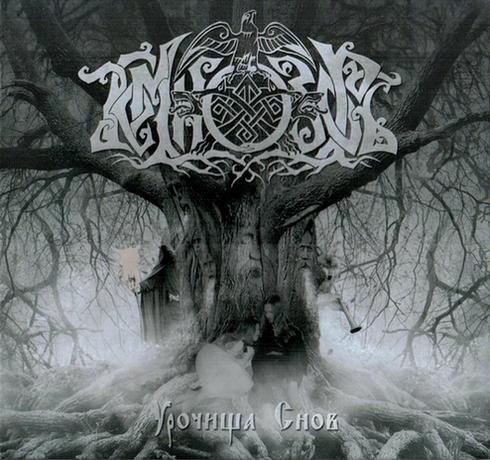 The latest album from Russia's Temnozor arrives hot on the heels of another pagan metal album, Nokturnal Mortum's The Voice of Steel. Perhaps unfairly it is impossible not to think about that triumphant record while listening to this one. A counterpoint to the bombast of The Voice of Steel, Haunted Dreamscapes flirts with speed and rock-influenced riffs, but ultimately settles into a very mellow and subdued mode.
The second and fifth tracks "Ravens of Bus" and "Grace-cup of Morrow" include a lot of flute-driven melody which is very well done. "Solstice-Kolyada" features the strongest riffs on the album with a rock sensibility backed up by the flute melodies. Their work is at its best on these three tracks.
The album takes a turn for the acoustic with the slow, ambient fourth number. The clean vocals are nice and establish a definite folk atmosphere; it's just too minimal to warrant repeat listens. The last two tracks are slow-going although the album closes out with a catchy guitar solo. More of that would have jazzed up the excitement overall.
As it is Haunted Dreamscapes is worth a listen once or twice if you really love the genre, but its not something that is going to set the world on fire.
Verdict: Indifference [6.5/10]
http://www.myspace.com/temnozor
Saturday, January 2, 2010
Slavogorje - Vrijeme iza nas EP (2009)
 Slavogorje are a Croatian duo that mix neofolk, ambient and post rock elements with a dash of raw, pagan metal for a sound quite unlike most. They've been productive in the half-decade of their existence, releasing some demos, splits and a pair of full-length albums, and have now arrived at their latest, the Vrijeme iza nas EP, a short effort with 3 songs in about 14 minutes. The material is pretty diverse, even for so short a release, and you never quite get the coherent picture. But I would be lax not to admit that they've got a truly original craft dripping with potential. Everything is played by Rugiewit and Isar, from the guitars to the pan flute and jaw harp, there is a lot of acoustic instrumentation.
"U Suton Bogova (A Dusk of the Gods)" is soothing enough, a vocal a capella which lasts about :35 seconds before the tranquil acoustics of "Perun i Ljeto (Perun and the Summer)", soon joined with Slavic whispers and deep percussion as the vocals and glistening guitars combine for neofolk bliss. You can also hear some woodwind within there. The track doesn't really develop much, but it does die out for a more somber moment of pipes and synth-induced ambiance. "Vrijeme iza nas (Time Behind Us)" itself sounds like something Vangelis would have written for Chariots of Fire, only with more drums and raw piano. If Tangerine Dream had a pagan metal guitar player, it might sound like this...and this is where Slavogorje are at their most interesting, dreamy scintillating post-rock with no shame for its electronic waves and pretty, wailing male vocals. The guitar does little more than trudge along with a few chords, but somehow its enough to send your mind racing as to the possibilities this marriage could produce.
It's not easy to recommend Vrijeme iza nas, because it feels a little uneven. "Perun i Ljeto" does not live up to its potential, and while the title track is full of elation, it does become too repetetive for replay value. The intro is just too brief to consider. But Slavogorje are onto something. Granted, that something is hardly metal music, and it hardly needs to be. If they can take some of the strength of the last track and apply it album-wide to their next full-length, with a little more variation, it will be something to behold. Also, I love a good logo, and this band has one.
Verdict: Indifference [6/10]
http://www.myspace.com/slavogorjeslavicforces
Saturday, December 26, 2009
Lux Divina - From the Tomb to Nature's Blood (2009)
 Spain's Lux Divina have been around for over a decade now, releasing a few demos and an EP around the turn of the century, and taking their time to produce this first full-length debut. Though the result is not the most thrilling pagan black metal you'll hear in this year, it's competent and well-performed, capable of producing a fine atmosphere that rekindles early Borknagar, especially through the use of Norax' clean vocals which blend in well over the thriving acoustic segments and glorious tones of the chords. Make no mistake, From the Tomb to Nature's Blood is not re-writing the book on the style, as hundreds of bands have previously mixed their harsher black metal side with the folk elements, and lyrically Lux Divina offer up only the most basic lyrics that pay tribute to the forest, the times of old, and whatever pagan gods they libate.
"Forgotten Deity (Deletrix) Part I" lets a few chords ring before storming forward into some adequate, melodic black metal, with a mix of deep clean male vocals and Norax' biting snarl. The note selection is glorious enough to conceive a rapturous momentum, but it's not exactly stunning. "Bloody Herbs of Revenge" and "Praise Hymn to the Horned God" feel like more of the same, with a good balance of plodding, woodland acoustics, soaring clean vocals and repulsive yet graceful black metal sections. I found most of the album's stronger moments to arrive later, like the beauty of "The Oracle of the Funeral Trees" or the creeping shadows of "Black Goddess' Mountains". "To Darkened Catacombs" also has a great rocking out feeling that pagan black does not often create. I didn't quite like the short vocal piece "Serpents Philosophy", but it's pretty folkish and lets Norax get that out of his system.
From the Tomb to Nature's Blood sounds pretty good, the tones are earthen feeling and all the instrumentation is clear, without the vocals ever dominating too fiercely. There is a strong core to the band, though they could sharpen up their riff writing. It's a decent effort from a country which is starting to produce a lot more in the black and folk genres, and since I don't always associate Spain with the Northern European history, a slightly different take on that style.
Highlights: The Oracle of the Funeral Trees, Black Goddess' Mountains, To Darkened Catacombs
Verdict: Win [7/10]
http://www.myspace.com/luxdivina
Thursday, December 24, 2009
Cales - KRF (2009)
 I should state that even though I did not completely love the 5th full-length effort from Czechs Cales, there is a certain balls out fervor to their style of Celtic folk/pagan doom that should take anyone straight to a dip in the Guiness, and I can envision no situation in which any human being would listen to this album and not have at least a little fun. It rocks, it rolls, it thunders and crashes like a man wearing a kilt on a boxing spree, and it asks that you only grab a drink and have a good time. And at times, it exceeds even this level of immersion to create moments that transcend its barbaric pagan bombast.
"Barbarian Paganus" is a rowsing drinkhall anthem which swaggers with the inevitable violence of a rumble over women and booze, but it romps along with a pretty harmless pace and expected folkish tint to the guitars. "Varjag" goes far beyond this, a swelling climax of huge rhythms and melodic tones that smack together like waves on a turbulent sea. This is an intense track, and had the entire album shared its desperation and beauty, we would have a classic on our hands. I loved Skuny's vocals on this, snarling like a constipated man trying to find his newspaper on the front lawn, with his drawers down. "Resolution" thrashes out with a great, winding rhythm that offsets intense chords and percussion, and it's nearly as good as "Varjag". "Pass in Time" and "Song of Outlaws" are far more along the lines of traditional folk metal, only with the Celtic edge as opposed to similar bands that use Finnish, Russian, German, Polish aesthetics, and so forth. "Legacy of Honour" has its moments, and "Savage Blood" staggers along a trail of warfare before "Magnificent Masterpiece of Apocalypse" puts you deep in your cups at the pugs.
Most of what Cales have conceived on the album is decent, and it all sounds quite bright and loud, but a few of the songs here really stand out (in particular "Varjag"). Two songs deep, I was thinking this album could be a true contender, but as the album moved along, I was a little disappointed. Still, KRF sounds really good, it does not often sound like a cut and paste from another folk metal album, and if you enjoy tales of Celtic and pre-Celt barbarism and lore, then go ahead and rock it.
Highlights: Varjag, Resolution, Savage Blood
Verdict: Win [7.75/10]
http://www.cales.mysteria.cz/
Monday, November 23, 2009
Graveland - The Fire of Awakening (2003)
 The Fire of Awakening is the 7th full-length from Rob Darken's legacy under Graveland. Like most of his work, it's an acquired taste with a number of flaws, which taken in context, are not exactly flaws...but still have a tendency to test the listener's patience. What happens here is the natural union of some lush, amazing atmosphere bathed in angelic synthesizers, and the barbaric, plodding, often quite boring guitar rhythms that broil below. Add to this the relative length of each track, from 8-10 minutes long, and the fact that most of the album slides along at the same general pace...and you've got either a recipe for headache, or a brilliant 47 minutes of heathen glory.
Although I find myself leaning towards the latter concoction, I cannot say that this is one of the best of Graveland. It's good, and shows a marked improvement in Rob's ability to conjure atmosphere through very minimal means...but the guitar riffs afford so little interest, that their mere bludgeoning alone cannot support them. What I do appreciate is the way the entire album sounds like a steady war march, if you listen carefully, with eyes closed, the rhythm of the crashing drums can often become hypnotic, sucking you straight into the ages past, your boots tramping through the sludge of human carnage and the cold moors. The keyboards are really well played here, though they create nothing but simple, ethereal lines that truly sound like the valkyries calling you skyward after an honorable death. He'll often use a subtle melodic guitar line speed picked along the synth notes to create a great harmony. The album definitely has its moments, but 47 of them?
"We Shall Prevail" begins with the choir of valkyries, before a slowly paced sludge rhythm drives straight through some smaller, melodic lines. This slowly builds in momentum, like a charge that never fully breaks, and though broken up with more atmospheric provisions, the track doesn't really meet a satisfactory climax. Instead, it bowls over and the "Battle of Wotan's Wolves" takes over. This is my least favorite track on the album, though the most raw in terms of just pounding away with the guitars. Darken is wielding his standard garbled, harsh vocals, never quite so aggressive as many other singers in the genre, but sufficient and no surprise if you've heard his past albums. "In the Sea of Blood" is the most mercifully brief track, under 8 minutes, but the style does not defer from what has come before. More trudging. More guitar melodies skirting alongside the slow march of the cavalry like starved and hungry hounds that seek the mercy of their drivers.
No more love, neither mercy
The red Sun has hidden herself
Their fear born from our hate
Kindles fire and ash
If you've survived this far, then you can probably handle the final two tracks, which are both 10+ minutes in length. "Die for Freedom" is quite extravagant, with epic battle percussion and more of Rob's graceful synth work. It breaks for rations by the midpoint, but wastes little time in retrieving the thunder. I can't help but feel 2-3 minutes less here would have condensed the song into a superior force, because it seems right as it grips you it just keeps rambling on. The closer, "The Four Wings of the Sun" arrives with an extremly glorious opening riff, slow and crunchy and slathered in great picking lines. Again, over 10 minutes, but have patience, and you will be rewarded, for the synths in this track are yet again beautiful over the crashing percussion and the stable if repetitive guitars. The tranquil break at around 6:20 is emotional and helps reel you back in, and this is the strongest overall track.
If an entire album of slower paced, barbaric majesty set aloft by some refined synth ambience is what you find yourself in need of, then look no further. The Fire of Awakening offers little else. Some better guitar riffs, and more diversity of tempos would have surely livened the effort, but Graveland fans should still be pleased. I should mention that the two albums after this, Dawn of Iron Blades and Fire Chariot of Destruction, are both better records, some of the best of his career. If it's your first exposure, you may want to track those down instead. Otherwise, I'll meet you by the morning fog, cold spear in hand, cracked and frosted helm, and the end in my eyes.
Highlights: In the Sea of Blood, The Four Wings of the Sun
Verdict: Win [7/10] (to protect me from the shine)
http://www.graveland.org/
Saturday, November 21, 2009
Menhir - Thuringia (1999)
 Menhir is a band who have made subtle mutations upon their sound, to slowly improve through the years into their current form, which has a cleaner, polished interface. But it's not difficult to hear how they arrived at such a form, as their earlier output maintained pretty high production standards for the pagan black metal sub-genre, and as early as 1999 they were writing some fairly crushing material with a load of atmosphere, in part through the synthesized orchestration and in part through the guitar melodies that constantly erupt over the driving bass and chords below.
Heiko Gerull dominates the album with a large rasping voice, full of depth and snarl. The cleaner vocals are a mixed bag; while they soar and feel sufficiently traditional in their arrangement, they can often border on distracting dorkiness. The lyrics here are in German, so if that's your first tongue, you may have a differing opinion on the the latter delivery. Regardless, the rest of the band more than compensates for a few 'meh' vocal lines. Manuela's keyboards create the perfect canopy for the core metal aspects, and Roman's guitar work is impeccable above a very functional rhythm section. Combined, the band creates some glorious work which is very difficult to listen to without summoning forth memories long before your time on this Earth; memories of war and victory, of loss and despair, the perfect geist for the atavistic gray matter that dwells within all of those with European blood, self included.
The "Intro" to Thuringia has big keyboards and big guitar riffs, a cycle of melody that steers the procession directly into the thrust of "Die Kelten"'s rolling chariot of majesty. Here the band offers a preamble of what you will be listening to for the next 36 minutes...great, drifting guitar melodies that surge across the symphonic blackscape, Gerull's black barking adding an element of darkness to what are otherwise quite uplifting scenes from a stained glass window. "Schwertes Bruder" cuts right back into the fray, with some excellent guitar flourish, even the bouncing clean vocals cannot bring this one down. The keyboards continue to hover above the metal, not missing a step as they 'elevate' the sound into something epic. Without these, I'm not sure the material would work. A rousing acoustic bridge is also used, though briefly. The title track follows here, a faster piece with fast rolling double bass and vibrant atmosphere, yet more desperate than the previous pieces. "Einherjer" opens with the sounds of battle, yet they sound almost...cheerful in a grim fashion, perhaps due to the buzzing array of guitars that slice through the violence. This is a cool, driving song with some nice bass lines, in fact one of the best on the album, and the clean, deep vocals here are actually decent.
"Das Kleine Volk" is another beautiful smiting, the synth and guitars are quite lush and moving, sad melodies resonant through the towering atmosphere. It's like staring up at some ancient oak tree, its leaves shifting red and yellow, falling upon you as if to bless your insignificance to the greater flow of time. The band then enters another of their rolling compositions, "Bonifatius", which uses some anthemic power metal guitar melodies to drive home its glory. The next track is an instrumental, but nearly 6 minutes in length. The music is quite good here, but it does not differ much from the other tracks, and one almost wonders if it were just a matter of not coming up with lyrics in time for the studio. Still, an instrumental track from Menhir is better than no track, and this one is captivating on its own merits. To close this sophomore album, the Germans chose to cover Bathory's "Woman of Dark Desires", and though it sounds good and violent, I was actually perturbed that the band did not choose to steep it in the symphonic bliss of their own material. The keys do appear late in the song, but it might have a better cover had the entire composition been bathed in the glory we had come to expect.
All of that aside, Thuringia is an incredibly strong album. It may not provide the most memorable moments of any symphonic/pagan black metal album in memory, but the performance is tight and the entire experience is balanced and professional. There's not much actual folk here, and there isn't a lot of diversity. Instead, they hit you with the same general configuration to each composition, but it's good enough that you likely won't care. Apart from the more recent, amazing Hildebrandslied, it's probably their strongest, most cohesive effort, worth tracking down if you enjoy pagan/heathen metal bathed in graceful keyboards and an actual studio recording.
Highlights: Die Kelten, Schwertes Bruder, Das Kleine Volk, Bonifatius
Verdict: Win [8.5/10]
http://www.ziuwari.de/
Friday, November 20, 2009
Ancestors Blood - Return of the Ancient Ones (2008)
 Though this Finnish band is only a recent discovery for myself, they have been releasing demos for some years, and finally produced a full-length effort in 2008. Ancestors Blood have a very simplistic style; slower paced, plodding black metal which is heavily laden in synthesizers and atmosphere. The vocals of Raud squelch, clearly derived of the Burzum school of thought, yet their tormented characteristic serves as a fine counterbalance to the very straight forward, melodic riffing and sorrow-filled landscape of synthesizer. The drumming of Pyromaniac (who also has his own band) is rock solid, though pushed farther back in the mix, it allows for the other sounds to stagger off into the atmosphere, and the entire album gives the effect of a wounded animal or man, dragging his limbs through the snows, leaving a trail of blood and memory.
No, Ancestors Blood are far from an innovative band, nor do they offer any complexity for your consumption. They simply craft great music from well tested concepts. The guitars are cruel and grim, though they often twist into the glorious melodies of the keyboards and cast their own shadows through very basic melodies. Return of the Ancient Ones is yet another of those pagan metal experiences which is a pleasure to listen in its entirety, individual tracks may not provide the beholder with the diversity or full immersion required for enjoyment. Listen to the whole damn record, and a different picture emerges, one of sadness and longing.
This album has a long intro, over 5 minutes in fact, but I'm not complaining, as the keyboards create quite a beautiful landscape of dark, ancient Finland, and beneath the white, whipping winds that no doubt straddle this sky, I envision all the creatures and the folks of old beneath, plying the streams and hewing the woodlands to their habitat's content. "To War and Glory" begins to take on a grimmer aspect, a clear representative to what you'll be hearing for most of the album. "Wisdom Opens the Gates for the King" creates a natural continuity, a flow straight from the tempo of the first track, and yet more glorious. Raud also uses an occasional narrative style tone, which he uses alongside his snarls, and it appears here. "Annihilation of Christianity" ups the majestic ante even further, with a beautiful guitar passage that envelops much of the track, Raud's torture becoming more immediate. "Shades of Life" grows more morose, and while it's a little duller than other tracks here, it is not a total loss.
Soon we foray on towards another fantastic track, that of the god "Ukko", which soars like an bird of prey across the forest roof of Lappland, it's underbelly a reflection of the layered snow beneath. "Fatherland" breaks out the double bass for the fastest rhythm yet to grace the album, yet the track is no less hypnotic than its forebears, and retains a charge throughout. "Reign of Terror" returns us to the band's typical pace of plodding, thoughtful atmosphere, and the album is closed out by "Rise of the Spirits of Ancient Heroes" and a resonant outro piece that picks up the storm of the original intro and carries it off on wailing, longing synthesized strings. Quite epic.
Return of the Ancient Ones is a quality debut, one I'd readily recommend to fans of a band like Summoning, whose strength also lies in simplicity of execution and repetitive patterning. The difference here would be the drumming, the vocals, and lyrical matter (though the ancient Finland of this band's heart is quite similar to the somber portrait of Middle-Earth that band creates). This is not 'depressive' black metal, though the vocals are typical for that style. The keyboards create uplifting environments, though lyrically it is just as sad in its own right. The production of the album is slightly above the bedroom standard, though never overdone. A certain crop of epic pagan black metallers will devour this album. It's not perfect, but I found it an enjoyable backdrop to both reading and grinding on the computer.
Highlights: Annihilation of Christianity, Ukko, Rise of the Spirits of Ancient Heroes
Verdict: Win [8/10] (people of North, people of Sisu, and the holy sauna)
http://www.myspace.com/ancestorsbloodfinland
Friday, November 13, 2009
Minas Morgul - Eisengott (2009)
 Though the glorious, charging pagan black metal formula has been beaten nearly to death at this point in time, Minas Morgul differentiate themselves from other bands in the field through their chorus-driven bass sound, which creates a boxy effect alongside the bright and raw guitar tone. The German vocals snarl and whisper in their native tongue, and the drums thunder below, audible but a mite overpowered by the rest.
The first proper track (beyond the intro) "Der letzte Tag" is glorious enough to peak the interest for more, with the thrumming of the bass and a few decent riffs. The guitars do occasionally feel cluttered here, but it gives the band a live feeling. "Sohnes Faden" has a pretty powerful lead-in riff, and a strong verse with the rolling double bass and bleeding cold streams of the guitar. The band's namesake "Minas Morgul" is another worthwhile trampling, its guitars creating elegaic atmosphere through the majestic sadness of the note selection. The bass in "Eisengott" simply pierces through the clouded battlefields that the band conjures, and other good tracks include "Rot" and the spearwall known as "Sinn und Ziel". In all, the album is quite the romp through the plains of the warfallen.
Beyond the target demographic of pagan black acolytes, I'd say fans of Amon Amarth might want to give the band a listen. The vocals are blacker, the production is nowhere near that budget, the bass sound is different, but they share a similar style of constructing simple riffs that successfully embody the lyrical concepts. It's another solid stud in the axe hilt.
Highlights: Der letzte tag, Sohnes Faden, Minas Morgul, Rot, Sinn und Ziel
Verdict: Win [7.5/10]
http://www.myspace.com/minasmorgulorg
Wednesday, November 4, 2009
Arkona - Goi, Rode, Goi! (2009)
 By this time, Arkona is poised to be one of the biggest success stories in the metal realms, with a solid back catalog and a new album which sounds absolutely breathtaking. They also boast one of the better female vocalists in the business, capable of growls and snarls alongside the lot of them. But Masha truly shines when singing her cutting, clean folk vocals. She may be a beautiful woman, but she is clearly not a gimmick, and never has been. And lo, while the metallic core of this band might provide a stable foundation to keep the band well within the metal spectrum, it is the majestic atmosphere and patriotic Slavic folk elements which truly sell the album.
Goi, Rode, Goi! picks up where Ot Serdtsa K Nebu left off, and if anything, it is a more consistent listening experience, though its predecessor did have a few more memorable tracks than what you will find within this 80 minute beast. Goi, Rode, Goi! features 14 songs, ranging widely in duration, and the album also boasts an orchestra, female choir, and string quartet, in addition to the band's expected use of tambourine, balalaika, khomuz and jaw-harp. The myriad instruments on the album are dispersed well throughout its contents, as are the varied vocals of Masha. Screams, whispers, grunts, whatever it takes to embellish each track with a wealth of atmosphere and depth to which the mind can wander and re-visit.
The title track sets the stage as the distant sounds of storm are eclipsed by hammering open chords and Masha's amazing clean vocals; they rise and fall and echo across the gathering, turbulent skies. The track quickly evolves into a groove below her death vocals, as the folk instrumentation drifts playfully across the steady drums. At its midpoint, it segues into orchestration before returning to its verse pattern. "Tropoiu Nevedannoi" (i.e. "On the Unknown Trail") charges forth with a grimmer atmosphere, lathed in somber orchestration, as if to remind us that this album will not be all fun and games, there is still a vile black heart beating beneath its overtures. The intro to "Nevidal" is mildly reminiscent of "Slavsya Rus" from the previous album, but it picks up into another thundering folk hymn. "Na Moey Zemle" (In My Land) is a 15 minute voyage that never once fails to captivate, from its percussive breaks to the narrative verse vocals.
In the chains of oblivion
Of the coming force of joy
You will cry
“Here is my land!”
The remainder of the album maintains its consistent strides, and if anything it is simply TOO ambitious, TOO full of goods to appreciate until you have listened repeatedly. Some of my favorites are the perky, Finntroll-like polka of "Yarilo", the elegaic "Liki Bessmertnykh Bogov", the grinding "Kolo Navi" which begins to soar at its half-way point, and the pure percussion/vocal piece "Kupalets". But honestly, it will take some time for the full experience to sink in...
Goi, Rode, Goi! is an ambitious work, on the lengthy side for what most metal bands can muster, but never growing dull in its 80 minutes. Considering the myriad of voices and instruments present here, the mix is very successful in capturing all of their strengths. Due to the sincerity of the band, the album never feels cheesy, unlike so many of their peers. They very easily convince the listener of the pride they have in the past of their peoples, and the result is alluring. The album isn't perfect, and there are few tracks which instantly cry out for individual replays, but if you're seeking Slavic themed, epic folk metal, this is the band to beat.
Highlights: Goi, Rode, Goi!, Tropoiu Nevedannoi, Yarilo, Kolo Navi, Kupalets
Verdict: Epic Win [9/10] (return to us the truth)
http://arkona-russia.com/
Tuesday, November 3, 2009
Bornholm - March for Glory and Revenge (2009)
 Six years is quite the stretch between albums, but Hungarians Bornholm have put the time to good use, crafting a worthy successor to their debut ...On the Way of the Hunting Moon. The nine new tracks showcase the band's heathen, hammering affection for both the charge to battle and the subtle glories of times past, and perhaps times to come. The March for Glory and Revenge steers the band on a collision path with many others who match the gallant, snarling black metal aesthetic with epic synthesizers and acoustics, but Bornholm proceeds to trample many of them straight into the dust.
Faded armor, rusty blades
Once they were knights,
Once they fought
A sound reflecting throughout the graves
Heroes of honour singing
Dark, mournful hymns
One of the album's obvious strengths is the mix. So many of these pagan/folk black metal bands dwell within the margin of oblivious production values, but Bornholm has torn a page directly from the bible of Blood, Fire Death and studied it well. The guitars and vocals take the center stage, black as pitch and effectively capturing the lost glories of their lyrical matter like flies in amber. The synthesizers perform their function admirably, as a backdrop to provide gravitas for the metal cavalry, and when this band decides to open their throats to some cleaner emissions, they don't sound like awkward fools who decided to form a band at last month's Renaissance Faire.
This is also a subtle album: not subtle in its clarion call to warfare, not subtle in kicking your face in with its steed, but subtle in that its charms grow upon you without the need for sickly memorable melodies. This is WAR, and you are on the BATTLEFIELD. Behold the leering greatness of "Towering Clouds Over the Fields in Carnumtum", or the savage hedge of spears thrust forward through "Light Burst Into Flames on the Horns of Baphomet", or the longing bliss of "Consecrating the Spear of Destiny". Bornholm has also taken an interesting approach which lyrically combines the occult with anti-Roman myth and history.
Oh, cold carpathian wind
I hear your call, bringer of storms
The stars shining above the mountains
Like lights above the graves
March for Glory and Revenge is a lot of fun, and a triumph for the Hungarians, one you will come to know within minutes of first listening to its "Call of the Heathen Horns". A more than adequate celebration of olde.
Highlights: Mournful Hymns, Towering Clouds Over the Fields in Carnumtum, Light Burst Into Flames on the Horns of Baphomet, Consecrating the Spear of Destiny
Verdict: Win [8.5/10] (blood flows from the throat of the mountains)
http://www.bornholm.hu/
Monday, October 19, 2009
Asenblut - Aufbruch (2009)
 Aufbruch is the debut of Germans Asenblut, another in the endless saga of pagan black metal bands to hail from Europe in recent years. Thankfully, Asenblut largely avoid the cliched trappings of the genre by trampling the folk flag with a crisp, blackened thrash style which centers far more on the metal; in fact, the band reminds me a lot of a thrash counterpart to Sweden's Amon Amarth, with the same penchant for solid songwriting and raging rhythms.
Not every track on Aufbruch delivers, but enough to recommend it to fans that are tired with excessively pompous and frustrating pagan folk bands whose idea is to scrap together a few phoned in metal riffs offset with boring, traditional instruments playing tired standards. Tracks like "Wolf", "Herbststurm", and "Die Legende" exist simply to beat your chest and dream of the glorious lives of your Scandinavian ancestry (provided you have one). The album simmers in a crisp production, but the bass is audible and the vocals and guitars are very well balanced. Vocalist Tetzel has a decent approach which alternates between the expected snarls and the death grunt style of a Johan Hegg. When the band does branch out into acoustics, as in the opening to "Ein Monument", the licks are tasteful and exhibit an almost progressive flair. The digipack for Aufbruch also includes the band's Kampfruf demo from last year. Probably worth a listen if you enjoy Amon Amarth or pagan metal with an emphasis on the latter word.
Highlights: Herbstturm, Die Legende, Ein Monument
Verdict: Win [7/10]
http://asenblut.de/
Friday, October 9, 2009
Nidhøgg - Siegeszug der Götter (2009)
 Nidhøgg is a German band playing a mix of black/death metal with pagan folk influences. Their debut Siegeszug der Götter is a fairly well rounded effort, if brief, the six tracks showcasing the band's range of acoustic folk segments, glorious charging rhythms and mug beating swagger.
The title track commences the album with an acoustic riff that transforms into a melody over chugging, mid-paced Viking metal. Though adequate, it isn't until the 3 minute mark in which the song really grabs hold with some violins and synth, used in repetition for the final 2 minutes of the track. "Till Death we Stand" is slow to start, but cuts into a charging melodic rhythm. Once again, some subtle orchestral layers appear near the end of the track and really add another dimension which would have improved the entire song. "Storm of Fimbul" is a driving melodic death track which reminded me somewhat of Amon Amarth, but with that added synthwork. "Jomsvikingar" is a little cheesy, with some clean folkills that sound like a drunk staggering out of the meadhall. "Der Tod des Baldur" features the best metal riffs on the album, churning chords and glistening melodies. The album ends with the "Saga von Tyr", more cheesy folkills and some forgettable riffing.
Siegeszug der Götter is not a bad album, nor does it sound bad. The vocals cut right through the thrust of the melodic rhythm guitars, the drumming is passable and the acoustics blend straight into their heavier counterparts. I didn't enjoy the band's clean singing, and only a few of the riffs really immersed me in the band's conceptual Norse folklore. If you're into bands like Thyrfing and Moonsorrow, then Nidhøgg is barking up your tree. But they have some distance to sail yet before they can arrive at comparable waters.
Verdict: Indifference [6/10]
http://www.nidhoegg.de/Nidhgg_-_Baltic_Viking_Metal/Index.html